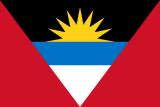
Antigua and Barbuda – Facts, Capital & Geography | Random Country Generator
Capital
St. John's
Population
100K (#182)
Currency
East Caribbean Dollar (XCD)
Language
English
Area
442 km²
National Dish
Fungie & Pepperpot
National Flower
Agave
Density
213/km²
Internet TLD
.ag
Brief History
Antigua and Barbuda was originally inhabited by Ciboney, Arawak, and Carib peoples before Christopher Columbus sighted the islands in 1493. British colonization began in 1632, establishing sugar plantations heavily reliant on enslaved African labor until emancipation in 1834. The nation achieved full independence from the United Kingdom on November 1, 1981, under the leadership of Vere Bird, retaining Queen Elizabeth II as head of state.
Key Demographics & Capital
Antigua and Barbuda has a population of approximately 100,000, with about 91% of the population identifying as being of African descent. English is the official language, while Antiguan Creole is spoken in daily informal communication. The population is heavily concentrated on the island of Antigua, particularly in the capital St. John's, while the sister island of Barbuda remains sparsely populated with under 2,000 residents.
Geography
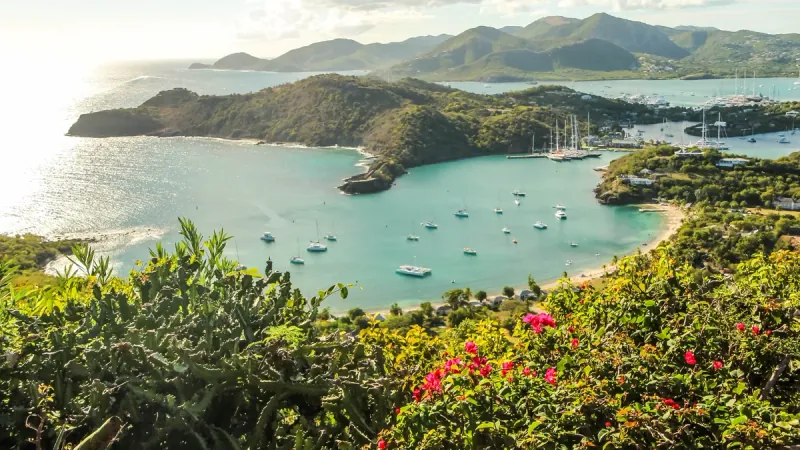
Antigua and Barbuda is a twin-island nation in the Eastern Caribbean. Antigua is the larger island with coral-limestone terrain and numerous beaches. Barbuda is a flat coral island with the stunning pink-sand beach. The islands have a tropical maritime climate with consistent trade winds.
Culture & Tradition
The culture is a blend of African, British, and Caribbean influences. Carnival is the biggest cultural event, featuring calypso, soca, and steel band music. Cricket is the national passion — Sir Vivian Richards is a national hero. Antiguan cuisine features ducana (sweet potato dumpling), saltfish, and fungi. Sailing culture is strong.
Economy
Tourism is the dominant economic sector, driven by the 365 beaches and luxury resorts. Services, construction, and light manufacturing contribute. The country is a popular cruise ship destination. Offshore financial services are a growing sector. Agriculture is limited but includes fruits and vegetables.
Travel Highlights
Swim at a different beach each day (365 beaches!), visit Nelson's Dockyard at English Harbour (UNESCO), explore Barbuda's pristine pink-sand beach, go sailing during Antigua Sailing Week, snorkel at Cades Reef, and experience Carnival celebrations. The islands offer quintessential Caribbean relaxation.
Fun Facts
Antigua has 365 beaches — one for each day of the year.
English Harbour was a base for Admiral Nelson's fleet.
Barbuda has one of the largest frigate bird colonies in the world.
The country is known as the 'Land of 365 Beaches.'
Cricket is the national sport.
Antigua Sailing Week is one of the world's top regattas.
Map
Bordering & Nearby Countries
Frequently Asked Questions (FAQs)
More from North America
Want a surprise? Try our random North America country generator or pick from the entire world.
Bahamas
Explore the Bahamas: 700 islands of paradise. Discover swimming pigs, blue holes, Junkanoo culture, and the world's clearest waters.
Barbados
Explore Barbados: Little England in the Caribbean. Discover Crop Over festival, world's oldest rum, and stunning beaches.
Belize
Explore Belize: the Great Blue Hole and ancient Maya civilizations. Discover the barrier reef, jaguars, and Caribbean-Central American culture.

Canada
Explore Canada: from Niagara Falls to the Rocky Mountains. Discover multicultural cities, pristine nature, and winter adventures.