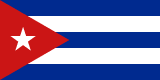
Cuba – Facts, Capital & Geography | Random Country Generator
Capital
Havana
Population
11.3 Million (#83)
Currency
Cuban Peso (CUP)
Language
Spanish
Area
109,884 km²
National Dish
Ropa Vieja
National Flower
White Mariposa
Density
106/km²
Internet TLD
.cu
Brief History
Cuba was inhabited by Siboney and Taíno peoples before Christopher Columbus claimed the island for Spain in 1492, establishing it as a key Spanish colonial military and trade hub. Following the Spanish-American War of 1898, Cuba achieved independence, though it remained under heavy US political and economic influence. The Cuban Revolution of 1959 led by Fidel Castro overthrew Fulgencio Batista, establishing a socialist state allied with the Soviet Union.
Key Demographics & Capital
Cuba has a population of approximately 11 million, presenting a demographic mix of White (64%), Mulatto/Mestizo (26%), and Black (9%), reflecting historical Spanish settlement and African slave imports. Spanish is the official language, spoken with a distinct Caribbean accent. The population is highly urbanized (77%), and the country has experienced significant waves of emigration to the United States.
Geography
Cuba is the largest island in the Caribbean, located at the entrance to the Gulf of Mexico. The landscape includes flat, rolling plains, the Sierra Maestra mountain range in the east, lush valleys like Viñales, and over 4,000 smaller islands and cays. Cuba has coral reefs, white-sand beaches, and tropical forests. The climate is tropical with wet and dry seasons.
Culture & Tradition
Cuban culture is a vibrant fusion of Spanish, African, and Caribbean influences. Music genres like son, salsa, rumba, and Buena Vista Social Club have global influence. Cuban art, literature, and dance are passionate and expressive. Havana's crumbling colonial architecture, vintage cars, and lively street life create a unique atmosphere. Baseball, boxing, and dominos are popular pastimes.
Economy
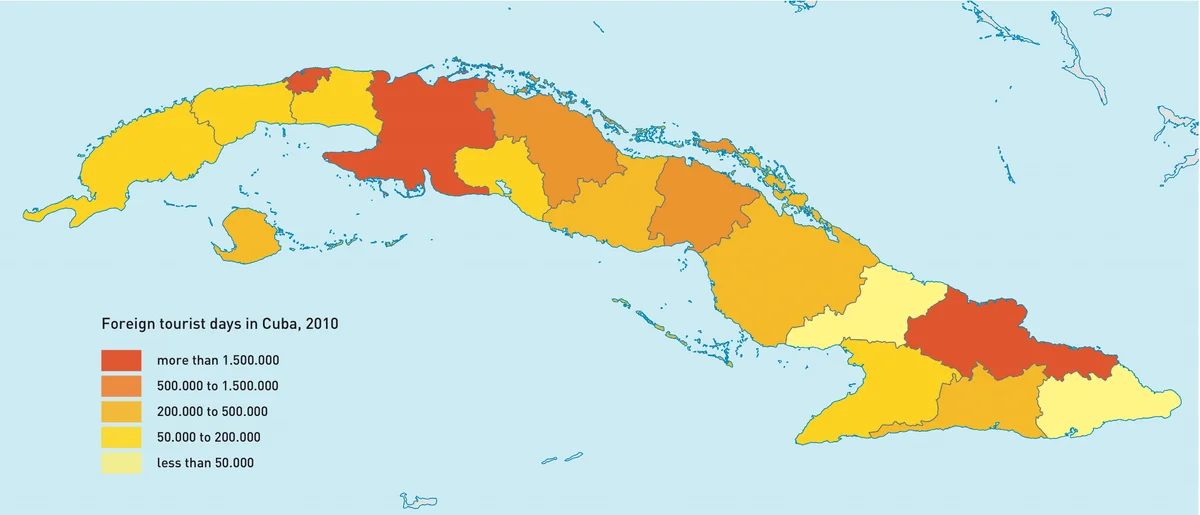
Cuba has a centrally planned economy. Key sectors include tourism (the largest foreign exchange earner), sugar production, tobacco (cigars), nickel mining, and biotechnology/pharmaceuticals. Cuba has developed notable achievements in healthcare and education despite limited resources. Economic reforms are gradually introducing private enterprise.
Travel Highlights
Wander the colorful streets of Old Havana (a UNESCO World Heritage Site), ride in a classic 1950s convertible, explore the tobacco fields of Viñales Valley, relax on Varadero's stunning beach, and visit Trinidad's perfectly preserved colonial town. Santiago de Cuba's music scene and the Bay of Pigs are also worth exploring.
Fun Facts
Cuba has one of the highest literacy rates in the world.
Classic American cars from the 1950s are still widely driven.
Cuba has free healthcare and education for all citizens.
Cuban cigars are considered the finest in the world.
Baseball, not football, is Cuba's national sport.
Cuba is the largest island in the Caribbean.
Map
Bordering & Nearby Countries
Frequently Asked Questions (FAQs)
More from North America
Want a surprise? Try our random North America country generator or pick from the entire world.
Antigua and Barbuda
Explore Antigua and Barbuda: 365 beaches in the Caribbean. Discover Nelson's Dockyard, pink sand, and world-class sailing.
Bahamas
Explore the Bahamas: 700 islands of paradise. Discover swimming pigs, blue holes, Junkanoo culture, and the world's clearest waters.
Barbados
Explore Barbados: Little England in the Caribbean. Discover Crop Over festival, world's oldest rum, and stunning beaches.
Belize
Explore Belize: the Great Blue Hole and ancient Maya civilizations. Discover the barrier reef, jaguars, and Caribbean-Central American culture.