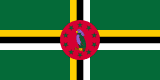
Dominica – Facts, Capital & Geography | Random Country Generator
Capital
Roseau
Population
72K (#185)
Currency
East Caribbean Dollar (XCD)
Language
English
Area
751 km²
National Dish
Mountain Chicken
National Flower
Bwa Kwaib
Density
96/km²
Internet TLD
.dm
Brief History
Dominica was originally inhabited by Caribs, who fiercely resisted European colonization, keeping the island as a neutral territory until France established sugar plantations in the 18th century. Britain took control in 1763, establishing it as a colony dependent on African slave labor. Dominica achieved full independence on November 3, 1978, establishing a parliamentary republic under Dame Eugenia Charles, the Caribbean's first female prime minister.
Key Demographics & Capital
Dominica has a population of approximately 73,000, with about 86% of the population identifying as being of African descent, alongside a small indigenous Carib (Kalinago) population of about 3,000, who live in a designated territory in the east. English is the official language, while Dominican Creole French (Patois) is spoken by the majority. The population is predominantly rural.
Geography
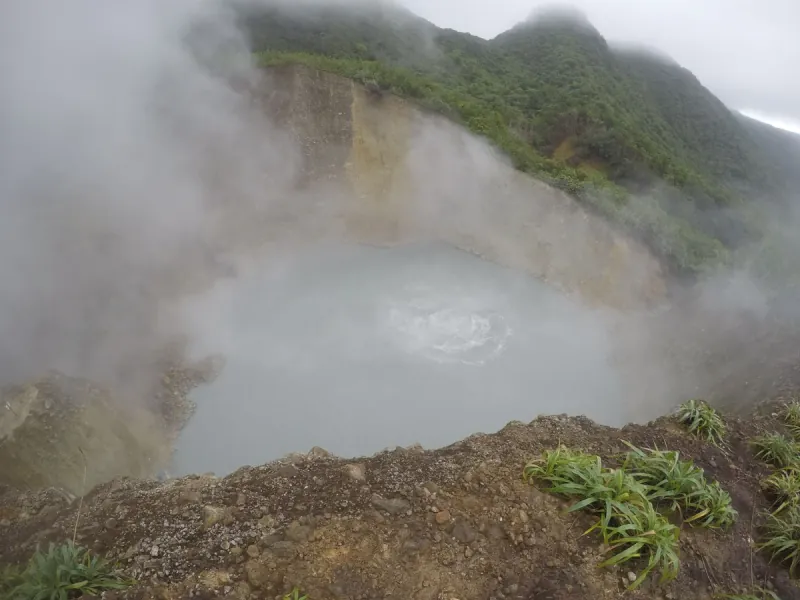
Dominica is a volcanic island in the Eastern Caribbean, known as the 'Nature Island.' The landscape is dramatically mountainous with tropical rainforest, volcanic peaks, hot springs, and numerous waterfalls. The Boiling Lake is the world's second-largest thermally heated lake. The island has black sand beaches and coral reefs.
Culture & Tradition
Dominican culture blends Kalinago (Carib) indigenous, African, and French Creole influences. The Kalinago Territory is one of the few remaining indigenous communities in the Caribbean. Creole Patois is widely spoken alongside English. Music includes bouyon (originally from Dominica) and cadence-lypso. Cuisine features crab backs, mountain chicken, and provisions.
Economy
Dominica's economy relies on agriculture (bananas, citrus), ecotourism, and its Citizenship by Investment Program. The country is developing geothermal energy from volcanic resources. Ecotourism is the growing sector, leveraging the island's pristine natural environment. Hurricane Maria in 2017 caused devastating damage.
Travel Highlights
Hike to the Boiling Lake through the Valley of Desolation, snorkel in Champagne Reef's volcanic bubbles, visit Trafalgar Falls, explore the Kalinago Territory, discover Emerald Pool, whale watch (sperm whales year-round), and trek through pristine rainforest. Dominica offers the Caribbean's best ecotourism.
Fun Facts
Dominica is called the 'Nature Island of the Caribbean.'
The Boiling Lake is the second-largest hot spring in the world.
Dominica has 365 rivers — one for each day of the year.
The island has nine volcanoes.
The Sisserou parrot is found only in Dominica.
Dominica was the last Caribbean island to be colonized.
Map
Bordering & Nearby Countries
Frequently Asked Questions (FAQs)
More from North America
Want a surprise? Try our random North America country generator or pick from the entire world.
Antigua and Barbuda
Explore Antigua and Barbuda: 365 beaches in the Caribbean. Discover Nelson's Dockyard, pink sand, and world-class sailing.
Bahamas
Explore the Bahamas: 700 islands of paradise. Discover swimming pigs, blue holes, Junkanoo culture, and the world's clearest waters.
Barbados
Explore Barbados: Little England in the Caribbean. Discover Crop Over festival, world's oldest rum, and stunning beaches.
Belize
Explore Belize: the Great Blue Hole and ancient Maya civilizations. Discover the barrier reef, jaguars, and Caribbean-Central American culture.