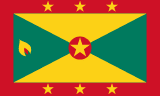
Grenada – Facts, Capital & Geography | Random Country Generator
Capital
St. George's
Population
125K (#177)
Currency
East Caribbean Dollar (XCD)
Language
English
Area
344 km²
National Dish
Oil Down
National Flower
Bougainvillea
Density
313/km²
Internet TLD
.gd
Brief History
Grenada was inhabited by Caribs before Christopher Columbus sighted the island in 1498. The French colonized it in 1649, establishing sugar plantations dependent on African slave labor, before ceding the island to Great Britain in 1763. Grenada achieved independence on February 7, 1974, under Eric Gairy. The socialist government of Maurice Bishop was overthrown in a 1983 coup, prompting a military invasion by the United States to restore order.
Key Demographics & Capital
Grenada has a population of approximately 125,000, with about 82% of the population identifying as being of African descent, and 13% as mixed race. English is the official language, while Grenadian Creole English is spoken in informal daily communication. The population density is high, with residents clustered heavily in the capital St. George's and the southern coastal suburbs.
Geography
Grenada is a tri-island state in the southeastern Caribbean, comprising Grenada, Carriacou, and Petite Martinique. The main island is volcanic with a mountainous interior, tropical rainforest, waterfalls, and beautiful beaches. Grand Anse Beach is consistently rated one of the Caribbean's best. The islands have coral reefs and clear waters.
Culture & Tradition
Grenadian culture blends African, French, and British influences. Spice production (nutmeg, mace, cinnamon, cloves) defines the island's identity. Carnival ('Spicemas') features jab jab (devil) characters in oil and paint. Grenadian cuisine includes oil down (national dish), callaloo, and nutmeg-flavored everything. Music features soca and calypso.
Economy
Grenada's economy relies on tourism, spice production (second-largest nutmeg producer globally), agriculture, and offshore education (St. George's University). Cocoa and chocolate production are growing niche exports. Construction and services contribute. The country has developed its Citizenship by Investment Program.
Travel Highlights
Relax on Grand Anse Beach, dive the Underwater Sculpture Park, explore St. George's colorful harbor, visit spice plantations and chocolate factories, hike to waterfalls in the interior, sail to Carriacou, and experience Spicemas Carnival. Grenada offers Caribbean charm with a distinctive spice-island character.
Fun Facts
Grenada is called the 'Spice Island' for its nutmeg production.
Grenada is the world's second-largest nutmeg producer.
The Underwater Sculpture Park was the world's first.
St. George's is one of the most picturesque harbors in the Caribbean.
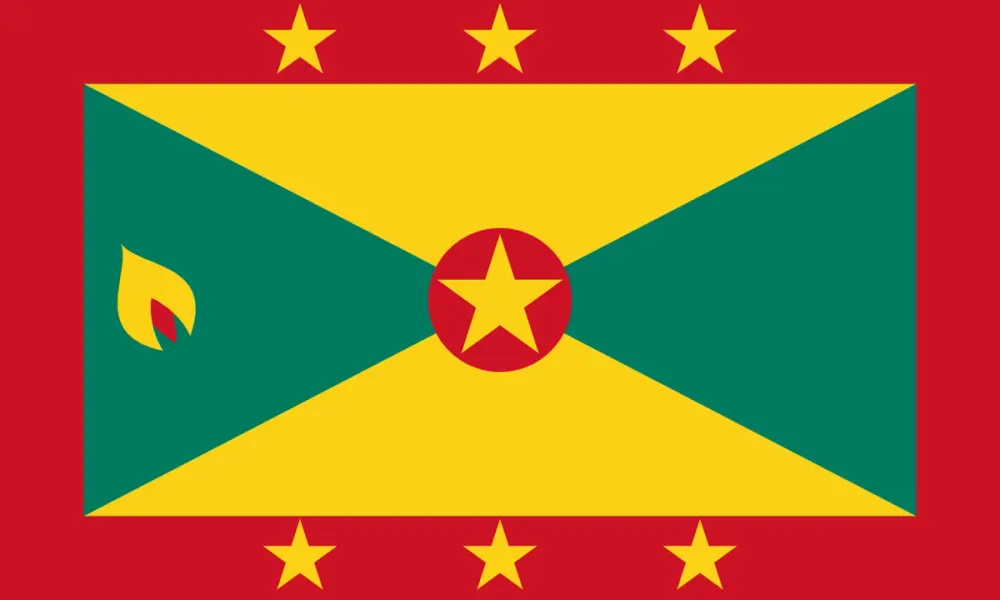
Grenada's flag features a nutmeg.
Chocolate production is growing, with Bean-to-Bar factories on the island.
Map
Bordering & Nearby Countries
Frequently Asked Questions (FAQs)
More from North America
Want a surprise? Try our random North America country generator or pick from the entire world.
Antigua and Barbuda
Explore Antigua and Barbuda: 365 beaches in the Caribbean. Discover Nelson's Dockyard, pink sand, and world-class sailing.
Bahamas
Explore the Bahamas: 700 islands of paradise. Discover swimming pigs, blue holes, Junkanoo culture, and the world's clearest waters.
Barbados
Explore Barbados: Little England in the Caribbean. Discover Crop Over festival, world's oldest rum, and stunning beaches.
Belize
Explore Belize: the Great Blue Hole and ancient Maya civilizations. Discover the barrier reef, jaguars, and Caribbean-Central American culture.