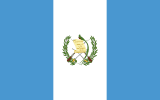
Guatemala – Facts, Capital & Geography | Random Country Generator
Capital
Guatemala City
Population
17.1 Million (#71)
Currency
Guatemalan Quetzal (GTQ)
Language
Spanish
Area
108,889 km²
National Dish
Pepián
National Flower
White Nun Orchid
Density
167/km²
Internet TLD
.gt
Brief History
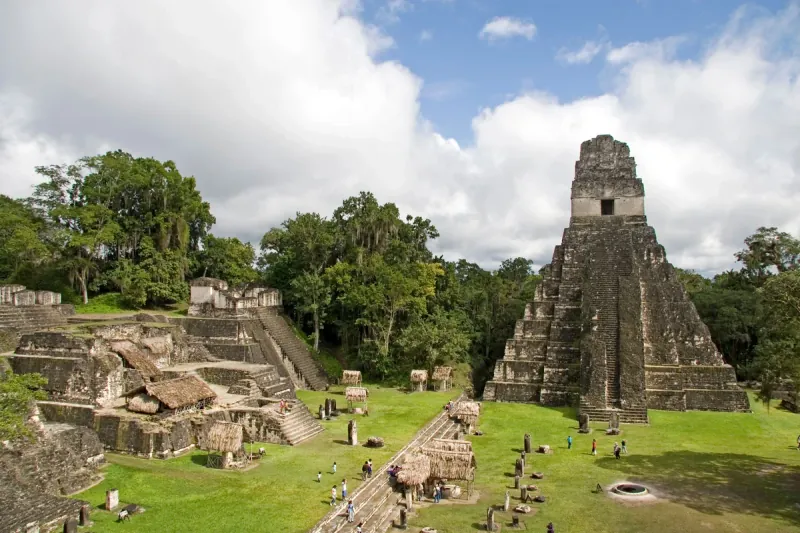
Guatemala was the heartland of the ancient Maya civilization, which built monumental cities like Tikal before Spanish conquistador Pedro de Alvarado conquered the region in 1524. It declared independence from Spain in 1821, briefly joining the Mexican Empire and the Federal Republic of Central America before becoming an independent republic in 1847. The nation suffered a devastating 36-year civil war (1960–1996) between military regimes and leftist rebels.
Key Demographics & Capital
Guatemala has a population of approximately 18 million, presenting a young demographic profile where over 43% identify as indigenous Maya, and 56% as Ladino (mixed race). Spanish is the official language, though the state recognizes 22 Mayan languages (such as K'iche' and Mam) as national languages. The population is concentrated in the southern highlands and around Guatemala City.
Geography
Guatemala is in Central America with Pacific and Caribbean coastlines. The landscape features volcanic highlands, tropical lowlands, and mountain ranges. Lake Atitlán sits in a volcanic caldera surrounded by three volcanoes. The Petén rainforest in the north contains major Maya ruins. Guatemala has extraordinary biodiversity.
Culture & Tradition
Guatemalan culture is a vibrant blend of Maya and Spanish colonial heritage. Indigenous Maya communities maintain traditional dress, languages, and customs. The colorful markets of Chichicastenango are world-famous. Guatemalan cuisine features black beans, tortillas, and pepián (spiced stew). Holy Week processions in Antigua are spectacular. Coffee culture is strong.
Economy
Guatemala has the largest economy in Central America. Key sectors include agriculture (coffee, sugar, bananas, cardamom), manufacturing, tourism, and remittances. Coffee is a major export and Guatemala produces some of the world's finest. The textile and garment industry is significant. The country has significant mining resources.
Travel Highlights
Explore the ancient Maya city of Tikal rising from the jungle, marvel at Lake Atitlán surrounded by volcanoes, walk the cobblestone streets of Antigua (UNESCO), shop at Chichicastenango market, hike Volcán Acatenango, and visit Semuc Champey's turquoise pools. Guatemala offers Central America's richest cultural experiences.
Fun Facts
Guatemala has the highest population of any Central American country.
Tikal was one of the largest Maya cities.
Guatemala is the birthplace of chocolate (cacao).
The quetzal bird is the national symbol and currency namesake.
Lake Atitlán is called the most beautiful lake in the world.
Guatemala has 37 volcanoes, three of which are active.
Map
Bordering & Nearby Countries
Frequently Asked Questions (FAQs)
More from North America
Want a surprise? Try our random North America country generator or pick from the entire world.
Antigua and Barbuda
Explore Antigua and Barbuda: 365 beaches in the Caribbean. Discover Nelson's Dockyard, pink sand, and world-class sailing.
Bahamas
Explore the Bahamas: 700 islands of paradise. Discover swimming pigs, blue holes, Junkanoo culture, and the world's clearest waters.
Barbados
Explore Barbados: Little England in the Caribbean. Discover Crop Over festival, world's oldest rum, and stunning beaches.
Belize
Explore Belize: the Great Blue Hole and ancient Maya civilizations. Discover the barrier reef, jaguars, and Caribbean-Central American culture.