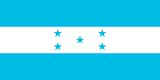
Honduras – Facts, Capital & Geography | Random Country Generator
Capital
Tegucigalpa
Population
10.3 Million (#90)
Currency
Honduran Lempira (HNL)
Language
Spanish
Area
112,492 km²
National Dish
Baleada
National Flower
Rhyncholaelia digbyana
Density
89/km²
Internet TLD
.hn
Brief History
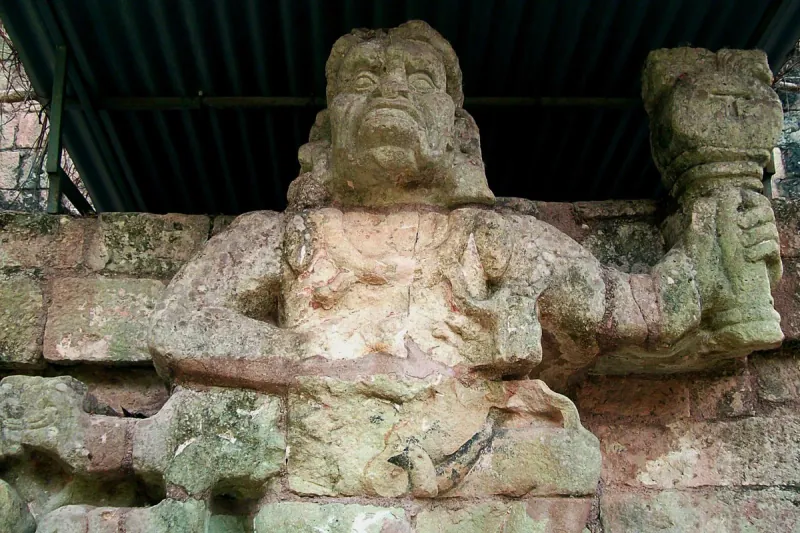
Honduras was part of the ancient Maya civilization, centered at the ruins of Copán, before Spanish conquistador Hernán Cortés conquered the territory in the 16th century. It achieved independence from Spain in 1821 as part of the Captaincy General of Guatemala, later establishing a separate republic in 1838. In the 20th century, the country's economy was dominated by US banana fruit companies, leading to the term 'banana republic'.
Key Demographics & Capital
Honduras has a population of approximately 10.4 million, presenting a highly homogeneous demographic profile with ethnic Mestizos comprising over 90% of the population, followed by small indigenous and Afro-Honduran (Garifuna) minorities. Spanish is the sole official language. The country has experienced massive emigration to the United States due to economic challenges.
Geography
Honduras is in Central America with Caribbean and Pacific coastlines. The interior is mountainous with fertile valleys. The Bay Islands (Roatán, Utila, Guanaja) in the Caribbean are famous for diving. The Mosquito Coast in the east is one of Central America's most remote areas. Cloud forests cover highland areas.
Culture & Tradition
Honduran culture blends Maya, Lenca, Garifuna, and Spanish heritage. The Garifuna people along the Caribbean coast have a UNESCO-recognized cultural tradition. Honduran cuisine features baleadas (stuffed tortillas), plato típico, and sopa de caracol (conch soup). Music includes punta from the Garifuna community. Football is the national passion.
Economy
Honduras' economy relies on agriculture (coffee, bananas, palm oil), manufacturing (maquila sector), remittances, and tourism. Coffee is a major export. The Bay Islands drive dive tourism. The country is a significant banana exporter. Economic challenges include poverty and inequality.
Travel Highlights
Dive the Bay Islands' incredible reefs (Roatán, Utila), explore the Maya ruins of Copán (UNESCO), discover the cloud forest of Cusuco National Park, experience Garifuna culture on the Caribbean coast, and hike in La Tigra National Park. Utila is one of the cheapest places in the world to get scuba certified.
Fun Facts
Honduras has the second-largest barrier reef in the world (Mesoamerican Reef).
Copán was one of the most important Maya cities.
The Bay Islands are a world-class diving destination.
Honduras was the original 'Banana Republic.'
The scarlet macaw is the national bird.
Honduras has the most biodiverse pine forests in Latin America.
Map
Bordering & Nearby Countries
Frequently Asked Questions (FAQs)
More from North America
Want a surprise? Try our random North America country generator or pick from the entire world.
Antigua and Barbuda
Explore Antigua and Barbuda: 365 beaches in the Caribbean. Discover Nelson's Dockyard, pink sand, and world-class sailing.
Bahamas
Explore the Bahamas: 700 islands of paradise. Discover swimming pigs, blue holes, Junkanoo culture, and the world's clearest waters.
Barbados
Explore Barbados: Little England in the Caribbean. Discover Crop Over festival, world's oldest rum, and stunning beaches.
Belize
Explore Belize: the Great Blue Hole and ancient Maya civilizations. Discover the barrier reef, jaguars, and Caribbean-Central American culture.