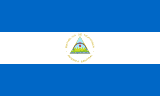
Nicaragua – Facts, Capital & Geography | Random Country Generator
Capital
Managua
Population
6.9 Million (#105)
Currency
Nicaraguan Córdoba (NIO)
Language
Spanish
Area
130,373 km²
National Dish
Gallo Pinto
National Flower
Sacuanjoche
Density
47/km²
Internet TLD
.ni
Brief History
Nicaragua was inhabited by Mesoamerican groups before Spanish conquistador Gil González Dávila explored the territory in 1522. It declared independence from Spain in 1821, briefly joining the Mexican Empire and the Federal Republic of Central America. The country was occupied by the US Marines in the early 20th century, followed by the Somoza family dictatorship (1936–1979) which was overthrown by the Sandinista Revolution.
Key Demographics & Capital
Nicaragua has a population of approximately 6.9 million, presenting a young demographic profile where Mestizos (mixed European and indigenous ancestry) comprise over 69% of the population, followed by White (17%) and Black (9%) communities. Spanish is the official national language, while Miskito and English Creole are spoken on the Caribbean coast. Emigration to Costa Rica is high.
Geography
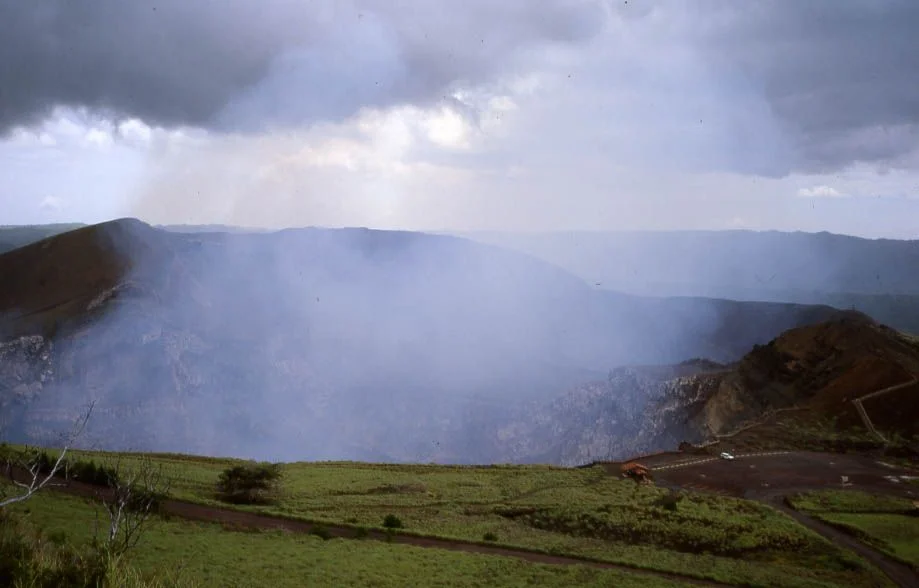
Nicaragua is the largest Central American country with both Pacific and Caribbean coastlines. The Pacific lowlands have a chain of volcanoes and two large lakes — Lake Managua and Lake Nicaragua. The central highlands have cloud forests. The Caribbean Mosquito Coast is remote and sparsely populated. The landscape is dramatically volcanic.
Culture & Tradition
Nicaraguan culture blends indigenous, Spanish, and Caribbean influences. The rival colonial cities of León (liberal) and Granada (conservative) showcase beautiful architecture. Nicaraguan cuisine features gallo pinto (rice and beans), nacatamales, and vigorón. Poetry is deeply respected — Rubén Darío is a national hero. Folk dance and music are vibrant.
Economy
Nicaragua's economy relies on agriculture (coffee, tobacco, beef, sugar), manufacturing (free trade zones), remittances, and tourism. The country produces high-quality coffee and cigars. Gold mining is significant. Tourism is growing, centered on colonial cities and eco-adventures. Nicaragua is one of the poorest countries in the Americas.
Travel Highlights
Volcano board down Cerro Negro, explore colonial Granada and its colorful streets, visit León's stunning cathedral (UNESCO), surf at San Juan del Sur, kayak through the Islets of Granada, explore Ometepe Island's twin volcanoes in Lake Nicaragua, and discover the Corn Islands' Caribbean vibe.
Fun Facts
Nicaragua has the largest lake in Central America (Lake Nicaragua).
Lake Nicaragua has freshwater sharks.
The country has 19 volcanoes.
Nicaragua is the largest country in Central America.
León and Granada are rival colonial cities.
Volcano boarding on Cerro Negro is a unique Nicaraguan adventure.
Map
Bordering & Nearby Countries
Frequently Asked Questions (FAQs)
More from North America
Want a surprise? Try our random North America country generator or pick from the entire world.
Antigua and Barbuda
Explore Antigua and Barbuda: 365 beaches in the Caribbean. Discover Nelson's Dockyard, pink sand, and world-class sailing.
Bahamas
Explore the Bahamas: 700 islands of paradise. Discover swimming pigs, blue holes, Junkanoo culture, and the world's clearest waters.
Barbados
Explore Barbados: Little England in the Caribbean. Discover Crop Over festival, world's oldest rum, and stunning beaches.
Belize
Explore Belize: the Great Blue Hole and ancient Maya civilizations. Discover the barrier reef, jaguars, and Caribbean-Central American culture.