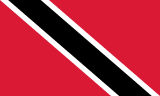
Trinidad and Tobago – Facts, Capital & Geography | Random Country Generator
Capital
Port of Spain
Population
1.4 Million (#150)
Currency
Trinidad and Tobago Dollar (TTD)
Language
English
Area
5,130 km²
National Dish
Doubles
National Flower
Chaconia
Density
267/km²
Internet TLD
.tt
Brief History
Trinidad and Tobago was originally inhabited by Arawak and Carib peoples before Spanish colonization, later changing hands between European powers multiple times. Tobago was fought over by the British, French, and Dutch, while Trinidad became a British colony in 1797. The islands unified administratively in 1889 and achieved independence from the United Kingdom on August 31, 1962, under Eric Williams. The country transitioned to a republic in 1976 and developed a prosperous economy driven by petroleum and natural gas exploitation.
Key Demographics & Capital
Trinidad and Tobago has a population of approximately 1.4 million, presenting a diverse demographic mix primarily divided between East Indians (35%) and Afro-Trinidadians (34%). English is the official language, spoken alongside Trinidadian English Creole and Hindustani dialects. The population is highly concentrated in the urban corridor of western Trinidad, stretching between Port of Spain and San Fernando. The country has experienced a high rate of emigration to the United States, Canada, and the United Kingdom.
Geography
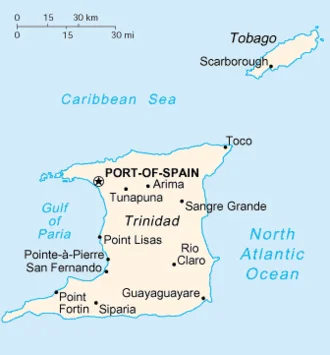
Trinidad and Tobago is a twin-island nation near Venezuela in the southern Caribbean. Trinidad is larger and more developed, while Tobago is more tourist-oriented. Trinidad has the Northern Range mountains, mangrove swamps, and Caroni Bird Sanctuary. Tobago has coral reefs and tropical beaches. Both islands have tropical rainforest.
Culture & Tradition
Trinbagonian culture is extraordinarily diverse, blending African, Indian, European, Chinese, and Middle Eastern influences. Carnival is the premier cultural event with calypso, soca, and steel pan competitions. The steel pan was invented here. Indian culture (Hindu festivals, cuisine) is equally prominent. Cuisine features doubles, roti, pelau, and crab and callaloo.
Economy
Trinidad and Tobago has one of the highest GDPs per capita in the Caribbean, driven by oil and natural gas (the leading Caribbean producer). Petrochemical manufacturing is significant. Tourism (especially in Tobago) contributes. The country has a diversified economy compared to other Caribbean nations.
Travel Highlights
Experience the world-famous Trinidad Carnival, visit the Asa Wright Nature Centre for birdwatching, explore Pitch Lake, relax on Tobago's pristine beaches, snorkel at Buccoo Reef, and experience the diversity of food at doubles and roti shops. Trinidad and Tobago offers the Caribbean's most diverse cultural experience.
Fun Facts
Trinidad and Tobago Carnival is one of the world's greatest street parties.
The steel pan drum was invented in Trinidad.
Pitch Lake in Trinidad is the world's largest natural deposit of asphalt.
Trinidad has the world's highest density of bird species per unit area.
Calypso and soca music originated here.
The country is the birthplace of limbo dancing.
Map
Bordering & Nearby Countries
Frequently Asked Questions (FAQs)
More from North America
Want a surprise? Try our random North America country generator or pick from the entire world.
Antigua and Barbuda
Explore Antigua and Barbuda: 365 beaches in the Caribbean. Discover Nelson's Dockyard, pink sand, and world-class sailing.
Bahamas
Explore the Bahamas: 700 islands of paradise. Discover swimming pigs, blue holes, Junkanoo culture, and the world's clearest waters.
Barbados
Explore Barbados: Little England in the Caribbean. Discover Crop Over festival, world's oldest rum, and stunning beaches.
Belize
Explore Belize: the Great Blue Hole and ancient Maya civilizations. Discover the barrier reef, jaguars, and Caribbean-Central American culture.