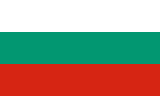
Bulgaria – Facts, Capital & Geography | Random Country Generator
Capital
Sofia
Population
6.5 Million (#108)
Currency
Bulgarian Lev (BGN)
Language
Bulgarian
Area
110,879 km²
National Dish
Banitsa
National Flower
Rose
Density
61/km²
Internet TLD
.bg
Brief History
Bulgaria established the First Bulgarian Empire in 681 CE, defeating the Byzantine Empire and creating the Cyrillic alphabet in the 9th century. It fell under Ottoman rule in the late 14th century, remaining occupied for nearly 500 years until gaining autonomy in 1878 with Russian help. Following WWII, Bulgaria became a Soviet satellite state, transitioning to a multi-party democracy in 1989 and subsequently joining NATO and the European Union.
Key Demographics & Capital
Bulgaria has a population of approximately 6.5 million, which has experienced one of the world's fastest population declines due to low birth rates and massive post-communist emigration. Ethnic Bulgarians comprise over 84% of the population, with Turkish (8%) and Roma (5%) minorities. Bulgarian is the sole official language, using the Cyrillic alphabet. Over 75% of the population resides in urban areas, mainly Sofia.
Geography
Bulgaria is in Southeastern Europe on the Balkan Peninsula, with a Black Sea coastline. The landscape features the Balkan Mountains running east-west through the center, the Rhodope Mountains in the south, the Thracian Plain, and the Danube River forming the northern border. The country has diverse terrain from beaches to ski resorts.
Culture & Tradition
Bulgarian culture is ancient and rich. The Cyrillic alphabet was created here. Rose oil production in the Rose Valley is world-famous. Bulgarian yogurt has a unique bacteria strain. Traditional music features distinctive vocal harmonies. Bulgarian cuisine includes shopska salad, banitsa (cheese pastry), and rakia (fruit brandy). Orthodox Christian traditions are deeply embedded.
Economy
Bulgaria's economy is growing with IT services, manufacturing, agriculture, and tourism as key sectors. The country has become an attractive outsourcing destination for European companies. Wine production, rose oil, and lavender are notable agricultural exports. Black Sea tourism and ski tourism are significant.
Travel Highlights
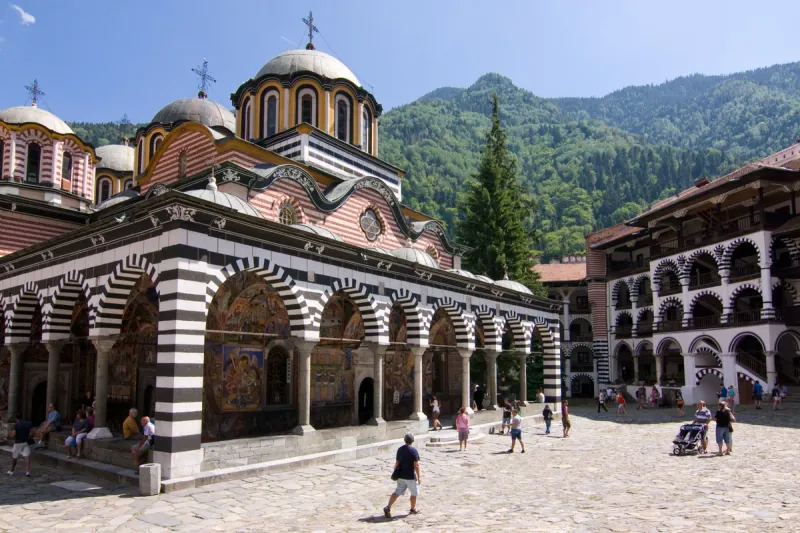
Explore the Rila Monastery (UNESCO), walk Sofia's blend of Roman, Ottoman, and Soviet architecture, relax on Black Sea beaches, hike in the Rila and Pirin Mountains, visit the ancient Thracian tombs of Kazanlak, and discover the medieval rock churches of Ivanovo (UNESCO). The Rose Valley during rose-picking season is magical.
Fun Facts
Bulgaria is the oldest country in Europe that hasn't changed its name since founding (681 AD).
Bulgarians shake their heads for 'yes' and nod for 'no.'
Bulgaria is one of the world's largest rose oil producers.
The Cyrillic alphabet was created in Bulgaria.
Yogurt bacteria was first identified in Bulgaria.
Bulgaria has some of the oldest gold artifacts in the world.
Map
Bordering & Nearby Countries
Frequently Asked Questions (FAQs)
More from Europe
Want a surprise? Try our random Europe country generator or pick from the entire world.
Albania
Explore Albania: Europe's last hidden gem. Discover pristine beaches, ancient cities, and dramatic Albanian Alps.
Andorra
Explore Andorra: tiny mountain principality in the Pyrenees. Discover skiing, duty-free shopping, and Romanesque heritage.
Austria
Explore Austria: land of Mozart, Alpine peaks, and Viennese culture. Discover Salzburg, ski resorts, and Habsburg heritage.
Belarus
Explore Belarus: Europe's last primeval forest and medieval castles. Discover Belovezhskaya Pushcha, Mir Castle, and Slavic heritage.