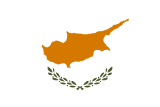
Cyprus – Facts, Capital & Geography | Random Country Generator
Capital
Nicosia
Population
1.2 Million (#155)
Currency
Euro (EUR)
Language
Greek, Turkish
Area
9,251 km²
National Dish
Halloumi & Mezze
National Flower
Rose
Density
131/km²
Internet TLD
.cy
Brief History
Cyprus's strategic location in the eastern Mediterranean attracted Phoenician, Assyrian, Egyptian, Persian, Roman, Byzantine, Venetian, and Ottoman rulers. It was leased to Britain in 1878 and formally annexed in 1914, achieving independence in 1960. Intercommunal violence between Greek and Turkish Cypriots culminated in a 1974 Greek coup attempt and subsequent Turkish military invasion, leaving the island divided by a UN-monitored Green Line.
Key Demographics & Capital
Cyprus has a population of approximately 1.2 million, divided between two main ethnic communities: Greek Cypriots (about 78% of the population) in the south, and Turkish Cypriots (about 18%) in the north. Greek and Turkish are the official languages, with English widely used in tourism and business. The population is highly urbanized (70%), concentrated in Nicosia, Limassol, and Larnaca.
Geography
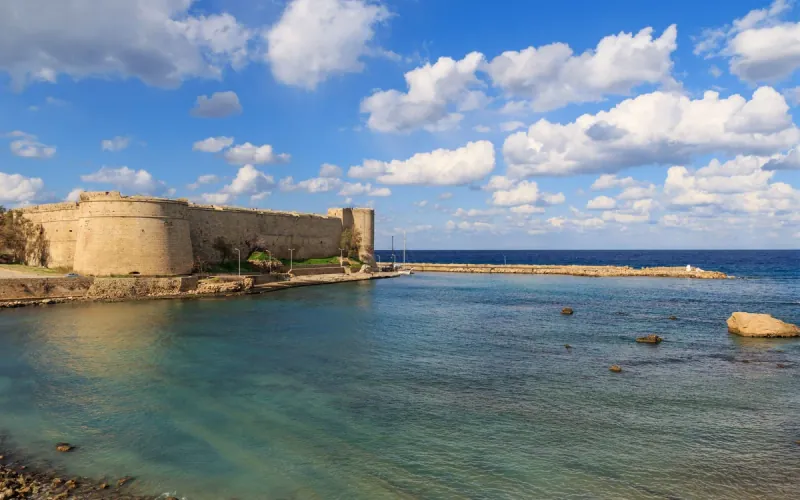
Cyprus is an island in the eastern Mediterranean. The landscape features two mountain ranges — the Troodos in the south and Kyrenia in the north — separated by a fertile central plain. The coastline has sandy beaches and rocky coves. The island has a Mediterranean climate with hot, dry summers and mild winters.
Culture & Tradition
Cypriot culture blends Greek and Turkish influences reflecting the island's division. Greek Cypriots in the south and Turkish Cypriots in the north maintain distinct identities. Cyprus is famous for halloumi cheese, commandaria wine (possibly the world's oldest named wine), and rich archaeological heritage. Orthodox Christianity and Islam coexist.
Economy
Cyprus has a services-based economy centered on tourism, shipping, financial services, and real estate. The island is a popular tourist destination for European visitors. Shipping registration is significant. Agriculture includes citrus, potatoes, and wine. The division of the island has economic implications for both communities.
Travel Highlights
Visit the ancient city of Paphos (UNESCO) and Aphrodite's Rock, explore the divided capital Nicosia, discover the painted churches of the Troodos Mountains (UNESCO), relax on Ayia Napa's beaches, visit the medieval Kolossi Castle, and explore the Karpas Peninsula's wild donkeys. Cyprus offers Mediterranean beauty with deep history.
Fun Facts
Cyprus is the third-largest island in the Mediterranean.
Nicosia is the world's last divided capital city.
Aphrodite, the Greek goddess of love, was said to be born in Cyprus.
Cyprus has been inhabited for over 10,000 years.
The island has 340 days of sunshine per year.
Halloumi cheese originated in Cyprus.
Map
Bordering & Nearby Countries
Frequently Asked Questions (FAQs)
More from Europe
Want a surprise? Try our random Europe country generator or pick from the entire world.
Albania
Explore Albania: Europe's last hidden gem. Discover pristine beaches, ancient cities, and dramatic Albanian Alps.
Andorra
Explore Andorra: tiny mountain principality in the Pyrenees. Discover skiing, duty-free shopping, and Romanesque heritage.
Austria
Explore Austria: land of Mozart, Alpine peaks, and Viennese culture. Discover Salzburg, ski resorts, and Habsburg heritage.
Belarus
Explore Belarus: Europe's last primeval forest and medieval castles. Discover Belovezhskaya Pushcha, Mir Castle, and Slavic heritage.