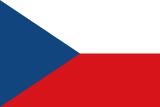
Czech Republic – Facts, Capital & Geography | Random Country Generator
Capital
Prague
Population
10.8 Million (#86)
Currency
Czech Koruna (CZK)
Language
Czech
Area
78,866 km²
National Dish
Svíčková
National Flower
Linden
Density
137/km²
Internet TLD
.cz
Brief History
The Czech Republic emerged as the Duchy of Bohemia in the 9th century, later becoming a powerful kingdom within the Holy Roman Empire. It fell under Habsburg rule in 1526, becoming part of Austria-Hungary until the empire's collapse in 1918, when it unified with Slovakia as Czechoslovakia. Following decades of Soviet domination, the peaceful Velvet Revolution of 1989 restored democracy, and the country split amicably into two nations in 1993.
Key Demographics & Capital
The Czech Republic has a population of approximately 10.8 million, with ethnic Czechs comprising over 64% of the population, alongside Moravian and Slovak communities. Czech is the sole official language, written in the Latin alphabet with diacritical marks. The population is highly urbanized, with over 74% residing in cities, and is characterized by a high degree of religious skepticism and secularism.
Geography
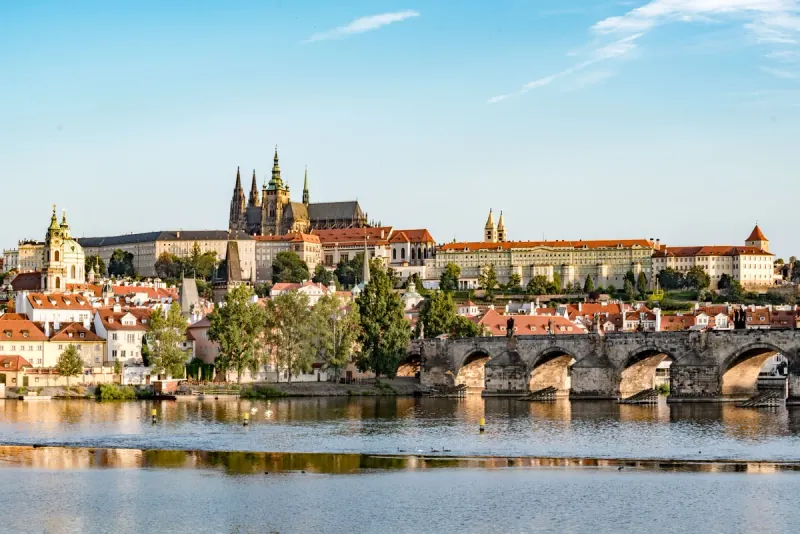
The Czech Republic is a landlocked country in Central Europe. Bohemia in the west is a basin surrounded by low mountains, while Moravia in the east features rolling hills and river valleys. The Vltava River flows through Prague. The country has a temperate continental climate with distinct seasons.
Culture & Tradition
Czech culture has deep roots in literature, music, and art. Prague's stunning architecture spans Gothic, Baroque, Art Nouveau, and Cubist styles. Beer culture is central — Czechs consume more beer per capita than any nation. Traditional foods include svíčková, trdelník, and knedlíky (dumplings). Classical music (Dvořák, Smetana) is a proud tradition.
Economy
The Czech Republic has one of the most developed and prosperous economies in Central Europe. Key sectors include automotive (Škoda), machinery, electronics, glass, and beer brewing. Tourism centered on Prague generates significant revenue. The country is a major industrial exporter within the EU.
Travel Highlights
Explore Prague's stunning Old Town Square and Charles Bridge, visit Prague Castle, discover the medieval town of Český Krumlov (UNESCO), tour the Pilsner Urquell brewery in Pilsen, soak in Karlovy Vary's thermal springs, and explore Kutná Hora's Bone Church. Czech beer culture deserves its own itinerary.
Fun Facts
The Czech Republic has the highest beer consumption per capita in the world.
Prague Castle is the largest ancient castle in the world.
Czechs invented soft contact lenses.
Pilsner beer originated in the Czech city of Pilsen.
Prague is called the 'City of a Hundred Spires.'
The Czech Republic has more castles per square mile than any country in Europe.
Map
Bordering & Nearby Countries
Frequently Asked Questions (FAQs)
More from Europe
Want a surprise? Try our random Europe country generator or pick from the entire world.
Albania
Explore Albania: Europe's last hidden gem. Discover pristine beaches, ancient cities, and dramatic Albanian Alps.
Andorra
Explore Andorra: tiny mountain principality in the Pyrenees. Discover skiing, duty-free shopping, and Romanesque heritage.
Austria
Explore Austria: land of Mozart, Alpine peaks, and Viennese culture. Discover Salzburg, ski resorts, and Habsburg heritage.
Belarus
Explore Belarus: Europe's last primeval forest and medieval castles. Discover Belovezhskaya Pushcha, Mir Castle, and Slavic heritage.