Denmark – Facts, Capital & Geography | Random Country Generator
Capital
Copenhagen
Population
5.9 Million (#112)
Currency
Danish Krone (DKK)
Language
Danish
Area
43,094 km²
National Dish
Smørrebrød
National Flower
Marguerite Daisy
Density
137/km²
Internet TLD
.dk
Brief History
Denmark was the homeland of the Vikings, who raided and traded across Europe from the 8th to 11th centuries, unifying as a kingdom under Harald Bluetooth. It dominated Scandinavia through the Kalmar Union (1397–1523) with Norway and Sweden. Denmark transitioned to a constitutional monarchy in 1849. Occupied by Germany during WWII, it became a founding member of NATO and joined the European Economic Community in 1973.
Key Demographics & Capital
Denmark has a population of approximately 5.9 million, with Danish serving as the official national language. The population is highly homogeneous, though about 10% are immigrants or descendants of immigrants. Around 88% of the population lives in urban areas, concentrated around Copenhagen, Aarhus, and Odense. The country ranks consistently among the highest in social trust and quality of life.
Geography
Denmark is a Scandinavian country comprising the Jutland Peninsula and over 400 islands. The landscape is flat and low-lying with gentle rolling hills, sandy coastlines, and farmland. Denmark includes the autonomous territories of Greenland and the Faroe Islands. The climate is maritime with mild winters and cool summers.
Culture & Tradition
Danish culture emphasizes 'hygge' (cozy contentment) and design. Danish design is world-renowned for furniture (Arne Jacobsen, Hans Wegner), architecture, and fashion. The culinary scene features New Nordic cuisine (Noma restaurant). Vikings have left their mark on history and identity. Social equality and work-life balance are core values.
Economy
Denmark has a highly developed mixed economy with strong welfare state. Key sectors include pharmaceuticals (Novo Nordisk), shipping (Maersk), wind energy (Vestas), agriculture, and design. Denmark is a world leader in renewable energy, especially offshore wind. Copenhagen is a hub for startups and green technology.
Travel Highlights
Explore Copenhagen's Nyhavn harbor and Tivoli Gardens, visit the Louisiana Museum of Modern Art, cycle through the capital's bike-friendly streets, discover Viking history at Roskilde, explore Hans Christian Andersen's Odense, and visit the dramatic Mons Klint chalk cliffs. Denmark offers design-forward living and hygge culture.
Fun Facts
Denmark is consistently ranked the happiest country in the world.
LEGO was invented in Denmark.
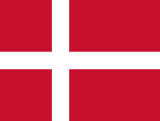
The Danish flag is the oldest state flag still in use.
Copenhagen's Tivoli Gardens inspired Walt Disney.
Denmark has no mountains — the highest point is just 170 meters.
The concept of 'hygge' (cozy contentment) is central to Danish culture.
Map
Bordering & Nearby Countries
Frequently Asked Questions (FAQs)
More from Europe
Want a surprise? Try our random Europe country generator or pick from the entire world.
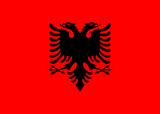
Albania
Explore Albania: Europe's last hidden gem. Discover pristine beaches, ancient cities, and dramatic Albanian Alps.
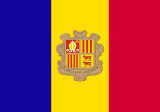
Andorra
Explore Andorra: tiny mountain principality in the Pyrenees. Discover skiing, duty-free shopping, and Romanesque heritage.
Austria
Explore Austria: land of Mozart, Alpine peaks, and Viennese culture. Discover Salzburg, ski resorts, and Habsburg heritage.
Belarus
Explore Belarus: Europe's last primeval forest and medieval castles. Discover Belovezhskaya Pushcha, Mir Castle, and Slavic heritage.