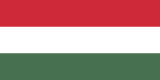
Hungary – Facts, Capital & Geography | Random Country Generator
Capital
Budapest
Population
9.7 Million (#95)
Currency
Hungarian Forint (HUF)
Language
Hungarian
Area
93,028 km²
National Dish
Goulash
National Flower
Tulip
Density
106/km²
Internet TLD
.hu
Brief History
Hungary was established as a Christian kingdom in 1000 CE under Saint Stephen I. It fell to Ottoman conquest in the 16th century, later absorbed into the Habsburg Monarchy, forming the dual Austro-Hungarian Empire in 1867. Hungary lost two-thirds of its territory under the Treaty of Trianon after WWI. Following Soviet occupation after WWII, it rose against communism in the 1956 Hungarian Revolution, transitioning to democracy in 1989.
Key Demographics & Capital
Hungary has a population of approximately 9.6 million, with ethnic Hungarians (Magyars) comprising over 85% of the population. Hungarian, an Uralic language unrelated to most European languages, is the sole official language. The population has been in decline since 1980 due to low birth rates, and about 72% of the population resides in urban areas, primarily in the capital Budapest.
Geography
Hungary is a landlocked country in Central Europe. The landscape is dominated by the Great Hungarian Plain (Puszta) in the east and the Transdanubian Hills in the west. The Danube River divides the country, flowing through Budapest. Lake Balaton is Central Europe's largest lake. The country has a continental climate.
Culture & Tradition
Hungarian culture is unique in Central Europe. The Magyar language is unrelated to neighboring Slavic or Germanic languages. Thermal bath culture is integral — Budapest alone has over 120 thermal springs. Hungarian cuisine features goulash, paprika chicken, and chimney cake. Folk music traditions inspired Bartók and Kodály. Tokaji wine is world-renowned.
Economy
Hungary has a diversified economy with automotive manufacturing (Audi, Mercedes, Suzuki), electronics, pharmaceuticals, and food processing. Budapest is the economic and cultural hub. Tourism centered on Budapest's thermal baths and wine regions is significant. Agriculture includes wine, paprika, and foie gras production.
Travel Highlights
Soak in Budapest's historic thermal baths (Széchenyi, Gellért), admire the Parliament building at night, explore the Buda Castle district, visit Eger's wine cellars, discover Lake Balaton, tour the wine region of Tokaj, and explore the puszta (Great Plain) with its horseman traditions. Budapest offers remarkable value for a world-class European capital.
Fun Facts
Budapest has the largest thermal water cave system in the world.
Hungary invented the Rubik's Cube.
The Hungarian language is unrelated to any neighboring country's language.
Budapest's Parliament building is the third-largest in the world.
Hungary has the oldest metro line in continental Europe.
Hungarians have won more Nobel Prizes per capita than most countries.
Map
Bordering & Nearby Countries
Frequently Asked Questions (FAQs)
More from Europe
Want a surprise? Try our random Europe country generator or pick from the entire world.
Albania
Explore Albania: Europe's last hidden gem. Discover pristine beaches, ancient cities, and dramatic Albanian Alps.
Andorra
Explore Andorra: tiny mountain principality in the Pyrenees. Discover skiing, duty-free shopping, and Romanesque heritage.
Austria
Explore Austria: land of Mozart, Alpine peaks, and Viennese culture. Discover Salzburg, ski resorts, and Habsburg heritage.
Belarus
Explore Belarus: Europe's last primeval forest and medieval castles. Discover Belovezhskaya Pushcha, Mir Castle, and Slavic heritage.