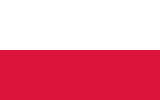
Poland – Facts, Capital & Geography | Random Country Generator
Capital
Warsaw
Population
37.6 Million (#38)
Currency
Polish Złoty (PLN)
Language
Polish
Area
312,679 km²
National Dish
Bigos
National Flower
Red Poppy
Density
124/km²
Internet TLD
.pl
Brief History
Poland established a unified state in 966 CE under Mieszko I, adopting Christianity. The Polish-Lithuanian Commonwealth was formed in 1569, becoming a major European power before being partitioned between Russia, Prussia, and Austria in the late 18th century. Poland regained independence in 1918, but was invaded by Germany and the USSR in 1939. The post-war communist regime was overthrown in 1989 through the Solidarity movement.
Key Demographics & Capital
Poland has a population of approximately 38 million, exhibiting high ethnic homogeneity with over 97% identifying as ethnic Poles. Polish, a West Slavic language, is the sole official national language. The population has been stable in recent years, but has seen increasing diversity due to a large influx of Ukrainian workers since 2014. Around 60% of the population lives in urban areas, primarily Warsaw.
Geography
Poland is in Central Europe with a Baltic Sea coastline. The landscape varies from the sandy Baltic coast and lake districts in the north to the flat central plains and the Tatra Mountains in the south. Major rivers include the Vistula and Oder. Białowieża Forest on the Belarusian border is Europe's last remaining primeval forest.
Culture & Tradition
Polish culture has deep roots in Catholic tradition, music (Chopin), literature, and resilience. Kraków is a cultural treasure with its medieval old town and Wawel Castle. Polish cuisine features pierogi (dumplings), bigos (hunter's stew), and żurek (sour rye soup). The country has a rich tradition of folk art, festivals, and vodka culture.
Economy
Poland has the largest economy in Central Europe and one of the fastest-growing in the EU. Key sectors include automotive, electronics, food processing, and IT. Warsaw is a financial hub. The country has attracted significant foreign investment. Poland's game development industry (CD Projekt/The Witcher) has gained global recognition.
Travel Highlights
Explore Kraków's magnificent Old Town and Wawel Castle, visit the sobering Auschwitz-Birkenau memorial, discover the Wieliczka Salt Mine, hike in the Tatra Mountains, see Warsaw's rebuilt Old Town (UNESCO), explore the colorful port city of Gdańsk, and discover the primeval Białowieża Forest. Poland offers extraordinary history and culture at great value.
Fun Facts
Poland has 17 UNESCO World Heritage Sites.
Kraków's Main Market Square is the largest medieval square in Europe.
The Wieliczka Salt Mine has an entire cathedral carved from salt.
Poland is the birthplace of Copernicus, Chopin, and Marie Curie.
Białowieża Forest is one of Europe's last primeval forests.
Poland has the highest number of bison in Europe.
Map
Bordering & Nearby Countries
Frequently Asked Questions (FAQs)
More from Europe
Want a surprise? Try our random Europe country generator or pick from the entire world.
Albania
Explore Albania: Europe's last hidden gem. Discover pristine beaches, ancient cities, and dramatic Albanian Alps.
Andorra
Explore Andorra: tiny mountain principality in the Pyrenees. Discover skiing, duty-free shopping, and Romanesque heritage.
Austria
Explore Austria: land of Mozart, Alpine peaks, and Viennese culture. Discover Salzburg, ski resorts, and Habsburg heritage.
Belarus
Explore Belarus: Europe's last primeval forest and medieval castles. Discover Belovezhskaya Pushcha, Mir Castle, and Slavic heritage.