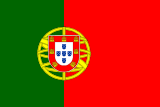
Portugal – Facts, Capital & Geography | Random Country Generator
Capital
Lisbon
Population
10.3 Million (#89)
Currency
Euro (EUR)
Language
Portuguese
Area
92,212 km²
National Dish
Bacalhau
National Flower
Lavender
Density
112/km²
Internet TLD
.pt
Brief History
Portugal emerged as an independent kingdom in 1139 under Afonso Henriques, establishing its borders by 1249. During the 15th and 16th centuries, Portuguese explorers pioneered global maritime trade, building a vast empire stretching from Brazil to Macau. The 1755 Lisbon earthquake devastated the capital, leading to political instability and the end of the monarchy in 1910. The authoritarian Estado Novo regime ruled from 1933 until the peaceful Carnation Revolution of 1974 restored democracy.
Key Demographics & Capital
Portugal has a population of approximately 10.3 million, with a high concentration of residents living in coastal urban areas like Lisbon and Porto. The official language is Portuguese, with Mirandese recognized as a co-official regional language in northeastern areas. The country has historically experienced high emigration, particularly to France, Luxembourg, and Brazil, though it now hosts growing Brazilian and British immigrant communities. The population is characterized by a low birth rate and aging demographics.
Geography
Portugal occupies the western part of the Iberian Peninsula, with a long Atlantic coastline. The landscape varies from the mountainous north (Serra da Estrela) to the rolling plains of the Alentejo and the stunning beaches of the Algarve. The Douro and Tagus Rivers flow through the country. The Azores and Madeira are Portuguese islands in the Atlantic.
Culture & Tradition
Portuguese culture is shaped by its maritime history and Age of Discovery. Fado music, expressing saudade (longing), is the soul of Portugal. Azulejo tiles adorn buildings everywhere. Portuguese cuisine features fresh seafood, pastéis de nata (custard tarts), and excellent wines (Port wine from the Douro Valley). Literature includes Fernando Pessoa and José Saramago (Nobel laureate).
Economy
Portugal has a service-based economy with growing technology and startup sectors. Lisbon has become a European tech hub. Tourism is a major contributor, along with textiles, cork (world's largest producer), wine, and automotive parts. The country has invested heavily in renewable energy, particularly solar and wind.
Travel Highlights
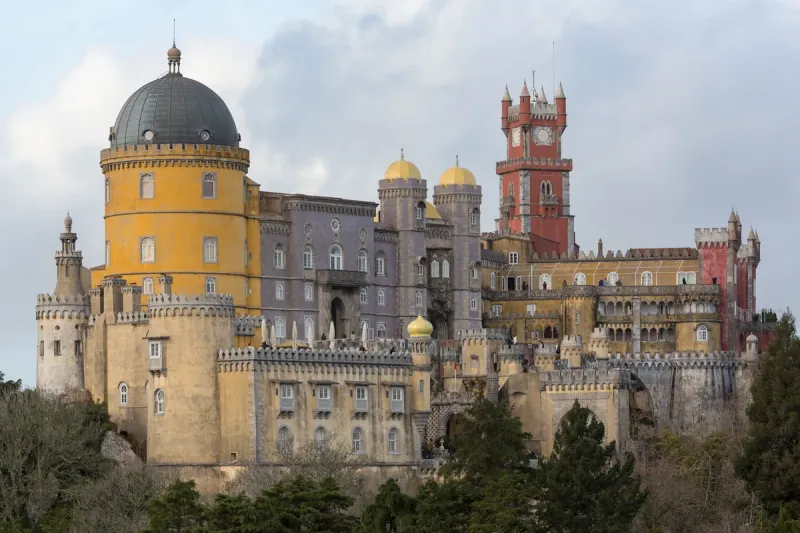
Explore Lisbon's historic neighborhoods (Alfama, Belém), discover Porto's wine cellars and Ribeira district, relax on the Algarve's golden beaches, visit the fairytale palaces of Sintra, and explore the Douro Valley vineyards. The Azores offer volcanic landscapes and whale watching. Évora's Roman temple and Coimbra's university are cultural highlights.
Fun Facts
Portugal is the oldest country in Europe with the same defined borders since 1139.
Portuguese is spoken by over 250 million people worldwide.
Portugal decriminalized all drugs in 2001.
The Vasco da Gama Bridge in Lisbon is the longest in Europe.
Portugal introduced tempura to Japan.
Fado music is a UNESCO Intangible Cultural Heritage.
Map
Bordering & Nearby Countries
Frequently Asked Questions (FAQs)
More from Europe
Want a surprise? Try our random Europe country generator or pick from the entire world.
Albania
Explore Albania: Europe's last hidden gem. Discover pristine beaches, ancient cities, and dramatic Albanian Alps.
Andorra
Explore Andorra: tiny mountain principality in the Pyrenees. Discover skiing, duty-free shopping, and Romanesque heritage.
Austria
Explore Austria: land of Mozart, Alpine peaks, and Viennese culture. Discover Salzburg, ski resorts, and Habsburg heritage.
Belarus
Explore Belarus: Europe's last primeval forest and medieval castles. Discover Belovezhskaya Pushcha, Mir Castle, and Slavic heritage.