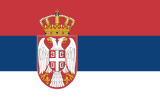
Serbia – Facts, Capital & Geography | Random Country Generator
Capital
Belgrade
Population
6.7 Million (#107)
Currency
Serbian Dinar (RSD)
Language
Serbian
Area
77,474 km²
National Dish
Ćevapi
National Flower
Plum Blossom
Density
86/km²
Internet TLD
.rs
Brief History
Serbia established a powerful medieval kingdom in the 12th century under the Nemanjić dynasty, later conquered by the Ottoman Empire in 1459 following the historic Battle of Kosovo. Serbia gained autonomy in 1815 and formal independence in 1878. Following WWI, it became the core of the Kingdom of Serbs, Croats, and Slovenes (later Yugoslavia), restoring its independent republic status in 2006 after Montenegro's secession.
Key Demographics & Capital
Serbia has a population of approximately 6.6 million, which has experienced decline due to low birth rates and significant emigration. Ethnic Serbs comprise over 83% of the population, followed by Hungarian (3.5%) and Bosniak minorities. Serbian is the sole official national language, written in both Cyrillic and Latin alphabets. Around 56% of the population lives in urban areas, primarily Belgrade.
Geography
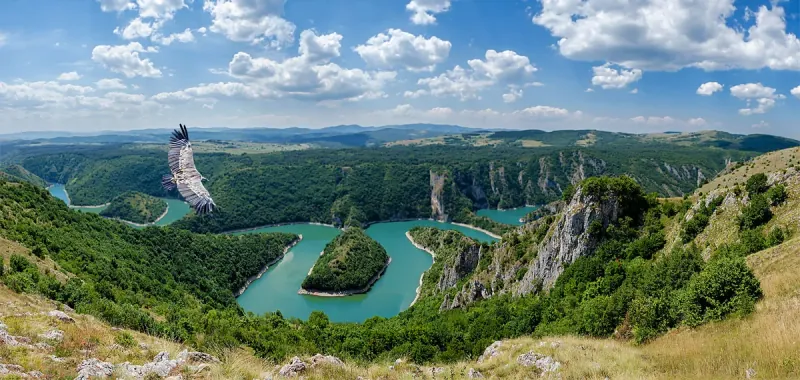
Serbia is a landlocked country in Southeastern Europe. The landscape varies from the fertile Pannonian Plain in the north (Vojvodina) to mountainous terrain in the south and west. The Danube and Sava rivers converge in Belgrade. Đerdap Gorge on the Danube is one of Europe's most impressive river gorges.
Culture & Tradition
Serbian culture has deep Orthodox Christian roots. Monasteries in Kosovo and central Serbia are masterpieces of medieval art. Belgrade has a vibrant nightlife scene with floating clubs (splavovi) on rivers. Serbian cuisine features ćevapi, pljeskavica, and kajmak (cream cheese). Music ranges from traditional folk to the renowned EXIT festival.
Economy
Serbia's economy is growing with manufacturing, agriculture, IT, and services as key sectors. The automotive sector (Fiat Chrysler plant) is important. Serbia is the world's largest raspberry exporter. Belgrade's IT scene is developing rapidly. The country is an EU candidate with ongoing reforms.
Travel Highlights
Experience Belgrade's legendary nightlife on river splavovi, explore the Kalemegdan fortress, visit the medieval monasteries of Studenica and Žiča, cruise through the Đerdap Gorge, attend the EXIT music festival in Novi Sad, and discover the wooden churches of Vojvodina. Serbia offers authentic Balkan hospitality.
Fun Facts
Belgrade is one of the oldest cities in Europe.
Serbia has more than 1,500 natural springs.
Nikola Tesla was of Serbian descent.
Belgrade's fortress has been destroyed and rebuilt 40 times.
Serbia is the world's largest exporter of raspberries.
EXIT Festival is one of Europe's best music festivals.
Map
Bordering & Nearby Countries
Frequently Asked Questions (FAQs)
More from Europe
Want a surprise? Try our random Europe country generator or pick from the entire world.
Albania
Explore Albania: Europe's last hidden gem. Discover pristine beaches, ancient cities, and dramatic Albanian Alps.
Andorra
Explore Andorra: tiny mountain principality in the Pyrenees. Discover skiing, duty-free shopping, and Romanesque heritage.
Austria
Explore Austria: land of Mozart, Alpine peaks, and Viennese culture. Discover Salzburg, ski resorts, and Habsburg heritage.
Belarus
Explore Belarus: Europe's last primeval forest and medieval castles. Discover Belovezhskaya Pushcha, Mir Castle, and Slavic heritage.