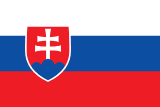
Slovakia – Facts, Capital & Geography | Random Country Generator
Capital
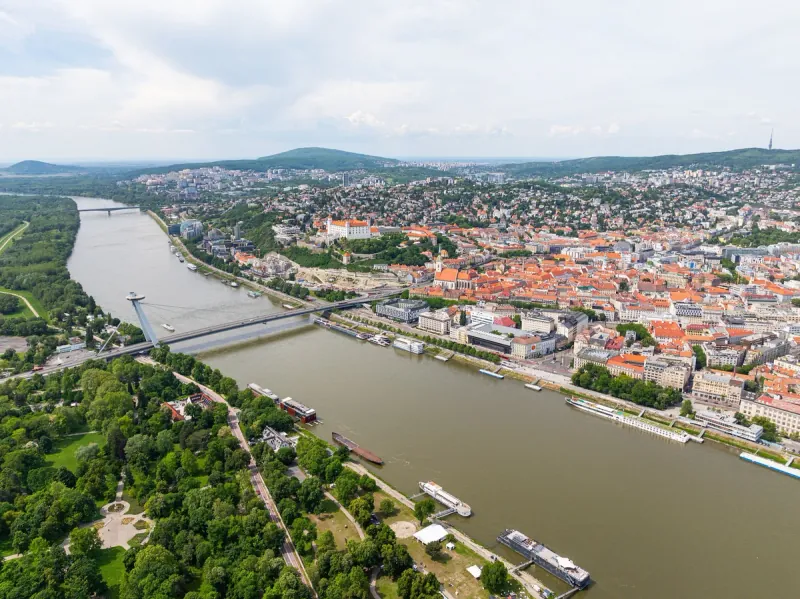
Bratislava
Population
5.4 Million (#118)
Currency
Euro (EUR)
Language
Slovak
Area
49,035 km²
National Dish
Bryndzové Halušky
National Flower
Rose
Density
113/km²
Internet TLD
.sk
Brief History
Slovakia was part of the Great Moravian Empire in the 9th century, later incorporated into the Kingdom of Hungary for nearly a millennium. Following the collapse of Austria-Hungary in 1918, it unified with the Czech lands to form Czechoslovakia. Undergoing decades of Soviet domination, the peaceful Velvet Revolution of 1989 oust communism, leading to the amicable Velvet Divorce on January 1, 1993, establishing independent Slovakia.
Key Demographics & Capital
Slovakia has a population of approximately 5.4 million, with ethnic Slovaks comprising over 83.8% of the population, followed by a significant Hungarian minority (about 7.7%). Slovak, a West Slavic language, is the sole official national language. The population is moderately urbanized, with over 53% residing in cities, and is characterized by a high degree of ethnic homogeneity in rural areas.
Geography
Slovakia is a landlocked Central European country dominated by the Carpathian Mountains. The Tatra Mountains in the north have peaks approaching 2,700 meters — the highest in the Carpathians. The south has fertile lowlands along the Danube. The country is rich in mineral springs and caves. Forests cover about 40% of the territory.
Culture & Tradition
Slovak culture blends Central European and Slavic traditions. Folk culture remains strong with traditional music, dance, and costumes. Hundreds of castles and medieval towns dot the landscape. Slovak cuisine features bryndzové halušky (sheep cheese dumplings), kapustnica (cabbage soup), and lokše. Christmas traditions are deeply cherished.
Economy
Slovakia is a major automotive manufacturer per capita, hosting factories for Volkswagen, Kia, Peugeot, and Jaguar Land Rover. The economy also relies on electronics, metal products, and IT services. Bratislava has high living standards. Tourism centered on castles, mountains, and spas is growing.
Travel Highlights
Hike in the High Tatra Mountains, explore the massive Spiš Castle (UNESCO), discover the medieval gems of Banská Štiavnica and Levoča, explore Bratislava's compact Old Town, visit the cave systems of Slovak Karst (UNESCO), and relax in traditional spa towns. Slovakia offers Central European charm without the crowds.
Fun Facts
Slovakia has more castles and châteaux per capita than any other country.
The Tatra Mountains are the smallest high mountains in the world.
Bratislava is the only capital bordering two other countries (Austria, Hungary).
Slovakia has over 6,000 caves.
Andy Warhol's parents were from Slovakia.
Spiš Castle is one of the largest castle complexes in Europe.
Map
Bordering & Nearby Countries
Frequently Asked Questions (FAQs)
More from Europe
Want a surprise? Try our random Europe country generator or pick from the entire world.
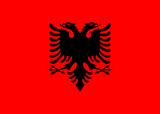
Albania
Explore Albania: Europe's last hidden gem. Discover pristine beaches, ancient cities, and dramatic Albanian Alps.
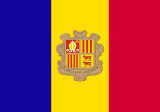
Andorra
Explore Andorra: tiny mountain principality in the Pyrenees. Discover skiing, duty-free shopping, and Romanesque heritage.
Austria
Explore Austria: land of Mozart, Alpine peaks, and Viennese culture. Discover Salzburg, ski resorts, and Habsburg heritage.
Belarus
Explore Belarus: Europe's last primeval forest and medieval castles. Discover Belovezhskaya Pushcha, Mir Castle, and Slavic heritage.