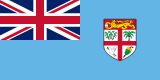
Fiji – Facts, Capital & Geography | Random Country Generator
Capital
Suva
Population
900K (#158)
Currency
Fijian Dollar (FJD)
Language
English, Fijian, Hindi
Area
18,272 km²
National Dish
Kokoda
National Flower
Tagimoucia
Density
49/km²
Internet TLD
.fj
Brief History
Fiji was settled by Austronesian seafaring groups before European explorer Abel Tasman sighted the islands in 1643. Seeking protection from local wars, King Seru Epenisa Cakobau formally ceded the islands to Great Britain in 1874, establishing Fiji as a crown colony. The British imported thousands of indentured Indian laborers to work on sugar plantations, shaping the nation's demographics. Fiji achieved independence on October 10, 1970, under Ratu Kamisese Mara.
Key Demographics & Capital
Fiji has a population of approximately 930,000, composed primarily of two distinct ethnic groups: indigenous Fijians (Taukei, about 57% of the population) and Indo-Fijians (descendants of Indian laborers, about 37%). English, iTaukei (Fijian), and Fiji Hindi are the official languages. The population is concentrated along the coastal areas of the two main islands, Viti Levu and Vanua Levu.
Geography
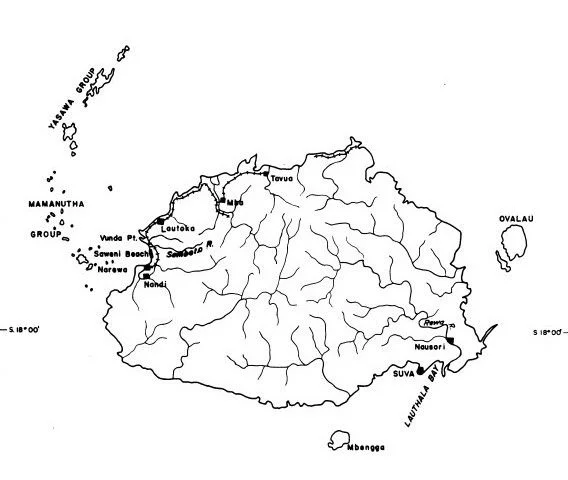
Fiji is an archipelago of over 330 islands in the South Pacific. The two largest islands, Viti Levu and Vanua Levu, account for most of the land area. The islands are volcanic with tropical rainforests, coral reefs, and white sand beaches. The Great Sea Reef is the third-longest barrier reef in the world.
Culture & Tradition
Fijian culture blends indigenous Melanesian traditions with Indian influences (Indo-Fijians make up about 37% of the population). Kava (yaqona) drinking ceremonies are important social rituals. Traditional meke dancing tells stories through movement. Fijian hospitality is legendary — 'Bula!' is the universal greeting. Village protocols and customs are respected.
Economy
Fiji's economy relies on tourism, sugar production, gold mining, fishing, and remittances. Tourism is the largest foreign exchange earner. Fiji Water is a well-known export brand. The garment industry and IT services are developing. The military has significant political influence.
Travel Highlights
Stay in overwater bures on the Mamanuca or Yasawa Islands, snorkel the Rainbow Reef, experience a traditional kava ceremony, explore the Garden of the Sleeping Giant, surf Cloudbreak, visit the Sigatoka Sand Dunes, and discover village life. Fiji offers the quintessential South Pacific island experience.
Fun Facts
Fiji has over 330 islands, about 110 are inhabited.
Fiji was the first country to welcome the new millennium.
Kava drinking is an important ceremonial tradition.
The Fiji rugby sevens team won Olympic gold.
Fiji water comes from an aquifer on the island of Viti Levu.
Firewalking originated in the Fijian island of Beqa.
Map
Bordering & Nearby Countries
Frequently Asked Questions (FAQs)
More from Oceania
Want a surprise? Try our random Oceania country generator or pick from the entire world.

Australia
Explore Australia: from the Great Barrier Reef to the Outback. Discover unique wildlife, stunning landscapes, and vibrant cities.
Kiribati
Explore Kiribati: remote Pacific atolls spanning the equator. Discover WWII history, traditional culture, and pristine ocean environments.
Marshall Islands
Explore the Marshall Islands: remote Pacific atolls and nuclear history. Discover world-class diving, stick chart navigation, and island culture.

Micronesia
Explore Micronesia: Nan Madol's mystery and world-class diving. Discover WWII wrecks, stone money of Yap, and Pacific island traditions.