
United Kingdom – Facts, Capital & Geography | Random Country Generator
Capital
London
Population
67.3 Million (#22)
Currency
British Pound (GBP)
Language
English
Area
243,610 km²
National Dish
Chicken Tikka Masala
National Flower
Tudor Rose
Density
281/km²
Internet TLD
.uk
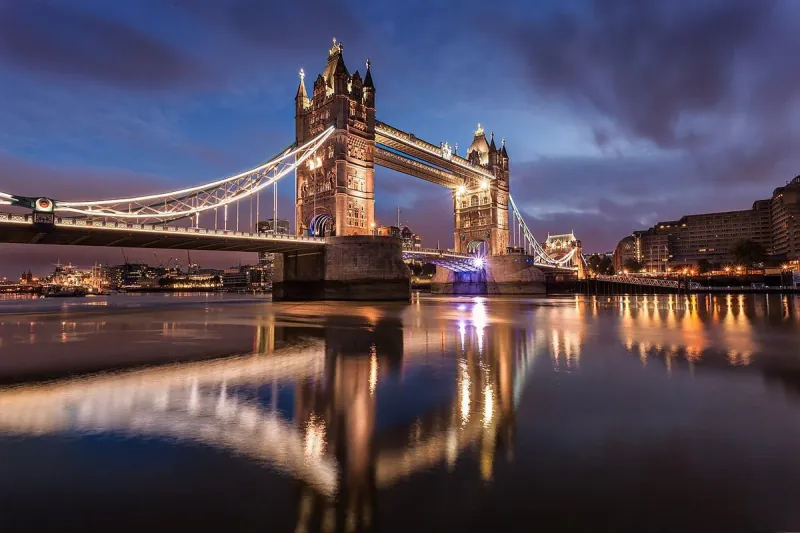
Brief History
The United Kingdom was formed through a series of Acts of Union joining England, Wales, Scotland, and Ireland, with the modern name adopted in 1927 following the partition of Ireland. The British Empire grew in the 18th and 19th centuries to become the largest empire in history, driving the Industrial Revolution and global trade. The UK played a leading role in defeating the Axis powers in WWII, subsequently dismantling its colonial empire and building a welfare state. In 2016, the UK voted to leave the European Union, a process completed in 2020.
Key Demographics & Capital
The United Kingdom has a population of approximately 67.3 million, with ethnic white British citizens making up about 82% of the population, followed by Asian (7%) and Black (4%) communities. English is the de facto official language, while Welsh, Gaelic, and Irish are recognized regional languages. The population is highly urbanized, with over 84% living in cities, and is concentrated in the London metropolitan area. The UK has seen significant immigration in recent decades, particularly from South Asia, the Caribbean, and Eastern Europe.
Geography
The United Kingdom comprises England, Scotland, Wales, and Northern Ireland on two main islands. The landscape varies from the Scottish Highlands and Lake District to the rolling English countryside and Welsh mountains. The Thames flows through London. The UK's coastline features dramatic cliffs like the White Cliffs of Dover.
Culture & Tradition
The UK has profoundly influenced world culture through literature (Shakespeare, Austen, Rowling), music (The Beatles, Adele), theater (West End), and sport (football, cricket, rugby). The monarchy is a living tradition. British humor, pub culture, and afternoon tea are quintessential. The UK is home to world-class museums, most of which are free.
Economy
The UK has the sixth-largest economy globally. London is one of the world's leading financial centers. Key sectors include financial services, technology, creative industries, pharmaceuticals, and aerospace. The UK is also a major hub for higher education with universities like Oxford and Cambridge attracting students worldwide.
Travel Highlights
London offers iconic landmarks — Big Ben, Tower of London, Buckingham Palace, and the British Museum. Beyond the capital, visit Edinburgh's castle and festival, the Cotswolds' charming villages, Stonehenge, Bath's Roman ruins, and the Scottish Highlands for dramatic scenery. The Lake District inspired poets and hikers alike.
Fun Facts
The UK has no written constitution.
London's Underground is the oldest metro system in the world.
The British drink about 165 million cups of tea daily.
Stonehenge is over 5,000 years old.
The UK has produced more Nobel laureates per capita than any other nation.
Big Ben is actually the name of the bell, not the tower.
Map
Bordering & Nearby Countries
Frequently Asked Questions (FAQs)
More from Europe
Want a surprise? Try our random Europe country generator or pick from the entire world.
Albania
Explore Albania: Europe's last hidden gem. Discover pristine beaches, ancient cities, and dramatic Albanian Alps.
Andorra
Explore Andorra: tiny mountain principality in the Pyrenees. Discover skiing, duty-free shopping, and Romanesque heritage.
Austria
Explore Austria: land of Mozart, Alpine peaks, and Viennese culture. Discover Salzburg, ski resorts, and Habsburg heritage.
Belarus
Explore Belarus: Europe's last primeval forest and medieval castles. Discover Belovezhskaya Pushcha, Mir Castle, and Slavic heritage.