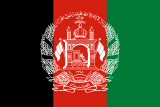
Afghanistan – Facts, Capital & Geography | Random Country Generator
Capital
Kabul
Population
41.1 Million (#36)
Currency
Afghan Afghani (AFN)
Language
Dari, Pashto
Area
652,230 km²
National Dish
Kabuli Pulao
National Flower
Tulip
Density
60/km²
Internet TLD
.af
Brief History
Afghanistan's history is shaped by its position along the ancient Silk Road, serving as a crossroads for the Persian, Greek (Alexander the Great), Maurya, and Mongol empires. The modern state was founded in 1747 by Ahmad Shah Durrani, establishing the Durrani Empire. Throughout the 19th and early 20th centuries, it maintained its independence from British and Russian imperial expansion in the Great Game, formally securing full sovereignty in 1919. Decades of conflict began with the 1978 communist coup and subsequent Soviet invasion, leading to a turbulent modern era.
Key Demographics & Capital
Afghanistan has an estimated population of 42 million, consisting of diverse ethnic groups such as Pashtuns, Tajiks, Hazaras, Uzbeks, and Aimaks. Pashto and Dari (a dialect of Persian) are the official languages and serve as the main lingua francas across ethnic boundaries. The population is heavily rural, with only about 26% living in urban areas, primarily concentrated around Kabul. High rates of emigration due to decades of conflict have created large refugee communities in neighboring Pakistan and Iran.
Geography
Afghanistan is a landlocked country in Central and South Asia. The Hindu Kush mountain range dominates the landscape, with peaks over 7,000 meters. The terrain varies from high mountain passes to arid deserts in the south. The Amu Darya river forms part of the northern border. Fertile valleys like the Panjshir and Bamiyan offer agricultural land.
Culture & Tradition
Afghan culture is deeply rooted in hospitality, honor, and Islamic traditions. Poetry, particularly the works of Rumi and Hafiz, is revered. Afghan carpets and rugs are world-famous for their intricate designs. Music, calligraphy, and miniature painting are traditional arts. Tea (chai) ceremonies are an essential part of social interaction.
Economy
Afghanistan's economy is largely agricultural, with significant mineral wealth (lithium, copper, iron ore) largely untapped. Agriculture (wheat, fruits, nuts) employs most of the population. Afghanistan is known for dried fruits and nuts exports. The economy faces significant challenges from conflict and instability.
Travel Highlights
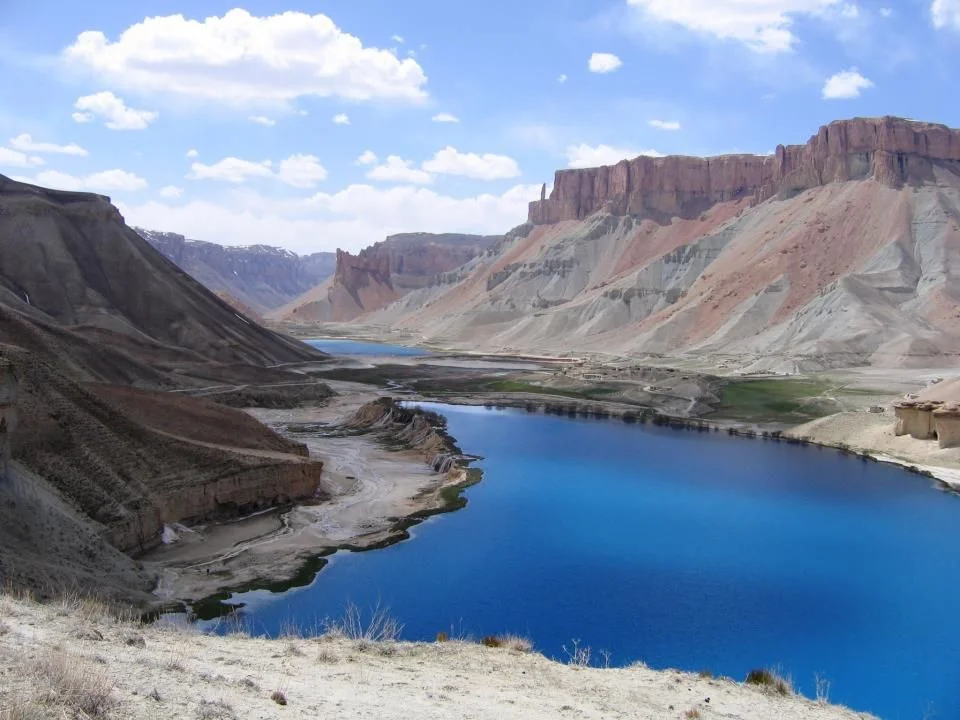
The Bamiyan Valley (despite the destroyed Buddhas) offers stunning landscapes and the Band-e-Amir lakes, the blue lakes of Afghanistan. The ancient minarets and mosques of Herat showcase Timurid architecture. The Panjshir Valley offers dramatic mountain scenery. Travel requires extensive planning due to security concerns.
Fun Facts
Afghanistan is called the 'Graveyard of Empires.'
The Bamiyan Valley once held giant Buddha statues.
Afghanistan is the world's largest producer of lapis lazuli.
Buzkashi, a game played on horseback with a goat carcass, is the national sport.
The Hindu Kush mountain range runs through the country.
Afghanistan's national dish is qabili palaw (lamb rice).
Map
Bordering & Nearby Countries
Frequently Asked Questions (FAQs)
More from Asia
Want a surprise? Try our random Asia country generator or pick from the entire world.
Armenia
Explore Armenia: first Christian nation. Discover ancient monasteries, Lake Sevan, and Caucasus mountain heritage.
Azerbaijan
Explore Azerbaijan: Land of Fire. Discover Baku's Flame Towers, ancient walled city, mud volcanoes, and Caspian Sea heritage.

Bahrain
Explore Bahrain: ancient Dilmun heritage and modern Gulf culture. Discover pearl diving history, Formula One, and island archipelago charm.
Bangladesh
Discover Bangladesh: the Sundarbans, world's longest beach, and rich Bengali culture. Explore river delta landscapes and ancient heritage.