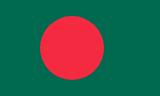
Bangladesh – Facts, Capital & Geography | Random Country Generator
Capital
Dhaka
Population
171.0 Million (#8)
Currency
Bangladeshi Taka (BDT)
Language
Bengali
Area
147,570 km²
National Dish
Hilsa Curry
National Flower
Water Lily
Density
1,119/km²
Internet TLD
.bd
Brief History
Bangladesh was part of the historical Bengal region, ruled by Maurya, Gupta, and Pala empires before the arrival of Islam and the establishment of the Mughal Empire. It came under British rule in 1757 and was partitioned as East Pakistan in 1947. Following a devastating liberation war in 1971 against West Pakistan, Bangladesh achieved independence with the help of Indian intervention, establishing a parliamentary republic under Sheikh Mujibur Rahman.
Key Demographics & Capital
Bangladesh has a population of approximately 170 million, making it one of the most densely populated countries in the world with over 1,150 people per square kilometer. Ethnic Bengalis comprise over 98% of the population. Bengali (Bangla) is the official language, while English is widely used in government and business. Urbanization is rising rapidly, with over 39% of the population living in cities, particularly Dhaka and Chittagong.
Geography
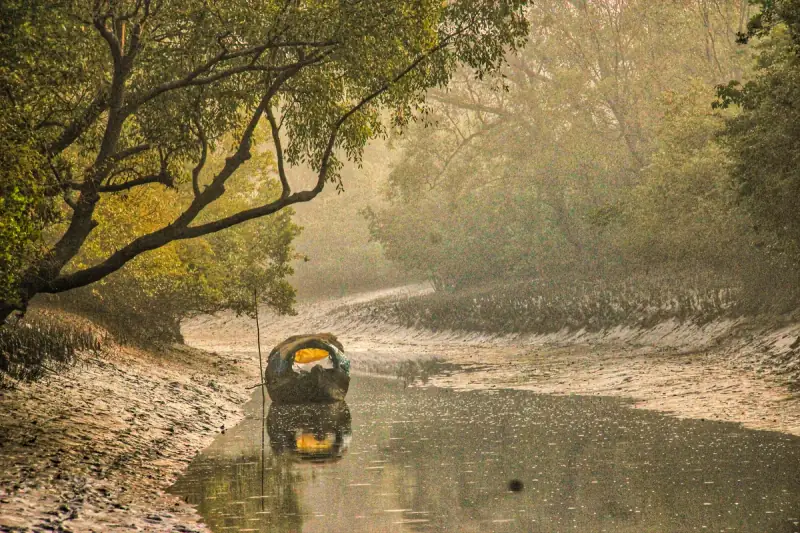
Bangladesh is located in South Asia, mostly on the Ganges-Brahmaputra delta — the world's largest river delta. The country is predominantly flat and riverine, with the Sundarbans mangrove forest in the southwest. The Chittagong Hill Tracts in the southeast offer hilly terrain. Bangladesh is extremely vulnerable to flooding and cyclones.
Culture & Tradition
Bengali culture is rich in literature, music, and art. Rabindranath Tagore, Nobel laureate, wrote both the Bangladeshi and Indian national anthems. Bengali cuisine features fish, rice, and distinctive spices. Traditional crafts include jamdani weaving and nakshi kantha embroidery. Pohela Boishakh (Bengali New Year) is celebrated with vibrant festivities.
Economy
Bangladesh has one of the fastest-growing economies in the world. The garment industry is the backbone, making it the world's second-largest clothing exporter. Agriculture (rice, jute), remittances, and services are significant. The country has made remarkable progress in poverty reduction and development indicators.
Travel Highlights
Explore the Sundarbans for Bengal tigers and mangrove ecosystems, walk the world's longest beach at Cox's Bazar, visit the ancient Buddhist monastery ruins of Paharpur (UNESCO), cruise the rivers and waterways, discover the mosques of Bagerhat (UNESCO), and experience Dhaka's vibrant Old City.
Fun Facts
Bangladesh is the world's most densely populated large country.
The Sundarbans is the world's largest mangrove forest.
Bangladesh is the world's second-largest garment exporter.
The Bengal tiger is the national animal.
Cox's Bazar has the world's longest natural sea beach (120 km).
Rickshaws are a primary form of transport in Dhaka.
Map
Bordering & Nearby Countries
Frequently Asked Questions (FAQs)
More from Asia
Want a surprise? Try our random Asia country generator or pick from the entire world.
Afghanistan
Discover Afghanistan: Hindu Kush mountains and ancient Silk Road heritage. Explore Bamiyan Valley, Herat's architecture, and Afghan culture.
Armenia
Explore Armenia: first Christian nation. Discover ancient monasteries, Lake Sevan, and Caucasus mountain heritage.

Azerbaijan
Explore Azerbaijan: Land of Fire. Discover Baku's Flame Towers, ancient walled city, mud volcanoes, and Caspian Sea heritage.

Bahrain
Explore Bahrain: ancient Dilmun heritage and modern Gulf culture. Discover pearl diving history, Formula One, and island archipelago charm.