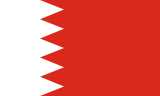
Bahrain – Facts, Capital & Geography | Random Country Generator
Capital
Manama
Population
1.5 Million (#149)
Currency
Bahraini Dinar (BHD)
Language
Arabic
Area
760 km²
National Dish
Machboos
National Flower
Arabian Jasmine
Density
2,239/km²
Internet TLD
.bh
Brief History
Bahrain was the seat of the ancient Dilmun civilization, a major trading hub linking Mesopotamia and the Indus Valley. It was ruled by various empires before the Al Khalifa family established control in 1783, subsequently signing treaties making Bahrain a British protectorate in 1861. Bahrain declared independence on August 15, 1971, under Sheikh Isa bin Salman Al Khalifa, transitioning to a constitutional monarchy in 2002.
Key Demographics & Capital
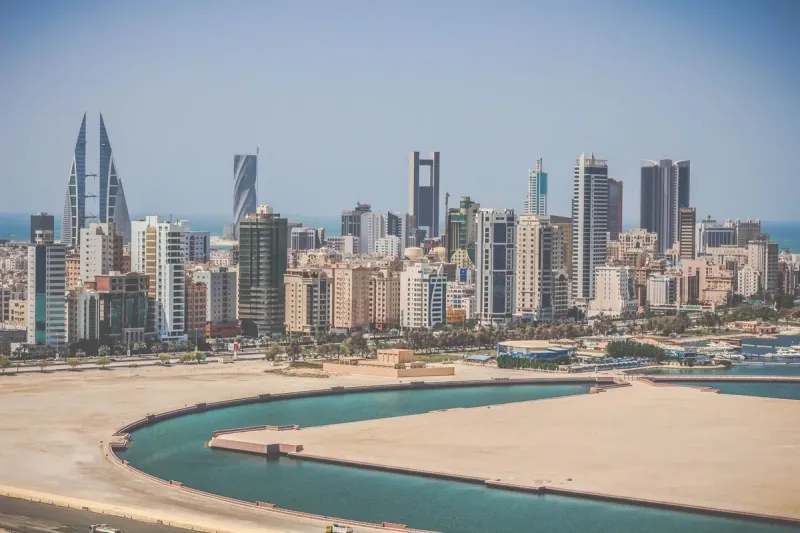
Bahrain has a population of approximately 1.5 million, with foreign nationals (primarily migrant workers from South and Southeast Asia) comprising over 52% of the total population. Arabic is the official language, while English is widely spoken in commercial and administrative sectors. The population is highly urbanized (nearly 90%), concentrated in the capital Manama and the adjacent city of Muharraq.
Geography
Bahrain is a small archipelago in the Persian Gulf, connected to Saudi Arabia by a causeway. The main island is mostly flat and arid. The country consists of 33 islands, with Bahrain Island being the largest. Despite its desert environment, artesian springs historically supported agriculture. The coastline has been extensively reclaimed.
Culture & Tradition
Bahraini culture blends ancient Dilmun heritage with Arab, Persian, and Indian influences. Pearl diving heritage is celebrated. Traditional music features the fidjeri (sea music). The country has a vibrant arts scene with galleries and cultural festivals. Bahraini cuisine includes machboos (spiced rice), muhammar, and halwa.
Economy
Bahrain was the first Gulf state to discover oil, but has diversified into banking, finance, and tourism. It is a major financial hub in the Middle East. Aluminum production (Alba) is significant. The country hosts the Bahrain Grand Prix, boosting tourism. Bahrain is positioning itself as a fintech center.
Travel Highlights
Visit the Bahrain Fort (UNESCO), see the mysterious Tree of Life, explore the National Museum for Dilmun artifacts, attend the Bahrain Grand Prix, discover the historic Muharraq pearl diving trail, and experience the vibrant Manama souks. The Bahrain National Theatre and modern architecture add to the appeal.
Fun Facts
Bahrain is an archipelago of 33 islands.
The Tree of Life has survived for over 400 years in the desert with no visible water source.
Bahrain was home to the ancient Dilmun civilization.
Bahrain hosts a Formula One Grand Prix.
Pearl diving was the main industry before oil discovery.
Bahrain was the first Gulf state to discover oil.
Map
Bordering & Nearby Countries
Frequently Asked Questions (FAQs)
More from Asia
Want a surprise? Try our random Asia country generator or pick from the entire world.
Afghanistan
Discover Afghanistan: Hindu Kush mountains and ancient Silk Road heritage. Explore Bamiyan Valley, Herat's architecture, and Afghan culture.
Armenia
Explore Armenia: first Christian nation. Discover ancient monasteries, Lake Sevan, and Caucasus mountain heritage.
Azerbaijan
Explore Azerbaijan: Land of Fire. Discover Baku's Flame Towers, ancient walled city, mud volcanoes, and Caspian Sea heritage.
Bangladesh
Discover Bangladesh: the Sundarbans, world's longest beach, and rich Bengali culture. Explore river delta landscapes and ancient heritage.