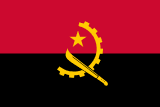
Angola – Facts, Capital & Geography | Random Country Generator
Capital
Luanda
Population
34.5 Million (#43)
Currency
Angolan Kwanza (AOA)
Language
Portuguese
Area
1,246,700 km²
National Dish
Muamba de Galinha
National Flower
Welwitschia
Density
26/km²
Internet TLD
.ao
Brief History
Angola was home to the ancient Kingdom of Kongo before Portuguese explorer Diogo Cão arrived in 1482, initiating centuries of Portuguese colonial rule and active slave trade. The struggle for independence culminated in 1975, immediately followed by a devastating 27-year civil war between rival nationalist factions (MPLA and UNITA). The conflict ended in 2002, paving the way for postwar reconstruction and the exploitation of Angola's vast oil and diamond resources.
Key Demographics & Capital
Angola has a population of approximately 36 million, with a very young demographic profile where over 48% of the population is under the age of 15. The main ethnic groups are Ovimbundu, Ambundu, and Bakongo. Portuguese is the official language, widely spoken alongside indigenous Bantu languages such as Umbundu, Kimbundu, and Kikongo. Urbanization is rapid, with over 68% of the population living in metropolitan areas, particularly the capital Luanda.
Geography
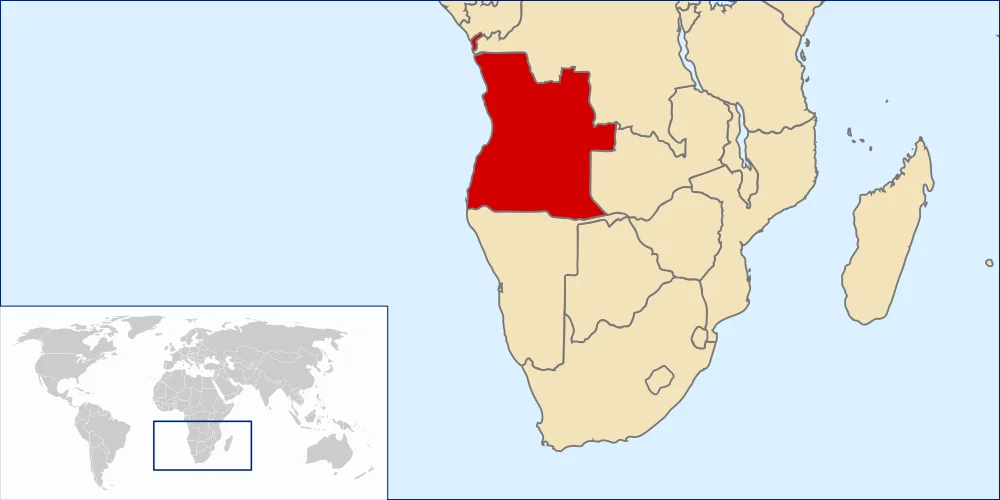
Angola is located on the west coast of Southern Africa. The country features a narrow coastal plain, rising to a vast interior plateau. The Kwanza River is the longest river entirely within Angola. The country has tropical forests in the north, savannas in the center, and semi-arid land in the south. The exclave of Cabinda lies north of the Congo River.
Culture & Tradition
Angolan culture reflects Bantu traditions blended with Portuguese colonial influence. Music genres like semba and kizomba originated here. Traditional dance and storytelling remain important cultural expressions. Angolan cuisine features ingredients like cassava, palm oil, and seafood. The country has a vibrant contemporary art scene, especially in Luanda.
Economy
Angola is one of Africa's largest oil producers and a member of OPEC. Diamonds are another major export. The economy has been diversifying into agriculture, fisheries, and construction. Luanda is one of the most expensive cities in the world for expatriates. The government is investing in infrastructure development and tourism.
Travel Highlights
Explore the dramatic Kalandula Falls, relax on the beaches of Ilha de Luanda, visit the historic fortress of São Miguel in Luanda, discover the Kissama National Park for wildlife viewing, and experience the unique rock formations of Pungo Andongo. The Namib Desert extends into southern Angola.
Fun Facts
Angola is the second-largest oil producer in sub-Saharan Africa.
The country has one of the youngest populations in the world.
Kalandula Falls is one of the largest waterfalls in Africa.
Angola has a coastline stretching over 1,600 km.
The giant sable antelope is Angola's national symbol.
Portuguese is the official language due to colonial history.
Map
Bordering & Nearby Countries
Frequently Asked Questions (FAQs)
More from Africa
Want a surprise? Try our random Africa country generator or pick from the entire world.
Algeria
Discover Algeria: Africa's largest country. From Saharan landscapes to Mediterranean coasts, explore ancient ruins and Berber culture.
Benin
Discover Benin: birthplace of Voodoo. Explore Dahomey palaces, floating villages, and rich West African traditions.
Botswana
Explore Botswana: home of the Okavango Delta and incredible safaris. Discover elephants, Kalahari landscapes, and African wilderness.
Burkina Faso
Discover Burkina Faso: Land of Honest People. Explore Africa's film capital, mask traditions, and Sahelian landscapes.