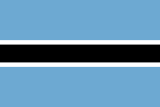
Botswana – Facts, Capital & Geography | Random Country Generator
Capital
Gaborone
Population
2.6 Million (#138)
Currency
Botswana Pula (BWP)
Language
English, Tswana
Area
581,730 km²
National Dish
Seswaa
National Flower
Mokolwane Palm
Density
4/km²
Internet TLD
.bw
Brief History
Botswana was inhabited by the San people for millennia before Bantu-speaking tribal groups settled in the region. Facing threats from Boer trekkers and Ndebele warriors, three Tswana chiefs traveled to London in 1885 to secure British protection, establishing the Bechuanaland Protectorate. Botswana achieved independence on September 30, 1966, under Seretse Khama, and became one of Africa's most stable democracies, fueled by major diamond discoveries.
Key Demographics & Capital
Botswana has a population of approximately 2.6 million, with ethnic Tswana (Setswana) comprising over 79% of the population, followed by minority groups like the Kalanga and San. English is the official language, while Setswana is the national language spoken by the vast majority. The population is highly concentrated in the eastern corridor, particularly in the capital Gaborone, leaving the Kalahari Desert sparsely populated.
Geography
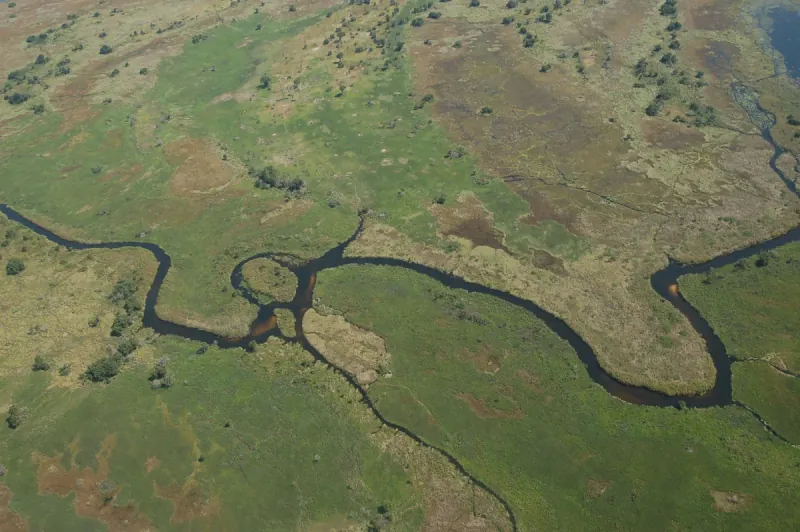
Botswana is a landlocked country in Southern Africa, dominated by the Kalahari Desert. The Okavango Delta in the northwest is the world's largest inland delta, creating a lush oasis in the desert. The Makgadikgadi Pans are vast salt flats. The Chobe River in the north supports one of Africa's largest elephant populations.
Culture & Tradition
Botswana's culture is rooted in the traditions of the Tswana people. The San (Bushmen) are among the oldest inhabitants and maintain traditional knowledge of the Kalahari. Music, dance, and storytelling are central to cultural life. Botswana is known for its commitment to conservation and sustainable tourism.
Economy
Botswana transformed from one of the poorest countries to an upper-middle-income nation through diamond mining. De Beers operates major mines here. Tourism, especially safari tourism, is a growing sector. The government has invested diamond revenues in education and infrastructure, making Botswana an African success story.
Travel Highlights
Experience the Okavango Delta by mokoro (canoe), spot elephants in Chobe National Park, explore the Makgadikgadi Pans, visit the Tsodilo Hills rock art site (UNESCO), and discover the Central Kalahari Game Reserve. Botswana offers some of the best safari experiences in Africa with a focus on low-impact, high-value tourism.
Fun Facts
Botswana has one of the fastest-growing economies in Africa.
The Okavango Delta is the world's largest inland delta.
Botswana has the highest concentration of African elephants.
Diamonds account for about 70% of export earnings.
Botswana is one of Africa's most stable democracies.
The Kalahari Desert covers about 70% of the country.
Map
Bordering & Nearby Countries
Frequently Asked Questions (FAQs)
More from Africa
Want a surprise? Try our random Africa country generator or pick from the entire world.
Algeria
Discover Algeria: Africa's largest country. From Saharan landscapes to Mediterranean coasts, explore ancient ruins and Berber culture.
Angola
Explore Angola: from Kalandula Falls to Atlantic beaches. Discover vibrant culture, wildlife, and Southern African landscapes.
Benin
Discover Benin: birthplace of Voodoo. Explore Dahomey palaces, floating villages, and rich West African traditions.
Burkina Faso
Discover Burkina Faso: Land of Honest People. Explore Africa's film capital, mask traditions, and Sahelian landscapes.