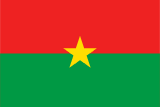
Burkina Faso – Facts, Capital & Geography | Random Country Generator
Capital
Ouagadougou
Population
22.1 Million (#59)
Currency
West African CFA Franc (XOF)
Language
French
Area
274,200 km²
National Dish
Tô
National Flower
Acacia
Density
77/km²
Internet TLD
.bf
Brief History
Burkina Faso was dominated by the Mossi kingdoms in the medieval period, which successfully resisted incorporation into the neighboring Songhai Empire. It was colonized by France in the late 19th century and named Upper Volta, gaining independence in 1960. Revolutionary leader Thomas Sankara renamed the country Burkina Faso ('Land of Incorruptible People') in 1984, initiating progressive reforms before being assassinated in a 1987 coup.
Key Demographics & Capital
Burkina Faso has a population of approximately 23 million, composed of over 60 ethnic groups, with the Mossi (over 50%) being the largest. French is the official language, while Mooré (the Mossi language) is the national lingua franca spoken by most residents, alongside Dioula in commercial sectors. The population is very young (median age of 17) and remains predominantly rural (70%), centered on the central plateau.
Geography
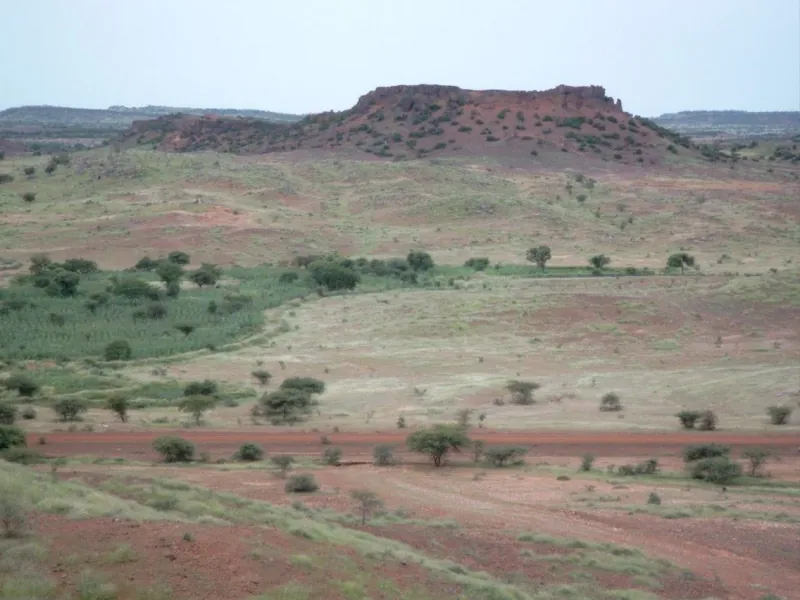
Burkina Faso is a landlocked country in West Africa, characterized by a semi-arid Sahelian landscape in the north and savanna in the south. The country has three main rivers: the Black Volta, White Volta, and Red Volta. The terrain is generally flat with some hills in the west and southeast.
Culture & Tradition
Burkina Faso has a rich cultural heritage with diverse ethnic traditions. Mask ceremonies and traditional dance are important cultural expressions. The country hosts FESPACO, the continent's premier film festival. Music and oral storytelling traditions are vibrant. Burkinabè cuisine features tô (millet porridge) and various sauces.
Economy
Burkina Faso's economy is based on agriculture, with cotton being the primary cash crop. Gold mining has become increasingly important. Livestock herding is a major activity in the north. The country faces challenges from drought and desertification but has a growing artisanal and cultural economy.
Travel Highlights
Attend the FESPACO film festival, explore the Ruins of Loropéni, visit the sacred crocodile ponds of Bazoulé, discover the Sindou Peaks rock formations, and experience traditional mask festivals. The Banfora region offers waterfalls and unique landscapes.
Fun Facts
Burkina Faso means 'Land of Honest People.'
FESPACO, Africa's largest film festival, is held in Ouagadougou.
The country has over 60 ethnic groups.
Burkina Faso is one of the world's largest cotton producers in Africa.
Traditional mask ceremonies are central to cultural life.
The Ruins of Loropéni are a UNESCO World Heritage Site.
Map
Bordering & Nearby Countries
Frequently Asked Questions (FAQs)
More from Africa
Want a surprise? Try our random Africa country generator or pick from the entire world.
Algeria
Discover Algeria: Africa's largest country. From Saharan landscapes to Mediterranean coasts, explore ancient ruins and Berber culture.
Angola
Explore Angola: from Kalandula Falls to Atlantic beaches. Discover vibrant culture, wildlife, and Southern African landscapes.
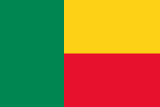
Benin
Discover Benin: birthplace of Voodoo. Explore Dahomey palaces, floating villages, and rich West African traditions.
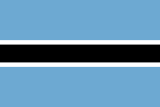
Botswana
Explore Botswana: home of the Okavango Delta and incredible safaris. Discover elephants, Kalahari landscapes, and African wilderness.