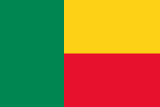
Benin – Facts, Capital & Geography | Random Country Generator
Capital
Porto-Novo
Population
13.4 Million (#76)
Currency
West African CFA Franc (XOF)
Language
French
Area
112,622 km²
National Dish
Amiwo
National Flower
African Tulip
Density
102/km²
Internet TLD
.bj
Brief History
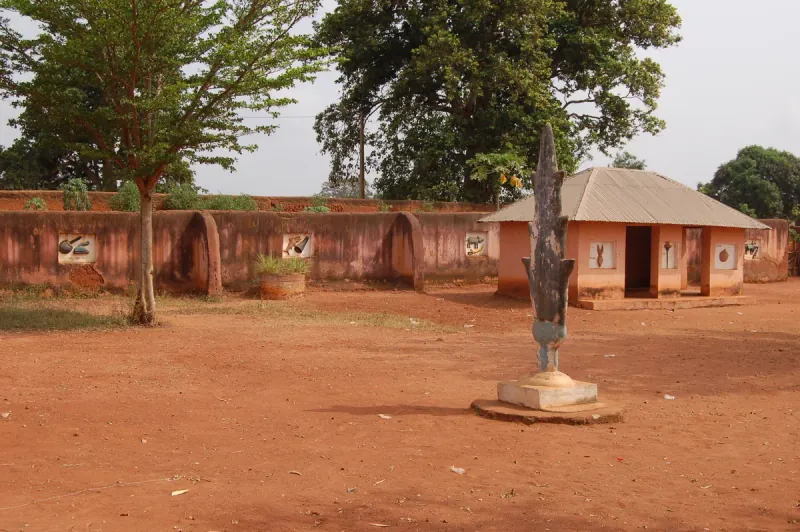
Benin was the center of the powerful Kingdom of Dahomey, which dominated the slave trade in the 17th and 18th centuries, earning the region the name 'Slave Coast'. It was colonized by France in the late 19th century and incorporated into French West Africa as Dahomey. The country achieved independence in 1960, renamed itself Benin in 1975 under a Marxist-Leninist military regime, and successfully transitioned to a stable multi-party democracy in 1990.
Key Demographics & Capital
Benin has a population of approximately 13.7 million, comprising over 42 ethnic groups, with the Fon (38%), Adja (15%), and Yoruba (12%) being the largest. French is the official language, while Fon and Yoruba are the most widely spoken indigenous languages in the south, and Bariba in the north. The population is predominantly young (median age of 18) and urbanizing, with Cotonou serving as the primary economic hub.
Geography
Benin is a narrow country in West Africa, stretching from the Atlantic coast northward. The south features sandy coastal plains and lagoons, while the north has savanna and semi-arid terrain. The Atakora mountain range runs through the northwest. Key rivers include the Ouémé and Niger.
Culture & Tradition
Benin is the birthplace of Voodoo (Vodun), which remains widely practiced alongside Christianity and Islam. The Kingdom of Dahomey left a rich legacy of art, including bronze sculptures and elaborate royal traditions. Beninese music features styles like tchink and zinli. The annual Voodoo festival in Ouidah attracts visitors worldwide.
Economy
Benin's economy relies on agriculture, with cotton being the main export crop. The Port of Cotonou serves as a major trade hub for the region. Tourism is growing, centered on Voodoo heritage and historical sites. The government has been investing in digital infrastructure and economic diversification.
Travel Highlights
Visit the Royal Palaces of Abomey, explore the floating village of Ganvié, walk the Route of Slaves in Ouidah, experience the Voodoo festival, and discover Pendjari National Park for wildlife viewing including elephants and lions. The Tata Somba traditional fortified houses in the north are architectural marvels.
Fun Facts
Benin is considered the birthplace of Voodoo.
The Kingdom of Dahomey was one of the most powerful in West Africa.
Benin's Ganvié is the largest lake village in Africa.
The country was formerly known as Dahomey until 1975.
Benin has a unique tradition of stilt-house villages.
The Royal Palaces of Abomey are a UNESCO World Heritage Site.
Map
Bordering & Nearby Countries
Frequently Asked Questions (FAQs)
More from Africa
Want a surprise? Try our random Africa country generator or pick from the entire world.
Algeria
Discover Algeria: Africa's largest country. From Saharan landscapes to Mediterranean coasts, explore ancient ruins and Berber culture.
Angola
Explore Angola: from Kalandula Falls to Atlantic beaches. Discover vibrant culture, wildlife, and Southern African landscapes.
Botswana
Explore Botswana: home of the Okavango Delta and incredible safaris. Discover elephants, Kalahari landscapes, and African wilderness.
Burkina Faso
Discover Burkina Faso: Land of Honest People. Explore Africa's film capital, mask traditions, and Sahelian landscapes.