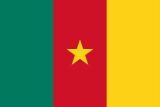
Cameroon – Facts, Capital & Geography | Random Country Generator
Capital
Yaoundé
Population
27.9 Million (#53)
Currency
Central African CFA Franc (XAF)
Language
French, English
Area
475,442 km²
National Dish
Ndolé
National Flower
Plumbago
Density
52/km²
Internet TLD
.cm
Brief History
Cameroon was home to the Sao civilization and later the Bamum Kingdom before becoming a German protectorate in 1884. Following Germany's defeat in WWI, the territory was partitioned between France and Britain under League of Nations mandates. French Cameroon gained independence in 1960 as the Republic of Cameroon, joined by the southern part of British Cameroons in 1961, establishing a presidential regime dominated by Paul Biya since 1982.
Key Demographics & Capital
Cameroon has a population of approximately 28 million, representing over 250 distinct ethnic and linguistic groups, with the Bamileke, Beti-Pahuin, and Fulani being among the largest. Both French and English are official languages, reflecting colonial partitions, though French is dominant in eight of the ten regions. The population is divided almost equally between urban and rural areas, with Yaoundé and Douala being major cities.
Geography
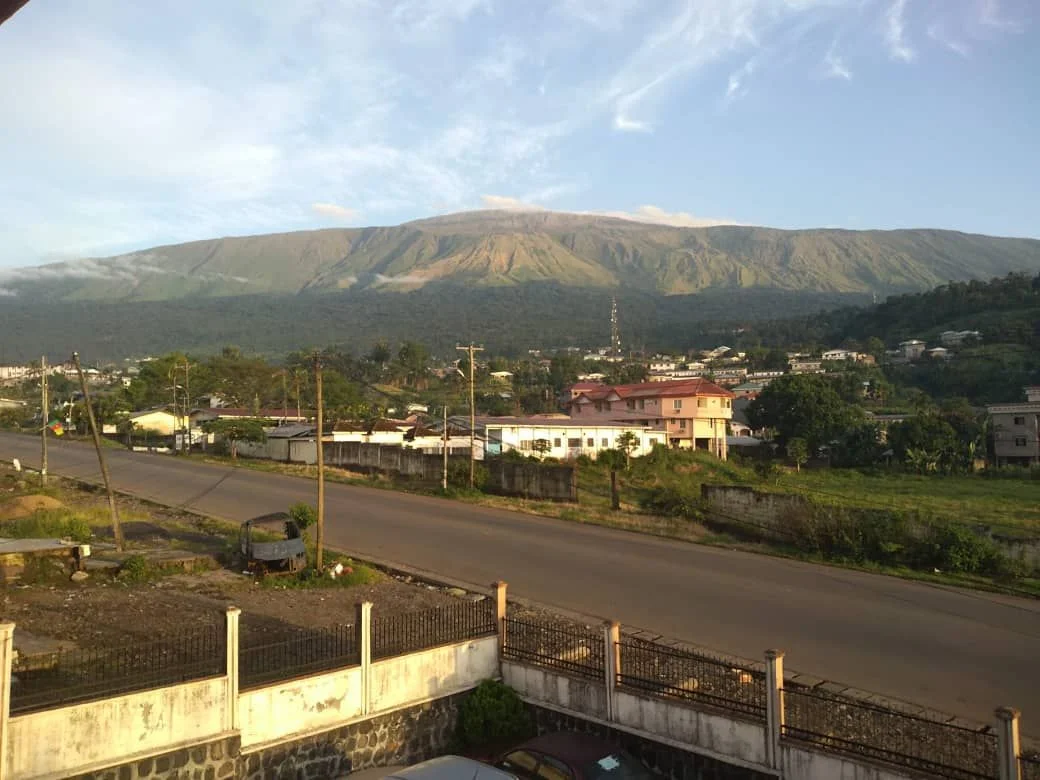
Cameroon is located in Central/West Africa and features extraordinary geographic diversity. The country has coastal lowlands, mountains (including volcanic Mount Cameroon at 4,095m), tropical rainforests, and Sahelian savanna. It borders the Gulf of Guinea and has a varied climate from tropical to semi-arid.
Culture & Tradition
Cameroon's cultural diversity is remarkable with over 250 ethnic groups. Each group has distinct traditions, music, and art forms. Makossa and bikutsi are popular music genres. Football is a national passion, with the 'Indomitable Lions' achieving international success. Traditional chieftaincies maintain significant cultural authority in many regions.
Economy
Cameroon has one of the most diversified economies in Central Africa. Oil production, agriculture (cocoa, coffee, bananas), timber, and mining are key sectors. The Port of Douala is the largest in the CEMAC region. The country is working to develop its considerable hydroelectric potential.
Travel Highlights
Climb Mount Cameroon, explore the Waza National Park for wildlife, visit the traditional Bamoun Palace in Foumban, relax on Kribi's beaches, discover the Ring Road through the scenic Western Highlands, and experience the Limbe Wildlife Centre. Dja Faunal Reserve is a UNESCO World Heritage Site.
Fun Facts
Cameroon is called 'Africa in Miniature' for its geological and cultural diversity.
Mount Cameroon is the highest peak in West Africa.
Cameroon has won the Africa Cup of Nations five times.
The country has over 250 ethnic groups and languages.
Lake Nyos experienced a deadly carbon dioxide eruption in 1986.
Cameroon has both English and French as official languages.
Map
Bordering & Nearby Countries
Frequently Asked Questions (FAQs)
More from Africa
Want a surprise? Try our random Africa country generator or pick from the entire world.
Algeria
Discover Algeria: Africa's largest country. From Saharan landscapes to Mediterranean coasts, explore ancient ruins and Berber culture.
Angola
Explore Angola: from Kalandula Falls to Atlantic beaches. Discover vibrant culture, wildlife, and Southern African landscapes.
Benin
Discover Benin: birthplace of Voodoo. Explore Dahomey palaces, floating villages, and rich West African traditions.
Botswana
Explore Botswana: home of the Okavango Delta and incredible safaris. Discover elephants, Kalahari landscapes, and African wilderness.