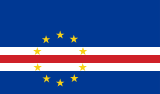
Cape Verde – Facts, Capital & Geography | Random Country Generator
Capital
Praia
Population
590K (#165)
Currency
Cape Verdean Escudo (CVE)
Language
Portuguese
Area
4,033 km²
National Dish
Cachupa
National Flower
Sturt's Desert Pea
Density
132/km²
Internet TLD
.cv
Brief History
Cape Verde was uninhabited when Portuguese mariners arrived in 1460, subsequently establishing the islands as a crucial transit point for the transatlantic slave trade and maritime commerce. The population developed a unique Creole identity blending European and African cultures. Following a protracted liberation struggle led by Amílcar Cabral, Cape Verde achieved independence from Portugal on July 5, 1975, establishing a stable democracy.
Key Demographics & Capital
Cape Verde has a population of approximately 560,000, with about 71% of the population identifying as Creole (mixed European and African descent). Portuguese is the official language, used in government and education, while Cape Verdean Creole (Kriolu) is the national language spoken in daily life. Interestingly, more Cape Verdeans live abroad (primarily in the US and Europe) than on the islands.
Geography
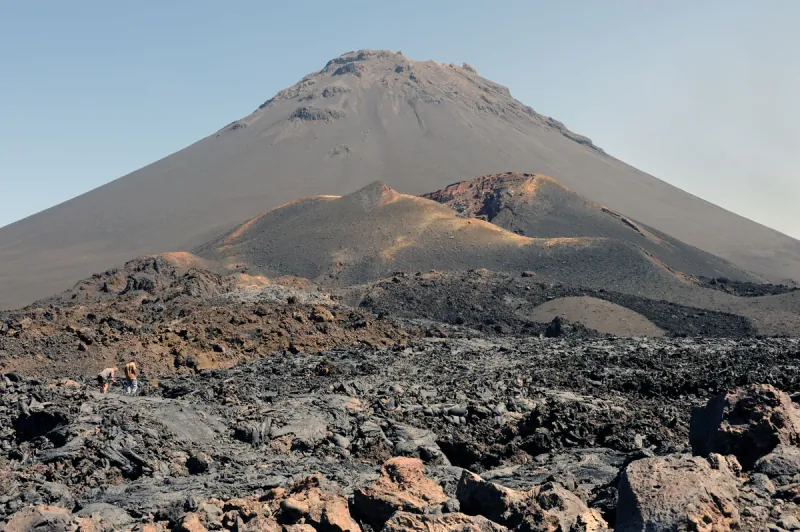
Cape Verde is a volcanic archipelago located about 570 km off the west coast of Africa. The 10 islands are divided into the Barlavento (windward) and Sotavento (leeward) groups. Landscapes range from the active Pico do Fogo volcano to sandy desert islands and lush valleys. The climate is tropical dry.
Culture & Tradition
Cape Verdean culture is a unique Creole blend of African and Portuguese influences. Music is central to identity, with morna and coladeira being beloved genres. Cesária Évora became an international music icon. The saudade (longing) theme permeates Cape Verdean art and literature. Creole language (Kriolu) is widely spoken alongside Portuguese.
Economy
Cape Verde has limited natural resources and relies on tourism, remittances from diaspora communities, and foreign aid. The service sector accounts for most of GDP. Fishing and agriculture are important but limited by the arid climate. The country has become a popular tourist destination, especially for European visitors.
Travel Highlights
Hike the Pico do Fogo volcano on Fogo Island, enjoy the beaches of Sal and Boa Vista, explore the colorful colonial town of Mindelo on São Vicente, discover the lush Santo Antão island for hiking, and experience live morna music in local bars. The islands offer excellent windsurfing and diving.
Fun Facts
Cape Verde is a volcanic archipelago of 10 islands.
The islands were uninhabited until Portuguese discovery in the 15th century.
Morna music, similar to Portuguese fado, was recognized by UNESCO.
Cesária Évora, the 'Barefoot Diva,' put Cape Verde on the global music map.
Cape Verde has one of the most stable democracies in Africa.
The Pico do Fogo volcano last erupted in 2014-2015.
Map
Bordering & Nearby Countries
Frequently Asked Questions (FAQs)
More from Africa
Want a surprise? Try our random Africa country generator or pick from the entire world.
Algeria
Discover Algeria: Africa's largest country. From Saharan landscapes to Mediterranean coasts, explore ancient ruins and Berber culture.
Angola
Explore Angola: from Kalandula Falls to Atlantic beaches. Discover vibrant culture, wildlife, and Southern African landscapes.
Benin
Discover Benin: birthplace of Voodoo. Explore Dahomey palaces, floating villages, and rich West African traditions.
Botswana
Explore Botswana: home of the Okavango Delta and incredible safaris. Discover elephants, Kalahari landscapes, and African wilderness.