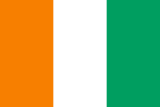
Ivory Coast – Facts, Capital & Geography | Random Country Generator
Capital
Yamoussoukro
Population
28.2 Million (#52)
Currency
West African CFA Franc (XOF)
Language
French
Area
322,463 km²
National Dish
Attiéké
National Flower
None official
Density
77/km²
Internet TLD
.ci
Brief History
Cote d'Ivoire was home to the Gyaaman Kingdom and the Baoulé state before French colonial expansion established a protectorate in 1843, later making it a colony in 1893. The nation achieved independence in 1960 under Félix Houphouët-Boigny, who ruled for 33 years and fostered economic prosperity through cocoa exports. Political instability and two successive civil wars in 2002 and 2010 temporarily disrupted its development.
Key Demographics & Capital
Cote d'Ivoire has a population of approximately 29 million, comprising over 60 distinct ethnic groups, with the Akan (42%), Voltaiques (17%), and Mande (16%) being the largest. French is the official language, while Dioula serves as the primary commercial lingua franca. The country has a large immigrant population, primarily agricultural workers from neighboring Burkina Faso, Mali, and Guinea.
Geography
Ivory Coast is in West Africa, with a southern coastline on the Gulf of Guinea. The south features tropical rainforest and lagoons, while the north has savanna. Mountains in the west include Mount Nimba. The climate is tropical with distinct wet and dry seasons.
Culture & Tradition
Ivorian culture is diverse with over 60 ethnic groups. Traditional mask dances, especially among the Dan and Senufo peoples, are significant. Coupé-Décalé and zouglou are popular music genres. Football is a national passion. The country has a strong literary tradition and vibrant contemporary arts scene.
Economy
Ivory Coast is the world's largest producer of cocoa beans and a major producer of coffee, palm oil, and cashews. It has the largest economy in the West African Economic and Monetary Union. Abidjan is the economic hub. The country has significant oil and natural gas reserves.
Travel Highlights
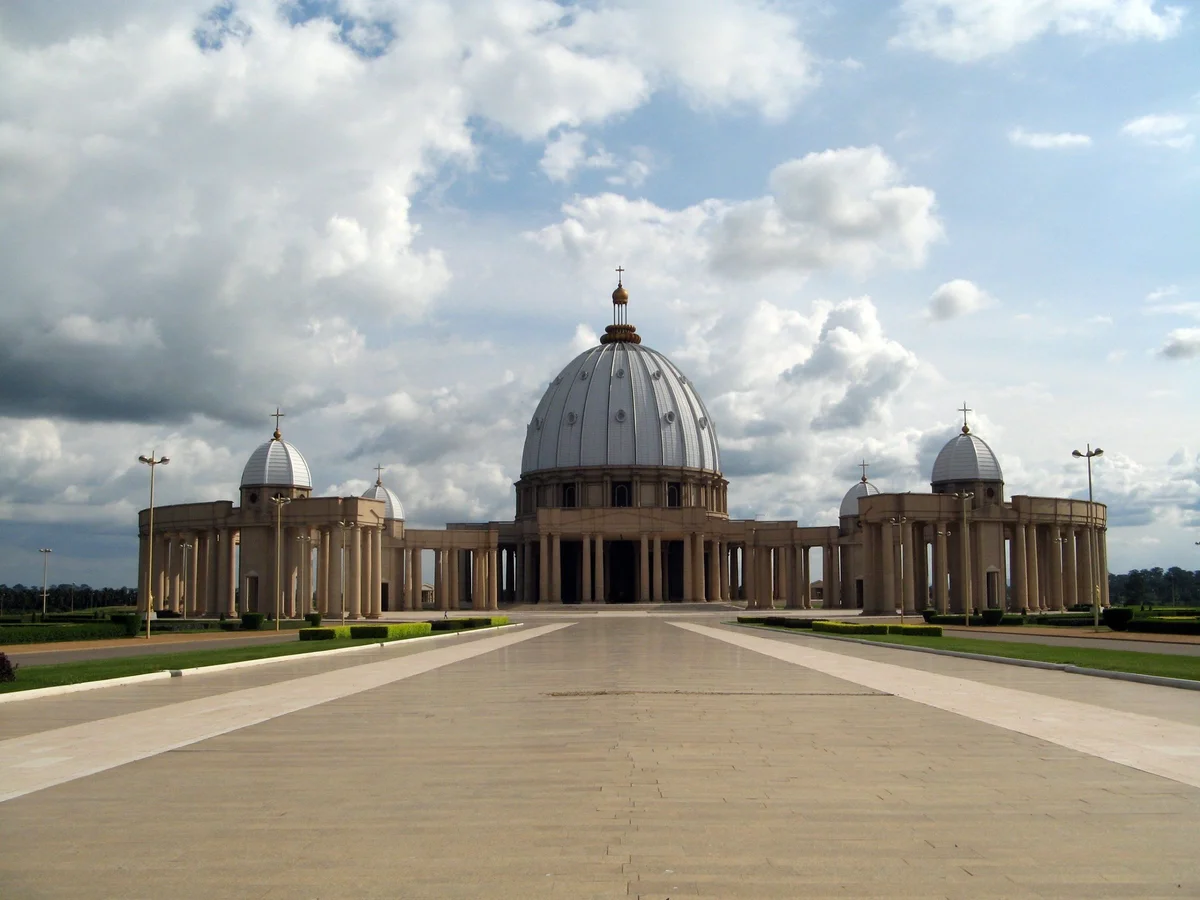
Visit the Basilica of Our Lady of Peace in Yamoussoukro (world's largest church), explore Abidjan's vibrant culture, discover Taï National Park (UNESCO), relax on Grand-Bassam's colonial-era beaches, and experience the stilt dancers of the Gouro people. Mount Nimba offers excellent hiking.
Fun Facts
Ivory Coast is the world's largest cocoa producer.
Yamoussoukro's Basilica is the largest church in the world.
The country has over 60 ethnic groups.
Ivory Coast was once the economic powerhouse of West Africa.
Didier Drogba is the country's most famous footballer.
The country has both a political and economic capital (Yamoussoukro and Abidjan).
Map
Bordering & Nearby Countries
Frequently Asked Questions (FAQs)
More from Africa
Want a surprise? Try our random Africa country generator or pick from the entire world.
Algeria
Discover Algeria: Africa's largest country. From Saharan landscapes to Mediterranean coasts, explore ancient ruins and Berber culture.
Angola
Explore Angola: from Kalandula Falls to Atlantic beaches. Discover vibrant culture, wildlife, and Southern African landscapes.
Benin
Discover Benin: birthplace of Voodoo. Explore Dahomey palaces, floating villages, and rich West African traditions.
Botswana
Explore Botswana: home of the Okavango Delta and incredible safaris. Discover elephants, Kalahari landscapes, and African wilderness.