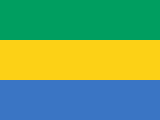
Gabon – Facts, Capital & Geography | Random Country Generator
Capital
Libreville
Population
2.4 Million (#142)
Currency
Central African CFA Franc (XAF)
Language
French
Area
267,668 km²
National Dish
Nyembwe Chicken
National Flower
Flame Lily
Density
8/km²
Internet TLD
.ga
Brief History
Gabon was inhabited by Pygmy and Bantu groups before Portuguese traders arrived in the 15th century. France established a protectorate in 1839 by signing treaties with local chiefs, later making it part of French Equatorial Africa. Gabon achieved independence on August 17, 1960, under Leon M'ba, and was subsequently ruled by Omar Bongo for 42 years (1967–2009), who established it as a stable French ally in Central Africa.
Key Demographics & Capital
Gabon has a population of approximately 2.4 million, presenting a young demographic profile with over 40 ethnic groups, with the Fang (32%) and Punu (18%) being the largest. French is the sole official language, widely spoken in administration and education. Gabon has one of the highest urbanization rates in Africa, with over 89% of the population living in cities, primarily Libreville.
Geography
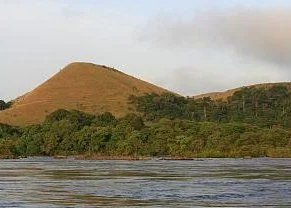
Gabon straddles the equator on the west coast of Central Africa. About 85% of the country is covered by dense tropical rainforest. The coastline features lagoons and mangroves. The Crystal Mountains and Chaillu Massif provide upland terrain. The Ogooué River is the main waterway.
Culture & Tradition
Gabonese culture is diverse with over 40 ethnic groups. The Bwiti spiritual tradition, involving iboga plant ceremonies, is a significant cultural practice. Traditional mask-making and wood carving are renowned. Music includes mogogo and other genres. French is the official language.
Economy
Gabon is one of the more prosperous countries in sub-Saharan Africa, thanks to oil and mineral (manganese, uranium) exports. Timber from tropical forests is also important. The government has been developing ecotourism as part of economic diversification. Libreville is a significant regional hub.
Travel Highlights
Track gorillas and see elephants on beaches in Loango National Park, explore Lopé National Park (UNESCO), visit Albert Schweitzer's hospital in Lambaréné, discover the Crystal Mountains, and cruise the Ogooué River. Gabon offers some of Africa's most pristine wilderness experiences.
Fun Facts
About 85% of Gabon is covered by tropical rainforest.
Gabon has 13 national parks covering 11% of the country.
Loango National Park is where gorillas and elephants walk on beaches.
Gabon is one of Africa's most urbanized countries.
The Bwiti spiritual tradition uses iboga plant ceremonies.
Albert Schweitzer's famous hospital was in Lambaréné, Gabon.
Map
Bordering & Nearby Countries
Frequently Asked Questions (FAQs)
More from Africa
Want a surprise? Try our random Africa country generator or pick from the entire world.
Algeria
Discover Algeria: Africa's largest country. From Saharan landscapes to Mediterranean coasts, explore ancient ruins and Berber culture.
Angola
Explore Angola: from Kalandula Falls to Atlantic beaches. Discover vibrant culture, wildlife, and Southern African landscapes.
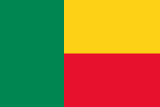
Benin
Discover Benin: birthplace of Voodoo. Explore Dahomey palaces, floating villages, and rich West African traditions.
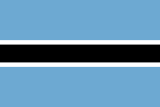
Botswana
Explore Botswana: home of the Okavango Delta and incredible safaris. Discover elephants, Kalahari landscapes, and African wilderness.