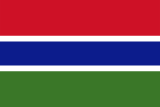
Gambia – Facts, Capital & Geography | Random Country Generator
Capital
Banjul
Population
2.5 Million (#141)
Currency
Gambian Dalasi (GMD)
Language
English
Area
11,295 km²
National Dish
Benachin
National Flower
None official
Density
230/km²
Internet TLD
.gm
Brief History
Gambia was part of the Mali and Songhai empires before Portuguese explorers entered the Gambia River in 1455. Great Britain established control in the 18th century, making Gambia a colony and protectorate surrounded by French Senegal. The nation achieved independence on February 18, 1965, as a constitutional monarchy under Dawda Jawara, transitioning to a republic in 1970 and later undergoing a long military dictatorship under Yahya Jammeh (1994–2017).
Key Demographics & Capital
Gambia has a population of approximately 2.7 million, comprising several ethnic groups, with the Mandinka (34%), Fula (22%), and Wolof (12%) being the largest. English is the official language, while Mandinka and Wolof are widely spoken in daily life. The country is highly dense, with the population clustered along the Gambia River banks, particularly in the coastal urban areas.
Geography
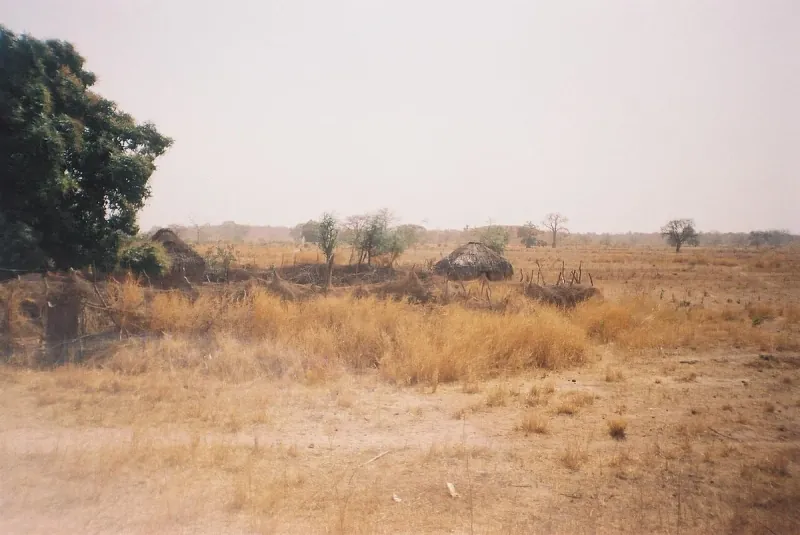
The Gambia is a narrow country in West Africa, stretching along both banks of the Gambia River. It is essentially a river valley surrounded by Senegal on three sides, with a short Atlantic coastline. The terrain is flat with mangroves along the river and sandy beaches on the coast. It is the smallest country on mainland Africa.
Culture & Tradition
Gambian culture features influences from the Mandinka, Fula, Wolof, and Jola peoples. Oral storytelling (griot tradition) is central to cultural heritage. The country gained fame through Alex Haley's 'Roots,' which traced his ancestry to the Gambian village of Juffureh. Music, particularly kora playing, is integral to cultural life.
Economy
Gambia's economy relies on agriculture (groundnuts/peanuts), tourism, and re-export trade. The country is a popular tourist destination for European visitors seeking winter sun. Fishing is an important sector. The Gambia River provides a vital economic corridor.
Travel Highlights
Explore Kunta Kinteh Island (UNESCO) and the Roots heritage trail, relax on Atlantic beaches, cruise the Gambia River for wildlife and birdwatching, visit Abuko Nature Reserve, and experience the lively Serrekunda Market. Gambia is an excellent destination for birdwatching with over 500 species.
Fun Facts
Gambia is the smallest country on mainland Africa.
The country is essentially a narrow strip along the Gambia River.
Alex Haley traced his ancestry to the village of Juffureh in Gambia.
Gambia is known as 'The Smiling Coast of Africa.'
The country is surrounded on three sides by Senegal.
Gambia has over 500 species of birds.
Map
Bordering & Nearby Countries
Frequently Asked Questions (FAQs)
More from Africa
Want a surprise? Try our random Africa country generator or pick from the entire world.
Algeria
Discover Algeria: Africa's largest country. From Saharan landscapes to Mediterranean coasts, explore ancient ruins and Berber culture.
Angola
Explore Angola: from Kalandula Falls to Atlantic beaches. Discover vibrant culture, wildlife, and Southern African landscapes.
Benin
Discover Benin: birthplace of Voodoo. Explore Dahomey palaces, floating villages, and rich West African traditions.
Botswana
Explore Botswana: home of the Okavango Delta and incredible safaris. Discover elephants, Kalahari landscapes, and African wilderness.