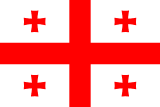
Georgia – Facts, Capital & Geography | Random Country Generator
Capital
Tbilisi
Population
3.7 Million (#128)
Currency
Georgian Lari (GEL)
Language
Georgian
Area
69,700 km²
National Dish
Khinkali
National Flower
Tamarind Blossom
Density
57/km²
Internet TLD
.ge
Brief History
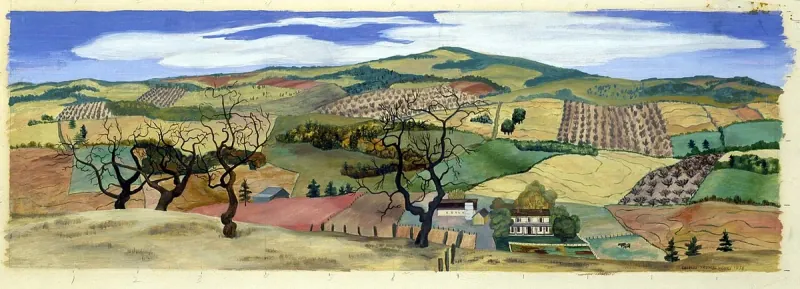
Georgia was home to the ancient kingdoms of Colchis and Iberia, adopting Christianity in 327 CE under Saint Nino. Over centuries, it was invaded by Mongols, Persians, and Ottomans before being annexed by the Russian Empire in 1801. Georgia declared a democratic republic in 1918, but was invaded by the Soviet Red Army in 1921. It regained independence in 1991, subsequent to which it faced territorial disputes over Abkhazia and South Ossetia.
Key Demographics & Capital
Georgia has a population of approximately 3.7 million, with ethnic Georgians comprising over 86% of the population, followed by Azeri and Armenian minorities. Georgian, a Kartvelian language with its own unique alphabet, is the sole official language. The population has declined significantly since 1990 due to low birth rates, economic instability, and high emigration to Europe and Russia.
Geography
Georgia is in the South Caucasus between Europe and Asia. The Greater Caucasus mountains form the northern border with peaks over 5,000 meters. The landscape includes Black Sea coastline, subtropical lowlands, alpine meadows, and semi-arid eastern plateaus. The country has extraordinary geographic diversity for its size.
Culture & Tradition
Georgian culture is ancient and distinctive. The country has its own unique alphabet and language. Wine-making using qvevri (clay vessels) has been practiced for 8,000 years (UNESCO). Georgian polyphonic singing is UNESCO-recognized. Georgian cuisine — khachapuri (cheese bread), khinkali (dumplings), and elaborate feasts (supras) — is increasingly celebrated worldwide.
Economy
Georgia's economy has grown through reforms that made it one of the easiest places to do business. Tourism, agriculture (wine, hazelnuts), mining, and transit corridor services are key. Wine exports are growing. The country is developing hydroelectric power. Tbilisi has a growing tech and startup scene.
Travel Highlights
Explore Tbilisi's sulfur baths and old town, visit the cave city of Vardzia, discover Svaneti's medieval towers in the Caucasus, tour the Kakheti wine region, ski in Gudauri, visit the ancient capital Mtskheta (UNESCO), and experience a traditional supra feast. Georgia offers one of the world's most underrated travel experiences.
Fun Facts
Georgia is one of the oldest wine-making countries (8,000 years).
Georgian is one of only 14 living languages with its own unique alphabet.
Tbilisi was founded on natural hot springs.
Georgia claims to be the birthplace of wine.
The Caucasus Mountains include Europe's highest peaks.
Georgian polyphonic singing is UNESCO-recognized.
Map
Bordering & Nearby Countries
Frequently Asked Questions (FAQs)
More from Asia
Want a surprise? Try our random Asia country generator or pick from the entire world.
Afghanistan
Discover Afghanistan: Hindu Kush mountains and ancient Silk Road heritage. Explore Bamiyan Valley, Herat's architecture, and Afghan culture.
Armenia
Explore Armenia: first Christian nation. Discover ancient monasteries, Lake Sevan, and Caucasus mountain heritage.
Azerbaijan
Explore Azerbaijan: Land of Fire. Discover Baku's Flame Towers, ancient walled city, mud volcanoes, and Caspian Sea heritage.

Bahrain
Explore Bahrain: ancient Dilmun heritage and modern Gulf culture. Discover pearl diving history, Formula One, and island archipelago charm.