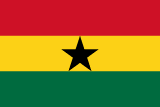
Ghana – Facts, Capital & Geography | Random Country Generator
Capital
Accra
Population
32.8 Million (#48)
Currency
Ghanaian Cedi (GHS)
Language
English
Area
238,533 km²
National Dish
Fufu with Soup
National Flower
Impala Lily
Density
136/km²
Internet TLD
.gh
Brief History
Ghana was the center of the powerful Ashanti Empire, which controlled rich gold fields and active trade routes before British colonization as the Gold Coast. Led by revolutionary leader Kwame Nkrumah, it became the first sub-Saharan African colony to achieve independence on March 6, 1957. Ghana underwent periods of military rule before establishing a stable multi-party democracy in 1992 under Jerry Rawlings.
Key Demographics & Capital
Ghana has a population of approximately 33 million, comprising several ethnic groups, with the Akan (47%), Mole-Dagbani (16%), and Ewe (14%) being the largest. English is the official language, while Akan (Twi) serves as the primary commercial lingua franca. The population is young (median age of 21) and highly urbanized (over 58%), concentrated in the southern coastal and forest zones.
Geography
Ghana is located on the Gulf of Guinea in West Africa. The landscape includes coastal savannas, tropical rainforests, and the Volta Basin. Lake Volta, one of the world's largest artificial lakes, dominates the eastern part of the country. The climate is tropical with two rainy seasons in the south and one in the north.
Culture & Tradition
Ghanaian culture is vibrant and diverse, with over 100 ethnic groups. Kente cloth weaving, Adinkra symbols, and colorful fantasy coffins are distinctive art forms. Highlife and hiplife music genres are popular. Ghanaian cuisine features jollof rice, fufu, and kenkey. The Ashanti Kingdom's rich heritage and traditions are an integral part of national identity.
Economy
Ghana's economy is one of West Africa's strongest. Key sectors include gold mining, cocoa production, oil and gas, agriculture, and services. Ghana has become an oil producer since 2010. Accra is an emerging tech hub. The country is known for its stable democracy and business-friendly environment.
Travel Highlights
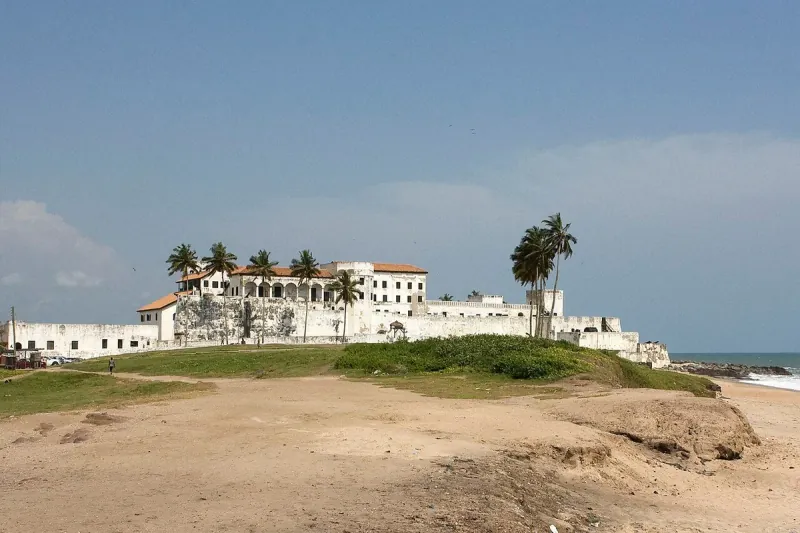
Explore Accra's vibrant markets and nightlife, visit the Cape Coast and Elmina slave castles (UNESCO sites), discover Ashanti culture in Kumasi, relax on the beaches of Busua and Kokrobite, and experience the Kakum National Park canopy walkway. The Mole National Park offers savanna wildlife viewing. Ghanaian festivals like Homowo are colorful celebrations.
Fun Facts
Ghana was the first sub-Saharan African country to gain independence.
Lake Volta is one of the world's largest man-made lakes.
Ghana is the second-largest cocoa producer in the world.
Ghanaian kente cloth is internationally recognized.
Ghana was formerly known as the Gold Coast.
Ghana is considered one of the most stable democracies in Africa.
Map
Bordering & Nearby Countries
Frequently Asked Questions (FAQs)
More from Africa
Want a surprise? Try our random Africa country generator or pick from the entire world.
Algeria
Discover Algeria: Africa's largest country. From Saharan landscapes to Mediterranean coasts, explore ancient ruins and Berber culture.
Angola
Explore Angola: from Kalandula Falls to Atlantic beaches. Discover vibrant culture, wildlife, and Southern African landscapes.
Benin
Discover Benin: birthplace of Voodoo. Explore Dahomey palaces, floating villages, and rich West African traditions.
Botswana
Explore Botswana: home of the Okavango Delta and incredible safaris. Discover elephants, Kalahari landscapes, and African wilderness.