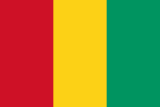
Guinea – Facts, Capital & Geography | Random Country Generator
Capital
Conakry
Population
13.5 Million (#75)
Currency
Guinean Franc (GNF)
Language
French
Area
245,857 km²
National Dish
Peanut Stew
National Flower
None official
Density
53/km²
Internet TLD
.gn
Brief History
Guinea was part of the medieval Mali Empire before French colonial expansion established a colony in 1891 as French Guinea. Under the leadership of Sekou Touré, Guinea made history in 1958 by rejecting Charles de Gaulle's French Community, declaring immediate independence on October 2, 1958. Touré established a socialist single-party state, and the nation underwent subsequent decades of military coups and political transitions.
Key Demographics & Capital
Guinea has a population of approximately 14 million, comprising three main ethnic groups: the Fula (Peul, 33%), Mandinka (Malinke, 31%), and Susu (20%). French is the official language, while Fula, Mandinka, and Susu serve as the primary regional languages. The population remains predominantly rural (over 62%), with density highest in the Fouta Djallon highlands.
Geography
Guinea is in West Africa with a coastline on the Atlantic. The country features four geographic regions: coastal lowlands, the Fouta Djallon highlands, upper Guinea savanna, and the forested Guinea Highlands. Major rivers including the Niger, Senegal, and Gambia originate in the Fouta Djallon, earning Guinea the title 'Water Tower of West Africa.'
Culture & Tradition
Guinean culture is rich in music and dance. The djembe drum originated here and remains central to cultural expression. The Mandinka, Fula, and Susu are major ethnic groups, each with distinct traditions. Guinean music has influenced West African and world music. Traditional weaving and leatherwork are important crafts.
Economy
Guinea has vast mineral wealth, including the world's largest bauxite reserves, along with iron ore, gold, and diamonds. Mining is the primary economic driver. Agriculture employs most of the population, with rice and cassava as staple crops. Hydroelectric potential from highland rivers is significant.
Travel Highlights
Trek through the Fouta Djallon highlands and waterfalls, explore Mount Nimba (UNESCO), visit the Îles de Los off Conakry, experience traditional djembe drumming, and discover the forests of the Guinea Highlands. The country offers off-the-beaten-path adventure travel.
Fun Facts
Guinea has the world's largest reserves of bauxite.
The Niger, Senegal, and Gambia rivers all originate in Guinea.
Guinea is called the 'Water Tower of West Africa.'
The country has rich musical traditions including djembe drumming.
Mount Nimba straddles the border with Ivory Coast and Liberia.
Guinea was the first French colony in Africa to gain independence.
Map
Bordering & Nearby Countries
Frequently Asked Questions (FAQs)
More from Africa
Want a surprise? Try our random Africa country generator or pick from the entire world.
Algeria
Discover Algeria: Africa's largest country. From Saharan landscapes to Mediterranean coasts, explore ancient ruins and Berber culture.
Angola
Explore Angola: from Kalandula Falls to Atlantic beaches. Discover vibrant culture, wildlife, and Southern African landscapes.
Benin
Discover Benin: birthplace of Voodoo. Explore Dahomey palaces, floating villages, and rich West African traditions.
Botswana
Explore Botswana: home of the Okavango Delta and incredible safaris. Discover elephants, Kalahari landscapes, and African wilderness.