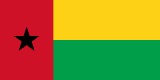
Guinea-Bissau – Facts, Capital & Geography | Random Country Generator
Capital
Bissau
Population
2.1 Million (#144)
Currency
West African CFA Franc (XOF)
Language
Portuguese
Area
36,125 km²
National Dish
Jollof Rice
National Flower
None official
Density
55/km²
Internet TLD
.gw
Brief History
Guinea-Bissau was home to the Kaabu Empire before Portuguese explorers arrived in 1446, establishing a major slave trade center. A protracted liberation war led by the PAIGC and Amílcar Cabral culminated in a unilateral declaration of independence in 1973, recognized by Portugal in 1974. The country has since experienced chronic political instability, characterized by multiple military coups, civil war, and political assassinations.
Key Demographics & Capital
Guinea-Bissau has a population of approximately 2.1 million, comprising several ethnic groups, with the Balanta (30%), Fula (23%), and Mandinka (14%) being the largest. Portuguese is the official language, used in administration and education, while Guinea-Bissau Creole (Kriol) is the national lingua franca spoken by over 90% of the population. The population is predominantly rural.
Geography
Guinea-Bissau is a small country on the West African coast. The mainland features flat coastal plains with mangroves, rising to savanna in the east. The Bijagós Archipelago comprises over 80 islands in the Atlantic Ocean. The country has numerous rivers and estuaries creating a complex waterway system.
Culture & Tradition
Guinea-Bissau's culture blends African and Portuguese traditions. The Bijagós people maintain a matriarchal society. Gumbe music, influenced by Portuguese and West African rhythms, is popular. Traditional masks and ceremonies are important. Carnival celebrations reflect the country's Portuguese heritage.
Economy
Guinea-Bissau is one of the poorest countries in the world. Cashew nuts account for the vast majority of exports. Fishing rights are an important revenue source. Rice is the staple food and main subsistence crop. Political instability has hindered economic development.
Travel Highlights
Explore the Bijagós Archipelago for pristine beaches and unique culture, visit Orango National Park for saltwater hippos, discover the colonial architecture of Bissau, and experience carnival celebrations. The islands offer unspoiled nature and fascinating matriarchal communities.
Fun Facts
Guinea-Bissau has the Bijagós Archipelago with over 80 islands.
The country is one of the world's poorest.
Cashew nuts are the main export.
The Bijagós Islands have a matriarchal society.
Guinea-Bissau is one of the first countries in West Africa to abolish the death penalty.
Marine biodiversity around the islands is exceptionally rich.
Map
Bordering & Nearby Countries
Frequently Asked Questions (FAQs)
More from Africa
Want a surprise? Try our random Africa country generator or pick from the entire world.
Algeria
Discover Algeria: Africa's largest country. From Saharan landscapes to Mediterranean coasts, explore ancient ruins and Berber culture.
Angola
Explore Angola: from Kalandula Falls to Atlantic beaches. Discover vibrant culture, wildlife, and Southern African landscapes.
Benin
Discover Benin: birthplace of Voodoo. Explore Dahomey palaces, floating villages, and rich West African traditions.
Botswana
Explore Botswana: home of the Okavango Delta and incredible safaris. Discover elephants, Kalahari landscapes, and African wilderness.