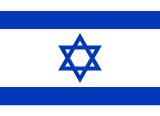
Israel – Facts, Capital & Geography | Random Country Generator
Capital
Jerusalem
Population
9.5 Million (#96)
Currency
Israeli New Shekel (ILS)
Language
Hebrew, Arabic
Area
20,770 km²
National Dish
Hummus
National Flower
Cyclamen
Density
400/km²
Internet TLD
.il
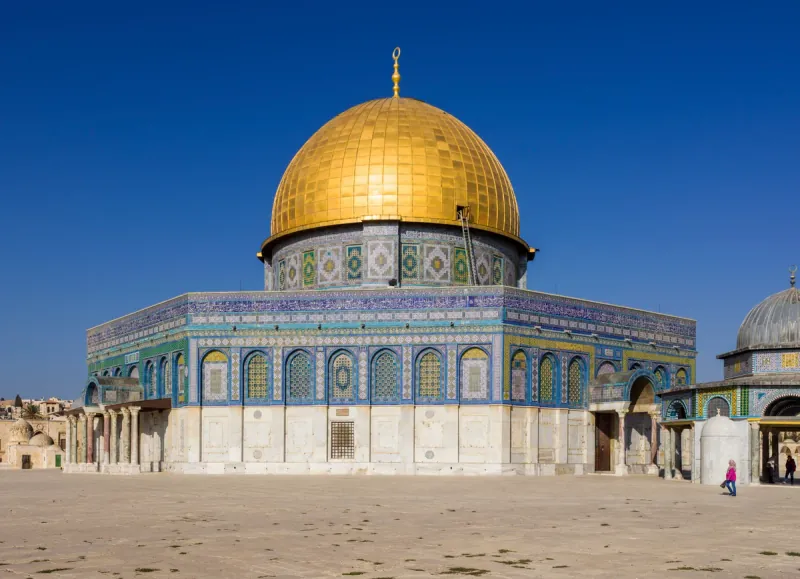
Brief History
Israel's history is rooted in ancient biblical periods, with the Kingdoms of Israel and Judah established in the Iron Age. The region was subsequently ruled by Roman, Byzantine, Islamic, Crusader, and Ottoman empires before British administration after WWI. Following decades of Zionist migration and the Holocaust, the modern State of Israel was declared on May 14, 1948, under David Ben-Gurion, sparking conflicts with Arab nations.
Key Demographics & Capital
Israel has a population of approximately 9.8 million, divided primarily into two demographic groups: Jewish citizens (about 73% of the population) and Arab citizens (about 21%). Hebrew is the official national language, while Arabic holds a special status. The population is highly urbanized (over 93%), concentrated along the Mediterranean coastal plain and the Jerusalem corridor.
Geography
Israel is a small country in the Middle East along the Mediterranean Sea. Despite its size, it has diverse geography: Mediterranean coast, central highlands, the Jordan Rift Valley, and the Negev Desert in the south. The Dead Sea is the lowest point on Earth at 430 meters below sea level. The Sea of Galilee is a major freshwater lake.
Culture & Tradition
Israeli culture blends ancient Jewish traditions with modern innovation. Jerusalem is sacred to Judaism, Christianity, and Islam. Tel Aviv represents the modern, secular side with vibrant nightlife and tech culture. Israeli cuisine includes falafel, hummus, shakshuka, and Middle Eastern dishes. The country has a thriving arts, music, and literature scene.
Economy
Israel has a highly developed, technology-driven economy often called the 'Startup Nation.' Key sectors include cybersecurity, fintech, biotech, defense technology, and agriculture (drip irrigation innovation). Diamond cutting and polishing is significant. Tourism to religious and historical sites is important.
Travel Highlights
Explore Jerusalem's Old City with sacred sites for three religions, float in the Dead Sea, experience Tel Aviv's beaches and nightlife, hike in the Negev Desert, visit Masada fortress, discover the ancient port of Caesarea, and explore the Sea of Galilee region. The Bahá'í Gardens in Haifa are stunning.
Fun Facts
Israel has more startups per capita than any other country.
The Dead Sea is the lowest point on Earth.
Israel is the only country to have revived a dead language (Hebrew).
Israeli scientists have won 12 Nobel Prizes.
Tel Aviv has the highest density of tech startups in the world.
Israel has the highest number of museums per capita.
Map
Bordering & Nearby Countries
Frequently Asked Questions (FAQs)
More from Asia
Want a surprise? Try our random Asia country generator or pick from the entire world.
Afghanistan
Discover Afghanistan: Hindu Kush mountains and ancient Silk Road heritage. Explore Bamiyan Valley, Herat's architecture, and Afghan culture.
Armenia
Explore Armenia: first Christian nation. Discover ancient monasteries, Lake Sevan, and Caucasus mountain heritage.
Azerbaijan
Explore Azerbaijan: Land of Fire. Discover Baku's Flame Towers, ancient walled city, mud volcanoes, and Caspian Sea heritage.

Bahrain
Explore Bahrain: ancient Dilmun heritage and modern Gulf culture. Discover pearl diving history, Formula One, and island archipelago charm.