Kyrgyzstan – Facts, Capital & Geography | Random Country Generator
Capital
Bishkek
Population
6.8 Million (#106)
Currency
Kyrgyzstani Som (KGS)
Language
Kyrgyz, Russian
Area
199,951 km²
National Dish
Beshbarmak
National Flower
Tulip
Density
34/km²
Internet TLD
.kg
Brief History
Kyrgyzstan was inhabited by Turkic nomadic tribes, coming under the Kokand Khanate before being annexed by the Russian Empire in 1876. It became a constituent republic of the Soviet Union in 1936, declaring independence on August 31, 1991. The post-Soviet era has been marked by democratic revolutions (such as the Tulip Revolution in 2005) that overthrew authoritarian presidents.
Key Demographics & Capital
Kyrgyzstan has a population of approximately 7 million, with ethnic Kyrgyz comprising over 73% of the population, followed by Uzbek (14.7%) and Russian (5.5%) minorities. Both Kyrgyz and Russian are official languages, with Russian widely spoken in government and urban areas. The population remains predominantly rural, concentrated in the Fergana and Chuy valleys.
Geography
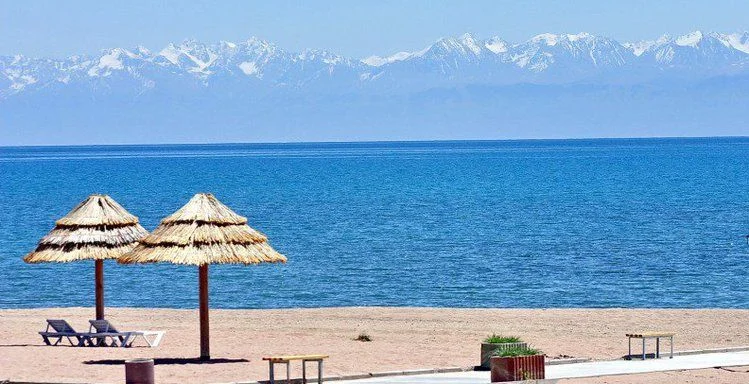
Kyrgyzstan is a mountainous, landlocked country in Central Asia. About 94% of the country is above 1,000 meters elevation. The Tien Shan mountain range dominates with peaks over 7,000 meters. Issyk-Kul, the world's second-largest alpine lake, never freezes despite its altitude. The Fergana Valley in the south is the main agricultural area.
Culture & Tradition
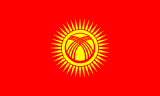
Kyrgyz culture is rooted in nomadic traditions. The yurt is the symbol of the nation, featured on the flag. The Epic of Manas is a cornerstone of cultural identity. Eagle hunting, horse games (kok-boru), and felt-making are living traditions. Kyrgyz cuisine features beshbarmak and kumys (fermented mare's milk).
Economy
Kyrgyzstan's economy relies on mining (gold from the Kumtor mine), agriculture, remittances, and hydroelectric power. Tourism is growing, particularly adventure tourism and cultural experiences. The country has significant water resources. Small-scale manufacturing and services are developing sectors.
Travel Highlights
Stay in yurts by alpine Lake Issyk-Kul, trek the stunning Ala-Archa and Jyrgalan valleys, experience the World Nomad Games traditions, visit the ancient Silk Road caravanserai of Tash Rabat, explore Bishkek's Soviet-era architecture, and ride horses through mountain pastures. Kyrgyzstan offers Central Asia's best adventure travel.
Fun Facts
Kyrgyzstan is known as the 'Switzerland of Central Asia.'
The epic of Manas is one of the world's longest poems.
About 94% of the country is mountainous.
Issyk-Kul is the world's second-largest alpine lake.
Yurt-building is a UNESCO-recognized cultural tradition.
Kyrgyzstan has over 2,000 mountain lakes.
Map
Bordering & Nearby Countries
Frequently Asked Questions (FAQs)
More from Asia
Want a surprise? Try our random Asia country generator or pick from the entire world.
Afghanistan
Discover Afghanistan: Hindu Kush mountains and ancient Silk Road heritage. Explore Bamiyan Valley, Herat's architecture, and Afghan culture.
Armenia
Explore Armenia: first Christian nation. Discover ancient monasteries, Lake Sevan, and Caucasus mountain heritage.
Azerbaijan
Explore Azerbaijan: Land of Fire. Discover Baku's Flame Towers, ancient walled city, mud volcanoes, and Caspian Sea heritage.

Bahrain
Explore Bahrain: ancient Dilmun heritage and modern Gulf culture. Discover pearl diving history, Formula One, and island archipelago charm.