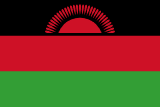
Malawi – Facts, Capital & Geography | Random Country Generator
Capital
Lilongwe
Population
20.4 Million (#61)
Currency
Malawian Kwacha (MWK)
Language
English, Chichewa
Area
118,484 km²
National Dish
Nsima
National Flower
Brachystegia
Density
204/km²
Internet TLD
.mw
Brief History
Malawi was inhabited by Bantu groups who established the Maravi Empire in the 15th century, controlling active trade routes. It became the British protectorate of Nyasaland in 1891, heavily targeted by Christian missionaries including David Livingstone. Led by nationalist leader Hastings Banda, Malawi achieved independence on July 6, 1964. Banda ruled as a dictator for 30 years before a democratic transition in 1994.
Key Demographics & Capital
Malawi has a population of approximately 21 million, comprising several ethnic groups, with the Chewa (34%), Lomwe (18%), and Yao (14%) being the largest. English is the official language, while Chichewa is the national language spoken by the vast majority. The population is dense and overwhelmingly rural (83%), clustered heavily in the southern and central regions, leaving the northern highlands sparsely populated.
Geography
Malawi is a landlocked country in southeastern Africa, dominated by Lake Malawi which occupies about one-third of the country's area. It is the third-largest lake in Africa and contains more fish species than any other lake on Earth. The Great Rift Valley runs through the country, creating highlands, plateaus, and the lake basin.
Culture & Tradition
Malawian culture is known for its warmth and hospitality. The Gule Wamkulu masked dance of the Chewa people is a UNESCO-recognized tradition. Music and dance are central to celebrations. Traditional crafts include wood carving and pottery. The country has diverse ethnic groups including Chewa, Tumbuka, and Yao.
Economy
Malawi's economy is predominantly agricultural, with tobacco, tea, and sugar as main exports. Fishing in Lake Malawi is vital for food security. The country is one of the least developed nations. Tourism is growing, centered on Lake Malawi's beauty. Uranium mining has potential for economic contribution.
Travel Highlights
Snorkel and dive in crystal-clear Lake Malawi, visit Cape Maclear and its islands, explore Liwonde National Park for elephants and hippos, hike Mount Mulanje, and experience the Gule Wamkulu ceremonies. Lake Malawi National Park (UNESCO) offers freshwater snorkeling among hundreds of colorful cichlid species.
Fun Facts
Lake Malawi contains more fish species than any other lake in the world.
Malawi is called 'The Warm Heart of Africa.'
Lake Malawi is the third-largest lake in Africa.
The lake contains over 1,000 species of cichlid fish.
Malawi has no coastline but has a massive lake.
The country is one of the most densely populated in Africa.
Map
Bordering & Nearby Countries
Frequently Asked Questions (FAQs)
More from Africa
Want a surprise? Try our random Africa country generator or pick from the entire world.
Algeria
Discover Algeria: Africa's largest country. From Saharan landscapes to Mediterranean coasts, explore ancient ruins and Berber culture.
Angola
Explore Angola: from Kalandula Falls to Atlantic beaches. Discover vibrant culture, wildlife, and Southern African landscapes.
Benin
Discover Benin: birthplace of Voodoo. Explore Dahomey palaces, floating villages, and rich West African traditions.
Botswana
Explore Botswana: home of the Okavango Delta and incredible safaris. Discover elephants, Kalahari landscapes, and African wilderness.