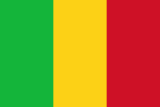
Mali – Facts, Capital & Geography | Random Country Generator
Capital
Bamako
Population
22.4 Million (#57)
Currency
West African CFA Franc (XOF)
Language
French
Area
1,240,192 km²
National Dish
Tô
National Flower
None official
Density
16/km²
Internet TLD
.ml
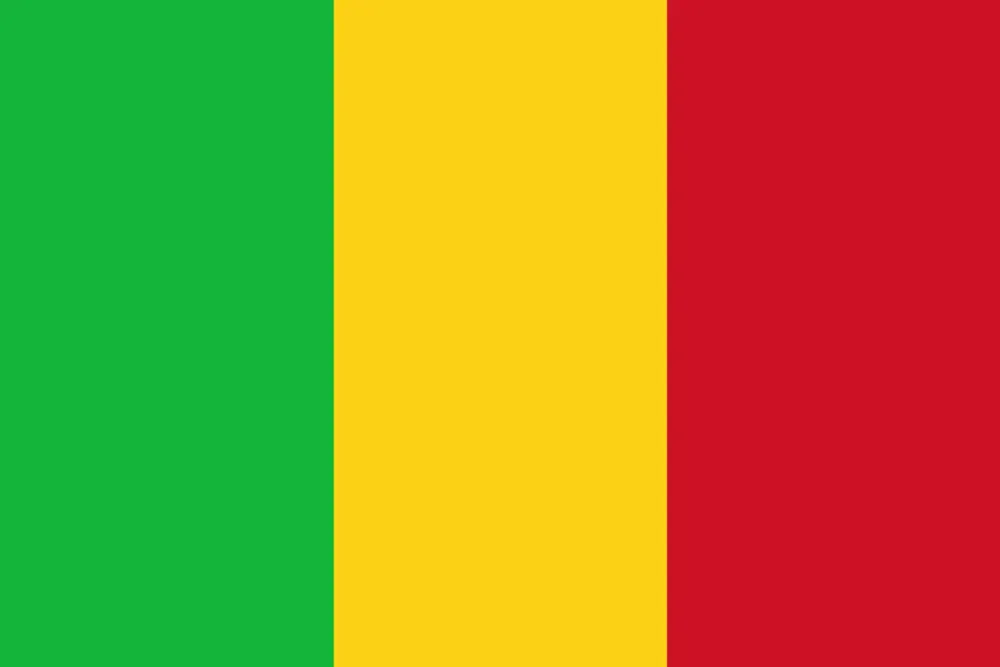
Brief History
Mali was the center of the wealthy Mali Empire, which flourished from the 13th to 17th centuries under Mansa Musa, who accumulated legendary gold wealth and made Timbuktu a global center of Islamic scholarship. It was colonized by France in the late 19th century as French Sudan, gaining independence in 1960. The country underwent decades of military coups, culminating in current security challenges since 2012.
Key Demographics & Capital
Mali has a population of approximately 23 million, with over 48% of the population under the age of 15. The main ethnic groups are the Bambara (34%), Fulani (15%), and Senufo (10.5%). French was recently replaced by local languages as the official language, with Bambara serving as the national lingua franca spoken by over 80% of the population. The population is predominantly rural, concentrated in the south.
Geography
Mali is a large, landlocked country in West Africa. The northern two-thirds is Saharan and Sahelian desert, while the south is more fertile savanna watered by the Niger and Senegal rivers. The Inner Niger Delta is a vast seasonal wetland. The Bandiagara Escarpment in Dogon Country offers dramatic cliff landscapes.
Culture & Tradition
Malian culture is extraordinarily rich in music, with artists like Ali Farka Touré and Salif Keita gaining international acclaim. The Dogon people maintain ancient traditions and cosmology. The Mandinka griot tradition preserves history through oral storytelling and music. The Great Mosque of Djenné and Timbuktu's manuscripts represent centuries of Islamic scholarship.
Economy
Mali's economy is based on agriculture (cotton, livestock), gold mining (third-largest gold producer in Africa), and fishing. The country is one of the world's poorest despite gold wealth. Agriculture employs about 80% of the population. The Niger River is vital for irrigation and transport.
Travel Highlights
Visit the Great Mosque of Djenné (UNESCO), explore Timbuktu's historic manuscripts and mosques, trek through Dogon Country's dramatic cliffs and villages, cruise the Niger River, and experience the vibrant music scene in Bamako. Mali offers some of West Africa's most culturally rich travel experiences.
Fun Facts
Timbuktu was once one of the world's great centers of learning.
The Great Mosque of Djenné is the largest mud-brick structure in the world.
Mali's music has influenced blues and rock around the world.
The Mali Empire was one of the richest in history under Mansa Musa.
The Dogon people have remarkable astronomical knowledge.
The Festival au Désert brought world music to the Sahara.
Map
Bordering & Nearby Countries
Frequently Asked Questions (FAQs)
More from Africa
Want a surprise? Try our random Africa country generator or pick from the entire world.
Algeria
Discover Algeria: Africa's largest country. From Saharan landscapes to Mediterranean coasts, explore ancient ruins and Berber culture.
Angola
Explore Angola: from Kalandula Falls to Atlantic beaches. Discover vibrant culture, wildlife, and Southern African landscapes.
Benin
Discover Benin: birthplace of Voodoo. Explore Dahomey palaces, floating villages, and rich West African traditions.
Botswana
Explore Botswana: home of the Okavango Delta and incredible safaris. Discover elephants, Kalahari landscapes, and African wilderness.