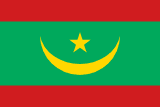
Mauritania – Facts, Capital & Geography | Random Country Generator
Capital
Nouakchott
Population
4.7 Million (#123)
Currency
Mauritanian Ouguiya (MRU)
Language
Arabic
Area
1,030,700 km²
National Dish
Thiéboudienne
National Flower
None official
Density
4/km²
Internet TLD
.mr
Brief History
Mauritania was the homeland of Berber nomads who established trade routes linking North Africa and the Sahel, later adopting Islam in the 11th century under the Almoravid dynasty. It was colonized by France in the early 20th century as part of French West Africa. Mauritania achieved independence on November 28, 1960, establishing Nouakchott as the new capital, and has since experienced several military coups.
Key Demographics & Capital
Mauritania has a population of approximately 4.8 million, divided demographically into three major groups: Haratin (black Moors, 40%), Beydan (white Moors, 30%), and Afro-Mauritanian ethnic groups (30%). Arabic is the official national language, while Fula, Wolof, and Soninke are recognized national languages. The population is concentrated along the southern border and the capital Nouakchott.
Geography
Mauritania is a vast, largely desert country in Northwest Africa. The Sahara Desert covers most of the territory. The Adrar Plateau in the center features dramatic canyons and ancient cities. The Senegal River valley in the south provides the main agricultural zone. The Atlantic coast has significant fishing grounds.
Culture & Tradition
Mauritanian culture bridges Arab-Berber and sub-Saharan African traditions. Moorish culture predominates, with strong traditions of Islamic scholarship and poetry. The ancient library cities of Chinguetti and Ouadane preserve centuries-old manuscripts. Tea ceremony is an important social ritual. Traditional Moorish music features the tidnit (lute).
Economy
Mauritania's economy relies on iron ore mining, fishing, and livestock herding. The country has significant offshore oil and gas reserves. Agriculture is limited to the Senegal River valley. Gold mining is growing. The fishing industry along the Atlantic coast is one of the richest in Africa.
Travel Highlights
Visit the ancient library town of Chinguetti (UNESCO), marvel at the Richat Structure (Eye of the Sahara) from the Adrar Plateau, ride the Iron Ore Train across the desert, explore the medieval trading town of Ouadane, and experience Saharan desert camping under vast starry skies.
Fun Facts
Mauritania's Richat Structure (Eye of the Sahara) is visible from space.
The country bridges Arab North Africa and sub-Saharan Africa.
Ancient Chinguetti was a center of Islamic scholarship.
Mauritania was the last country to abolish slavery (1981).
The Iron Ore Train is one of the longest in the world.
Nouakchott was a small village until becoming capital in 1960.
Map
Bordering & Nearby Countries
Frequently Asked Questions (FAQs)
More from Africa
Want a surprise? Try our random Africa country generator or pick from the entire world.
Algeria
Discover Algeria: Africa's largest country. From Saharan landscapes to Mediterranean coasts, explore ancient ruins and Berber culture.
Angola
Explore Angola: from Kalandula Falls to Atlantic beaches. Discover vibrant culture, wildlife, and Southern African landscapes.
Benin
Discover Benin: birthplace of Voodoo. Explore Dahomey palaces, floating villages, and rich West African traditions.
Botswana
Explore Botswana: home of the Okavango Delta and incredible safaris. Discover elephants, Kalahari landscapes, and African wilderness.