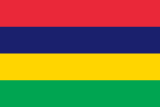
Mauritius – Facts, Capital & Geography | Random Country Generator
Capital
Port Louis
Population
1.3 Million (#151)
Currency
Mauritian Rupee (MUR)
Language
English, French
Area
2,040 km²
National Dish
Dholl Puri
National Flower
Trochetia Boutoniana
Density
626/km²
Internet TLD
.mu
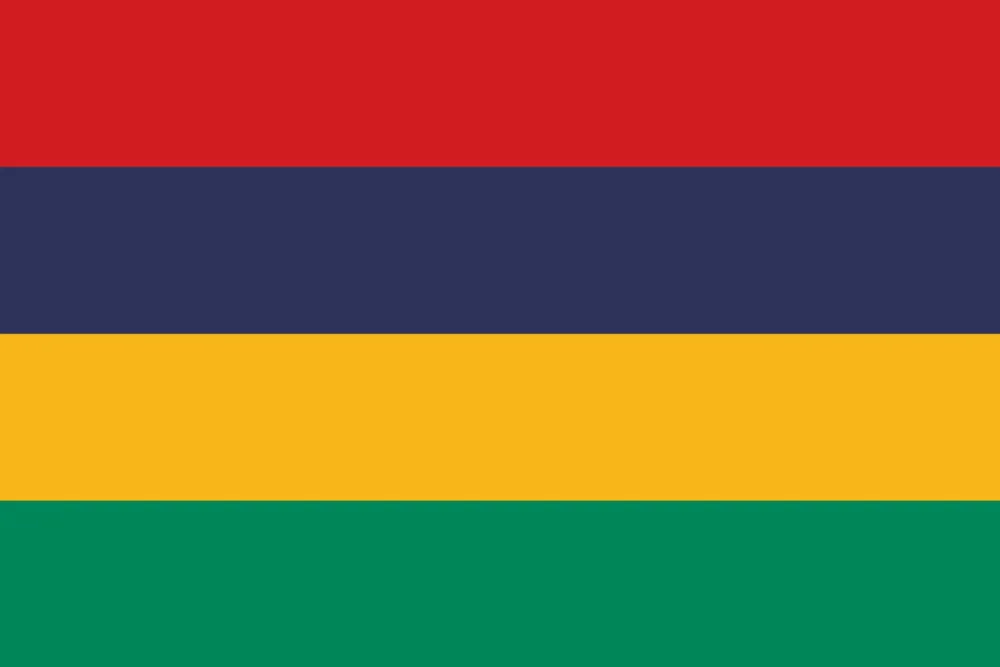
Brief History
Mauritius was uninhabited when Dutch sailors arrived in 1598, naming the island after Prince Maurice of Nassau. It was colonized by France in 1715, who renamed it Isle de France and imported enslaved Africans, and later captured by Britain in 1810. The British imported indentured Indian laborers to work in sugar fields. Mauritius achieved independence on March 12, 1968, under Seewoosagur Ramgoolam.
Key Demographics & Capital
Mauritius has a population of approximately 1.3 million, presenting a unique demographic composition reflecting historical migrations: Indo-Mauritian nationals comprise over 65% of the population, followed by Creole (mixed Afro-Malagasy, 27%) and Franco-Mauritian (2%) minorities. English is the official language, while Mauritian Creole is universally spoken. The population density is high.
Geography
Mauritius is a volcanic island nation in the Indian Ocean, about 2,000 km off the southeast coast of Africa. The main island features a central plateau surrounded by mountains, with coral reefs encircling the coast. The island has beautiful lagoons, waterfalls, and tropical forests. Rodrigues Island is an autonomous outer island.
Culture & Tradition
Mauritius is one of the most culturally diverse nations, with Indian, African, Chinese, and European heritage. Hindu, Muslim, Christian, and Buddhist festivals are all celebrated. Sega music and dance is the national cultural expression. Mauritanian cuisine blends Indian, Chinese, French, and African flavors. Multiple languages are spoken including Creole, French, English, and Hindi.
Economy
Mauritius has transformed from a sugar-dependent economy to a diversified one with tourism, financial services, textiles, and ICT sectors. It is one of Africa's wealthiest and most stable economies. The country is a gateway for investment into Africa. Sugar production remains significant but is no longer dominant.
Travel Highlights
Swim in turquoise lagoons, visit the seven-colored earth of Chamarel, explore Black River Gorges National Park, discover the underwater waterfall illusion (aerial view), tour colonial Port Louis, and relax on pristine beaches like Flic en Flac. The island offers world-class diving, luxury resorts, and cultural diversity.
Fun Facts
Mauritius is the only known home of the now-extinct dodo bird.
The island has the underwater waterfall illusion visible from above.
Mauritius has been called a 'successful state' by economists.
The seven-colored earth of Chamarel is a natural geological phenomenon.
Mauritius has a remarkably diverse population from Africa, India, China, and Europe.
The country has no indigenous population — it was uninhabited until 1598.
Map
Bordering & Nearby Countries
Frequently Asked Questions (FAQs)
More from Africa
Want a surprise? Try our random Africa country generator or pick from the entire world.
Algeria
Discover Algeria: Africa's largest country. From Saharan landscapes to Mediterranean coasts, explore ancient ruins and Berber culture.
Angola
Explore Angola: from Kalandula Falls to Atlantic beaches. Discover vibrant culture, wildlife, and Southern African landscapes.
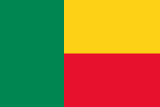
Benin
Discover Benin: birthplace of Voodoo. Explore Dahomey palaces, floating villages, and rich West African traditions.
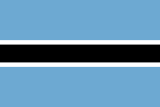
Botswana
Explore Botswana: home of the Okavango Delta and incredible safaris. Discover elephants, Kalahari landscapes, and African wilderness.