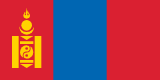
Mongolia – Facts, Capital & Geography | Random Country Generator
Capital
Ulaanbaatar
Population
3.4 Million (#130)
Currency
Mongolian Tugrik (MNT)
Language
Mongolian
Area
1,564,116 km²
National Dish
Buuz
National Flower
Scabiosa comosa
Density
2/km²
Internet TLD
.mn
Brief History
Mongolia's nomadic tribes were unified in 1206 by Genghis Khan, who founded the Mongol Empire, the largest contiguous empire in world history. Following the fall of the Yuan dynasty, it came under Chinese Qing dynasty rule in the 17th century. Mongolia declared independence in 1911, establishing a communist state (Mongolian People's Republic) in 1924, transitioning peacefully to democracy in 1990.
Key Demographics & Capital
Mongolia has a population of approximately 3.4 million, making it the most sparsely populated sovereign country in the world. Ethnic Mongolians comprise over 95% of the population, with a small Kazakh minority in the west. Mongolian (Khalkha) is the state language. The population has transitioned from nomadic to urban, with over 68% living in cities, and nearly half concentrated in Ulaanbaatar.
Geography
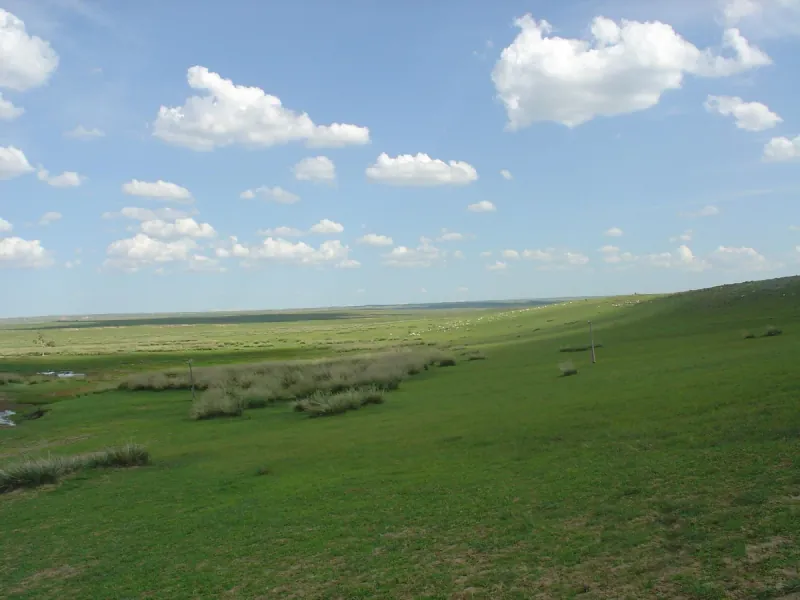
Mongolia is a vast, landlocked country between Russia and China. The landscape is dominated by vast steppes, the Gobi Desert in the south, the Altai Mountains in the west, and forests and lakes in the north. Mongolia has extreme continental climate with harsh winters. The country is one of the most sparsely populated on Earth.
Culture & Tradition
Mongolian culture is deeply rooted in nomadic traditions. The ger (yurt) remains home for many Mongolians. Horse culture is central — children learn to ride before they can walk. The Naadam festival showcases the 'three manly games': horse racing, wrestling, and archery. Throat singing (khoomei) is a UNESCO-recognized art form.
Economy
Mongolia's economy relies on mining (copper, gold, coal), agriculture (livestock), and cashmere production. The Oyu Tolgoi mine is one of the world's largest copper-gold mines. Nomadic herding of sheep, goats, horses, cattle, and camels remains important. Tourism is growing, centered on adventure and cultural experiences.
Travel Highlights
Stay with nomadic families in a ger, attend the Naadam Festival, explore the Gobi Desert for dinosaur fossils, ride horses across the endless steppe, visit Khustain Nuruu for wild Przewalski's horses, trek in the Altai Mountains with eagle hunters, and discover ancient monasteries like Erdene Zuu. Mongolia offers raw, adventurous travel.
Fun Facts
Mongolia has the lowest population density of any country.
Genghis Khan created the largest contiguous empire in history.
About 30% of Mongolians still live as nomadic herders.
The Gobi Desert is one of the world's great deserts.
Mongolia has more horses than people.
The Mongolian eagle hunting tradition dates back thousands of years.
Map
Bordering & Nearby Countries
Frequently Asked Questions (FAQs)
More from Asia
Want a surprise? Try our random Asia country generator or pick from the entire world.
Afghanistan
Discover Afghanistan: Hindu Kush mountains and ancient Silk Road heritage. Explore Bamiyan Valley, Herat's architecture, and Afghan culture.
Armenia
Explore Armenia: first Christian nation. Discover ancient monasteries, Lake Sevan, and Caucasus mountain heritage.
Azerbaijan
Explore Azerbaijan: Land of Fire. Discover Baku's Flame Towers, ancient walled city, mud volcanoes, and Caspian Sea heritage.

Bahrain
Explore Bahrain: ancient Dilmun heritage and modern Gulf culture. Discover pearl diving history, Formula One, and island archipelago charm.