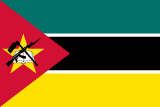
Mozambique – Facts, Capital & Geography | Random Country Generator
Capital
Maputo
Population
33.0 Million (#46)
Currency
Mozambican Metical (MZN)
Language
Portuguese
Area
801,590 km²
National Dish
Piri Piri Prawns
National Flower
Flame Lily
Density
38/km²
Internet TLD
.mz
Brief History
Mozambique was settled by Bantu groups and became a major Swahili trading hub before Portuguese explorer Vasco da Gama arrived in 1498, initiating centuries of Portuguese colonial rule. The struggle for independence was led by FRELIMO in a ten-year war, culminating in sovereignty in 1975, followed immediately by a civil war (1977–1992). The country has since focused on postwar economic recovery.
Key Demographics & Capital
Mozambique has a population of approximately 33 million, with over 45% of the population under the age of 15. The main ethnic groups are the Makhuwa (29%), Tsonga (22.4%), and Lomwe (16%). Portuguese is the sole official language, used in administration and education, while Emakhuwa and Xichangana are widely spoken. The population remains predominantly rural (over 63%), concentrated along the coast.
Geography
Mozambique stretches along southeastern Africa's Indian Ocean coast for over 2,500 km. The country features coastal lowlands, central plateaus, and highlands in the west. The Zambezi River crosses the country. Offshore, the Bazaruto and Quirimbas archipelagos feature pristine islands and coral reefs.
Culture & Tradition
Mozambican culture blends Bantu African traditions with Portuguese colonial influence. Marrabenta music is distinctive to Mozambique. Traditional dance and sculpture are important art forms. Portuguese is the official language but many Bantu languages are spoken. Seafood-based cuisine with peri-peri spice is characteristic.
Economy
Mozambique's economy is growing, driven by natural gas (massive offshore discoveries), coal mining, agriculture, and fishing. Tourism is developing, centered on beaches and marine parks. Aluminum smelting and agriculture (cashews, sugar, prawns) are significant. The country has major LNG potential.
Travel Highlights
Dive and snorkel in the Bazaruto Archipelago, explore Gorongosa National Park's restored ecosystem, visit the Island of Mozambique (UNESCO), swim with whale sharks at Tofo Beach, discover the Quirimbas Archipelago, and experience Maputo's vibrant seafood scene and colonial architecture.
Fun Facts
Mozambique's flag features an AK-47 rifle.
The Bazaruto Archipelago is often called 'paradise on Earth.'
Mozambique has one of the longest coastlines in Africa.
The country is home to dugongs (sea cows).
Island of Mozambique was the capital until 1898.
Mozambique's currency (Metical) is named after a gold weight unit.
Map
Bordering & Nearby Countries
Frequently Asked Questions (FAQs)
More from Africa
Want a surprise? Try our random Africa country generator or pick from the entire world.
Algeria
Discover Algeria: Africa's largest country. From Saharan landscapes to Mediterranean coasts, explore ancient ruins and Berber culture.
Angola
Explore Angola: from Kalandula Falls to Atlantic beaches. Discover vibrant culture, wildlife, and Southern African landscapes.
Benin
Discover Benin: birthplace of Voodoo. Explore Dahomey palaces, floating villages, and rich West African traditions.
Botswana
Explore Botswana: home of the Okavango Delta and incredible safaris. Discover elephants, Kalahari landscapes, and African wilderness.