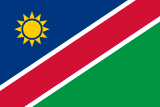
Namibia – Facts, Capital & Geography | Random Country Generator
Capital
Windhoek
Population
2.6 Million (#139)
Currency
Namibian Dollar (NAD)
Language
English
Area
824,292 km²
National Dish
Kapana
National Flower
Welwitschia
Density
3/km²
Internet TLD
.na
Brief History
Namibia was inhabited by San, Damara, and Herero groups before becoming the colony of German South West Africa in 1884, experiencing the tragic Herero and Namaqua genocide (1904–1908). It was administered by South Africa after WWI under a League of Nations mandate. Following a protracted guerrilla war led by SWAPO, Namibia achieved independence on March 21, 1990, under Sam Nujoma.
Key Demographics & Capital
Namibia has a population of approximately 2.6 million, with the Ovambo ethnic group comprising over 50% of the total population, followed by the Kavango (9%) and Herero (7%). English is the sole official language, while Oshiwambo is spoken by the majority. The country is one of the most sparsely populated in the world, with the population concentrated in the north and the capital Windhoek.
Geography
Namibia is in southwestern Africa, featuring the ancient Namib Desert along the Atlantic coast and the Kalahari Desert in the east. The central plateau has savanna and mountains. The Skeleton Coast is one of the most inhospitable coastlines. Etosha Pan is a vast salt flat. Fish River Canyon is the second-largest canyon in the world.
Culture & Tradition
Namibia has diverse cultures including the Himba, Herero, San, Damara, and Ovambo peoples. The Himba people are known for their distinctive ochre-covered appearance. German colonial influence is visible in Windhoek and Swakopmund's architecture. Namibian cuisine blends German and African traditions.
Economy
Namibia's economy relies on mining (diamonds, uranium — world's fourth-largest producer), fishing, agriculture, and tourism. The country is one of the largest diamond producers in the world. Tourism is a major growing sector. Namibia has been praised for its conservation-based economy.
Travel Highlights
Marvel at Sossusvlei's towering red sand dunes, spot wildlife in Etosha National Park, explore the eerie Skeleton Coast, hike Fish River Canyon, visit the German colonial town of Swakopmund, see desert-adapted elephants in Damaraland, and experience Himba cultural visits. Namibia offers some of Africa's most dramatic landscapes.
Fun Facts
Namibia has the oldest desert in the world (the Namib, 55 million years old).
The Skeleton Coast is littered with shipwrecks.
Sossusvlei has some of the tallest sand dunes in the world.
Namibia was the first African country to incorporate environmental protection in its constitution.
The country has one of the lowest population densities in the world.
Namibia has the largest free-roaming population of cheetahs.
Map
Bordering & Nearby Countries
Frequently Asked Questions (FAQs)
More from Africa
Want a surprise? Try our random Africa country generator or pick from the entire world.
Algeria
Discover Algeria: Africa's largest country. From Saharan landscapes to Mediterranean coasts, explore ancient ruins and Berber culture.
Angola
Explore Angola: from Kalandula Falls to Atlantic beaches. Discover vibrant culture, wildlife, and Southern African landscapes.
Benin
Discover Benin: birthplace of Voodoo. Explore Dahomey palaces, floating villages, and rich West African traditions.
Botswana
Explore Botswana: home of the Okavango Delta and incredible safaris. Discover elephants, Kalahari landscapes, and African wilderness.