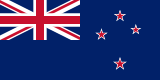
New Zealand – Facts, Capital & Geography | Random Country Generator
Capital
Wellington
Population
5.1 Million (#121)
Currency
New Zealand Dollar (NZD)
Language
English, Māori
Area
268,021 km²
National Dish
Hāngī
National Flower
Kōwhai
Density
19/km²
Internet TLD
.nz
Brief History
New Zealand was settled by Polynesian Maori seafarers in the late 13th century, developing a distinct tribal culture. Abel Tasman sighted the islands in 1642, and Captain James Cook mapped them in 1769. The Treaty of Waitangi was signed on February 6, 1840, between the British Crown and Maori chiefs, establishing British sovereignty. New Zealand achieved dominion status in 1907 and full legislative autonomy in 1947.
Key Demographics & Capital
New Zealand has a population of approximately 5.1 million, with European (mainly British) descent comprising over 70% of the population, followed by indigenous Maori (16.5%), Asian (15%), and Pacific peoples (8%). English, Maori, and New Zealand Sign Language are the official languages. The population is highly urbanized (86%), concentrated in the North Island, particularly around Auckland.
Geography
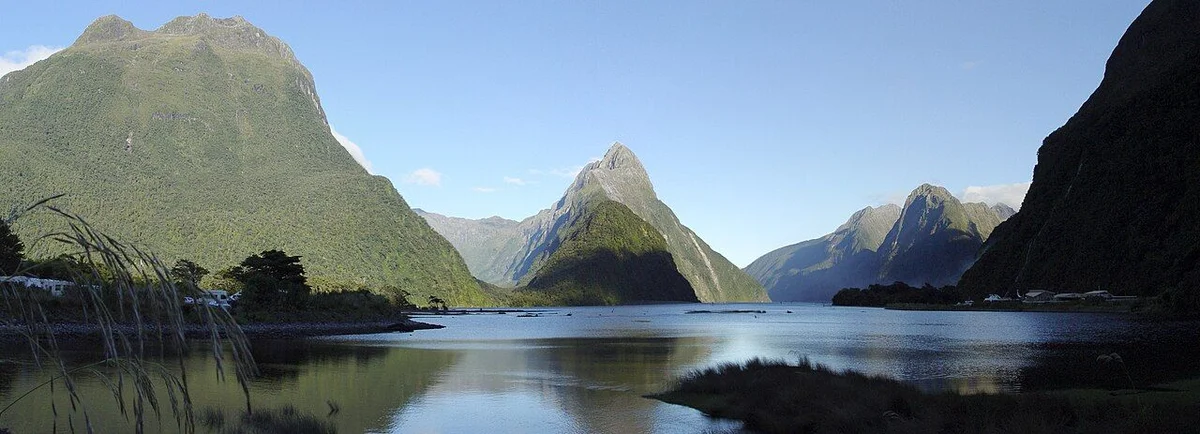
New Zealand comprises two main islands — the North Island and South Island — in the southwestern Pacific Ocean. The South Island features the Southern Alps with glaciers and fjords (Milford Sound). The North Island has volcanic activity, geothermal areas, and rolling green farmland. The country is seismically active and has diverse ecosystems from subtropical forests to alpine landscapes.
Culture & Tradition
New Zealand culture blends Maori (indigenous Polynesian) and European (mainly British) traditions. The Maori haka dance is performed by the All Blacks rugby team. Kiwi culture values outdoor adventure, environmentalism, and egalitarianism. The country's film industry gained global recognition through Peter Jackson's Lord of the Rings trilogy. Rugby union is the national sport.
Economy
New Zealand has a developed, free-market economy. Agriculture (dairy, meat, wool, kiwifruit, wine) is a major export earner. Tourism is crucial, driven by natural beauty and adventure tourism. The tech sector is growing, and the film industry (Weta Workshop) is internationally recognized. Renewable energy provides about 80% of electricity.
Travel Highlights
Explore the stunning fjords of Milford Sound, hike the Tongariro Alpine Crossing, visit Hobbiton movie set, experience Maori culture in Rotorua, bungee jump in Queenstown (the adventure capital), and relax in Abel Tasman National Park. Stargazing in the Aoraki Mackenzie International Dark Sky Reserve is extraordinary.
Fun Facts
New Zealand was the first country to give women the right to vote in 1893.
There are more sheep than people in New Zealand.
New Zealand has no native land mammals (except bats).
Bungee jumping was commercialized in New Zealand.
The country served as the filming location for Lord of the Rings.
The kiwi bird is a national symbol, and New Zealanders call themselves 'Kiwis'.
Map
Bordering & Nearby Countries
Frequently Asked Questions (FAQs)
More from Oceania
Want a surprise? Try our random Oceania country generator or pick from the entire world.

Australia
Explore Australia: from the Great Barrier Reef to the Outback. Discover unique wildlife, stunning landscapes, and vibrant cities.
Fiji
Explore Fiji: 330 islands of South Pacific paradise. Discover pristine reefs, warm Fijian hospitality, and tropical island adventures.
Kiribati
Explore Kiribati: remote Pacific atolls spanning the equator. Discover WWII history, traditional culture, and pristine ocean environments.
Marshall Islands
Explore the Marshall Islands: remote Pacific atolls and nuclear history. Discover world-class diving, stick chart navigation, and island culture.