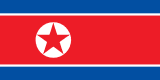
North Korea – Facts, Capital & Geography | Random Country Generator
Capital
Pyongyang
Population
26.1 Million (#55)
Currency
North Korean Won (KPW)
Language
Korean
Area
120,538 km²
National Dish
Kimchi
National Flower
Magnolia
Density
213/km²
Internet TLD
.kp
Brief History
North Korea was part of the ancient Gojoseon kingdom, later unified under the Goryeo and Joseon dynasties before Japanese annexation in 1910. Following Japan's defeat in WWII, the peninsula was divided along the 38th parallel. The Democratic People's Republic of Korea was established on September 9, 1948, under Kim Il Sung, initiating the Korean War in 1950 and developing a highly isolated dynastic communist state.
Key Demographics & Capital
North Korea has a population of approximately 26 million, exhibiting extreme ethnic homogeneity with ethnic Koreans comprising virtually the entire population. Korean is the sole official language, using the Joseon-geul (Hangul) script. The population is heavily urbanized (63%), concentrated in the coastal plains and the capital Pyongyang. The country is subject to strict state control over movement.
Geography
North Korea occupies the northern half of the Korean Peninsula. The landscape is predominantly mountainous with narrow coastal plains. Mount Paektu (2,744m) on the Chinese border is considered sacred. Rivers include the Yalu and Tumen. The DMZ separates North and South Korea. The east coast faces the Sea of Japan.
Culture & Tradition
North Korean culture is heavily shaped by the state ideology of Juche (self-reliance). Mass performances like the Arirang Festival are spectacles of coordinated performance. Traditional Korean culture (music, dance, cuisine) underlies the society. Korean cuisine in the north features naengmyeon (cold noodles) and kimchi. The cult of personality around the Kim dynasty is pervasive.
Economy
North Korea has a centrally planned economy with significant state control. Mining, military industry, and agriculture are key sectors. International sanctions limit trade. The country has mineral resources including coal, iron ore, and rare earth elements. Economic challenges include food insecurity and limited energy supply.
Travel Highlights
Tourism to North Korea is highly restricted and must be arranged through government-approved tour operators. Visitors can see Pyongyang's monumental architecture, the DMZ from the northern side, the Kumsusan Palace of the Sun, Mount Myohyang and its International Friendship Exhibition, and the mass games (when held). Travel is heavily guided.
Fun Facts
North Korea is officially called the Democratic People's Republic of Korea (DPRK).
Pyongyang has an elaborate metro system with ornate stations.
The Korean Demilitarized Zone (DMZ) is one of the most heavily militarized borders.
North Korea has its own calendar (Juche calendar) based on Kim Il-sung's birth year.
The Ryugyong Hotel (105 stories) was never completed.
Internet access is restricted to a domestic intranet.
Map
Bordering & Nearby Countries
Frequently Asked Questions (FAQs)
More from Asia
Want a surprise? Try our random Asia country generator or pick from the entire world.
Afghanistan
Discover Afghanistan: Hindu Kush mountains and ancient Silk Road heritage. Explore Bamiyan Valley, Herat's architecture, and Afghan culture.
Armenia
Explore Armenia: first Christian nation. Discover ancient monasteries, Lake Sevan, and Caucasus mountain heritage.
Azerbaijan
Explore Azerbaijan: Land of Fire. Discover Baku's Flame Towers, ancient walled city, mud volcanoes, and Caspian Sea heritage.
Bahrain
Explore Bahrain: ancient Dilmun heritage and modern Gulf culture. Discover pearl diving history, Formula One, and island archipelago charm.