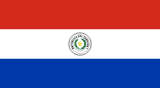
Paraguay – Facts, Capital & Geography | Random Country Generator
Capital
Asunción
Population
7.4 Million (#103)
Currency
Paraguayan Guaraní (PYG)
Language
Spanish, Guarani
Area
406,752 km²
National Dish
Sopa Paraguaya
National Flower
Mburucuyá
Density
17/km²
Internet TLD
.py
Brief History
Paraguay was inhabited by the indigenous Guaraní before Spanish colonizers founded Asunción in 1537, establishing Jesuit missions that protected indigenous populations. Independence was declared on May 14, 1811. The country was devastated by the Triple Alliance War (1864–1870) against Brazil, Argentina, and Uruguay, losing over half of its population, and was later ruled by the military dictatorship of Alfredo Stroessner (1954–1989).
Key Demographics & Capital
Paraguay has a population of approximately 6.8 million, presenting a highly homogeneous demographic profile with over 95% identifying as Mestizo. Both Spanish and Guaraní are the official languages, with Guaraní (an indigenous language) spoken by over 90% of the population, making Paraguay unique in its widespread indigenous language use. The population is concentrated in the eastern region.
Geography
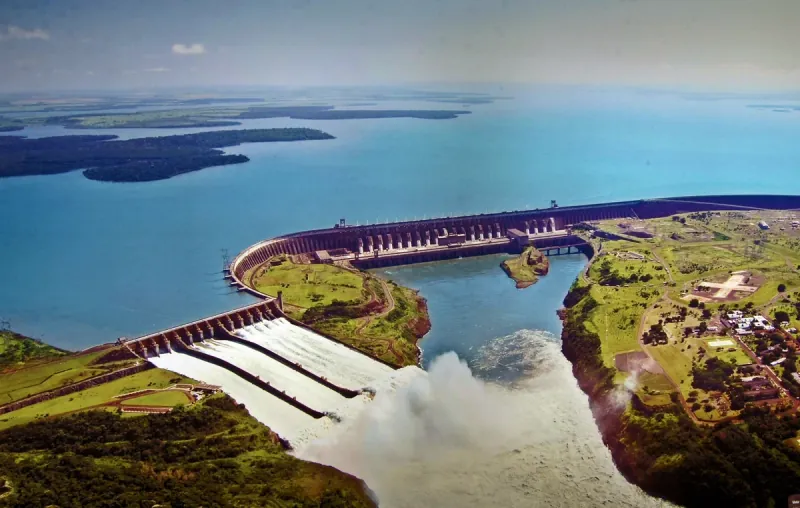
Paraguay is a landlocked country in central South America. The Paraguay River divides the country into two distinct regions: the Eastern Region with forests, hills, and farmland, and the Western Chaco — a vast, sparsely populated semi-arid plain. The Itaipú Dam on the Paraná River is one of the world's largest hydroelectric projects.
Culture & Tradition
Paraguayan culture uniquely blends Guaraní indigenous and Spanish traditions. Guaraní language is spoken by almost the entire population alongside Spanish. Tereré (cold yerba mate) is the quintessential social beverage. Paraguayan harp music and polka paraguaya are distinctive. Ñandutí (spider web lace) is a renowned traditional craft.
Economy
Paraguay's economy is based on agriculture (soybeans — one of the world's largest exporters, beef, corn), hydroelectric power (Itaipú Dam generates enormous revenue), and commerce (Ciudad del Este is a major trading hub). The country has one of the lowest costs of living in South America.
Travel Highlights
Visit the massive Itaipú Dam, explore the Jesuit Missions ruins (UNESCO), discover the Chaco wilderness, visit Asunción's historic center, and experience Paraguayan harp music and tereré culture. The Pantanal wetlands extend into northern Paraguay, offering wildlife viewing.
Fun Facts
Paraguay is one of two South American landlocked countries.
Guaraní is co-official with Spanish — almost everyone is bilingual.
Paraguay has the largest hydroelectric dam in the world by energy output (Itaipú).
The Chaco region covers 60% of the country but has only 2% of the population.
Paraguay has never won an Olympic gold medal.
Tereré (cold yerba mate) is the national drink.
Map
Bordering & Nearby Countries
Frequently Asked Questions (FAQs)
More from South America
Want a surprise? Try our random South America country generator or pick from the entire world.
Argentina
Discover Argentina: from Buenos Aires tango to Patagonian glaciers. Explore wine country, Iguazu Falls, and vibrant culture.
Bolivia
Explore Bolivia: the Salar de Uyuni and world's highest capital. Discover Lake Titicaca, indigenous culture, and Andean adventures.
Brazil
Discover Brazil: home of the Amazon, Carnival, and beautiful beaches. Explore culture, geography, and travel highlights.
Chile
Discover Chile: from the Atacama Desert to Patagonian glaciers. Explore Easter Island, wine country, and diverse landscapes.