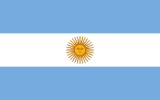
Argentina – Facts, Capital & Geography | Random Country Generator
Capital
Buenos Aires
Population
46.0 Million (#33)
Currency
Argentine Peso (ARS)
Language
Spanish
Area
2,780,400 km²
National Dish
Asado
National Flower
Ceibo
Density
17/km²
Internet TLD
.ar
Brief History
Argentina was inhabited by indigenous groups like the Diaguita and Guaraní before Spanish colonizers arrived in the early 16th century, establishing the Viceroyalty of the Río de la Plata. Independence was declared on July 9, 1816, during the Argentine War of Independence led by José de San Martín. The late 19th and early 20th centuries were marked by massive European immigration and economic growth, followed by political instability and a military junta (1976–1983) before democracy was restored.
Key Demographics & Capital
Argentina has a population of approximately 46 million, characterized by a high degree of European ancestry (mainly Spanish and Italian descent) due to massive immigration waves in the late 19th and early 20th centuries. Spanish is the de facto national language, spoken with a distinct accents and vocabulary (Rioplatense Spanish). The country is highly urbanized, with over 92% of the population living in cities, and more than a third residing in the Greater Buenos Aires metropolitan area.
Geography
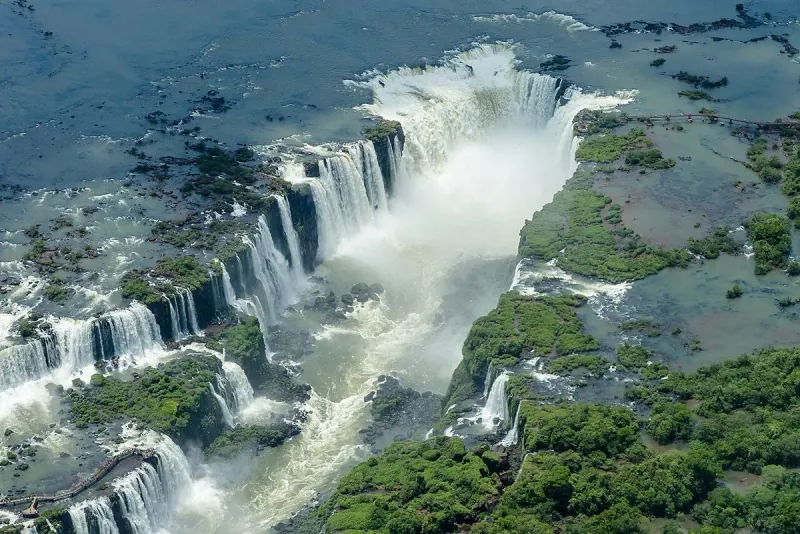
Argentina is South America's second-largest country, stretching from the subtropical north to the sub-Antarctic south. The Andes Mountains form the western border with Chile. The country features the vast Pampas grasslands, Patagonian steppe, Iguazu Falls in the northeast, and glaciers in the south including the famous Perito Moreno. Tierra del Fuego lies at the southernmost tip.
Culture & Tradition
Argentine culture revolves around tango, football (Messi, Maradona), asado (barbecue), and mate tea. Buenos Aires is often called the 'Paris of South America' for its European-influenced architecture and café culture. Literature (Borges), psychoanalysis (Argentina has more therapists per capita than anywhere), and passionate sports fandom define the national character.
Economy
Argentina has the third-largest economy in Latin America. Agriculture (beef, soybeans, wheat, wine) is a cornerstone. The country is a major food exporter and wine producer (Mendoza's Malbec). Other sectors include energy, mining, and technology. Buenos Aires is a growing tech startup hub.
Travel Highlights
Experience the tango culture of Buenos Aires, marvel at Iguazu Falls, hike in Patagonia's Los Glaciares National Park, taste world-class wines in Mendoza, and visit Ushuaia — the 'End of the World.' The Lake District around Bariloche offers stunning alpine scenery. Valdes Peninsula is ideal for whale watching.
Fun Facts
Argentina is home to the widest avenue in the world (Avenida 9 de Julio).
Tango was born in Buenos Aires.
Argentina has the southernmost city in the world — Ushuaia.
Argentines consume more beef per capita than almost any other country.
Patagonia spans over 400,000 square miles.
Argentina has won the FIFA World Cup three times.
Map
Bordering & Nearby Countries
Frequently Asked Questions (FAQs)
More from South America
Want a surprise? Try our random South America country generator or pick from the entire world.
Bolivia
Explore Bolivia: the Salar de Uyuni and world's highest capital. Discover Lake Titicaca, indigenous culture, and Andean adventures.
Brazil
Discover Brazil: home of the Amazon, Carnival, and beautiful beaches. Explore culture, geography, and travel highlights.
Chile
Discover Chile: from the Atacama Desert to Patagonian glaciers. Explore Easter Island, wine country, and diverse landscapes.
Colombia
Discover Colombia: from Cartagena's colonial charm to the coffee region. Explore biodiversity, vibrant culture, and Caribbean beaches.