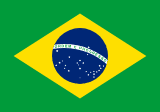
Brazil – Facts, Capital & Geography | Random Country Generator
Capital
Brasília
Population
214.3 Million (#7)
Currency
Brazilian Real (BRL)
Language
Portuguese
Area
8,515,767 km²
National Dish
Feijoada
National Flower
Cattleya labiata
Density
25/km²
Internet TLD
.br
Brief History
Brazil was inhabited by indigenous tribal societies before Portuguese explorer Pedro Álvares Cabral arrived in 1500, initiating centuries of Portuguese colonial rule. The country became the center of a global sugar and coffee economy reliant on millions of enslaved Africans. Dom Pedro I declared independence on September 7, 1822, establishing the Empire of Brazil, which transitioned to a republic in 1889. Following periods of military dictatorship, democracy was restored in 1985.
Key Demographics & Capital
Brazil has a population of approximately 214 million, presenting a highly diverse demographic mix: about 47% identify as White (mainly Portuguese, Italian, and German descent), 43% as Pardo (mixed race), and 8% as Black. Portuguese is the sole official language, spoken with a distinct Brazilian dialect. The population is heavily urbanized (over 87%), clustered along the eastern coast, with São Paulo and Rio de Janeiro being mega-cities.
Geography
Brazil is the fifth-largest country in the world, covering nearly half of South America. It features the vast Amazon Rainforest, the Pantanal wetlands, the Atlantic Forest, and extensive coastline stretching over 7,400 km. Major rivers include the Amazon (the world's largest by volume) and the São Francisco. The terrain varies from tropical lowlands to highland plateaus.
Culture & Tradition
Brazilian culture is a vibrant mix of Indigenous, Portuguese, African, and immigrant influences. Music genres like samba, bossa nova, and forró are central to Brazilian identity. Carnival celebrations feature elaborate parades, costumes, and dancing. Football (soccer) is practically a religion. Capoeira, a martial art combining dance and acrobatics, originated in Brazil.
Economy
Brazil has the largest economy in Latin America and is a major producer of coffee, soybeans, sugar, and orange juice. The country has significant oil reserves and a growing aerospace industry (Embraer). São Paulo is the financial hub of South America. Tourism, agriculture, and mining are key economic drivers.
Travel Highlights
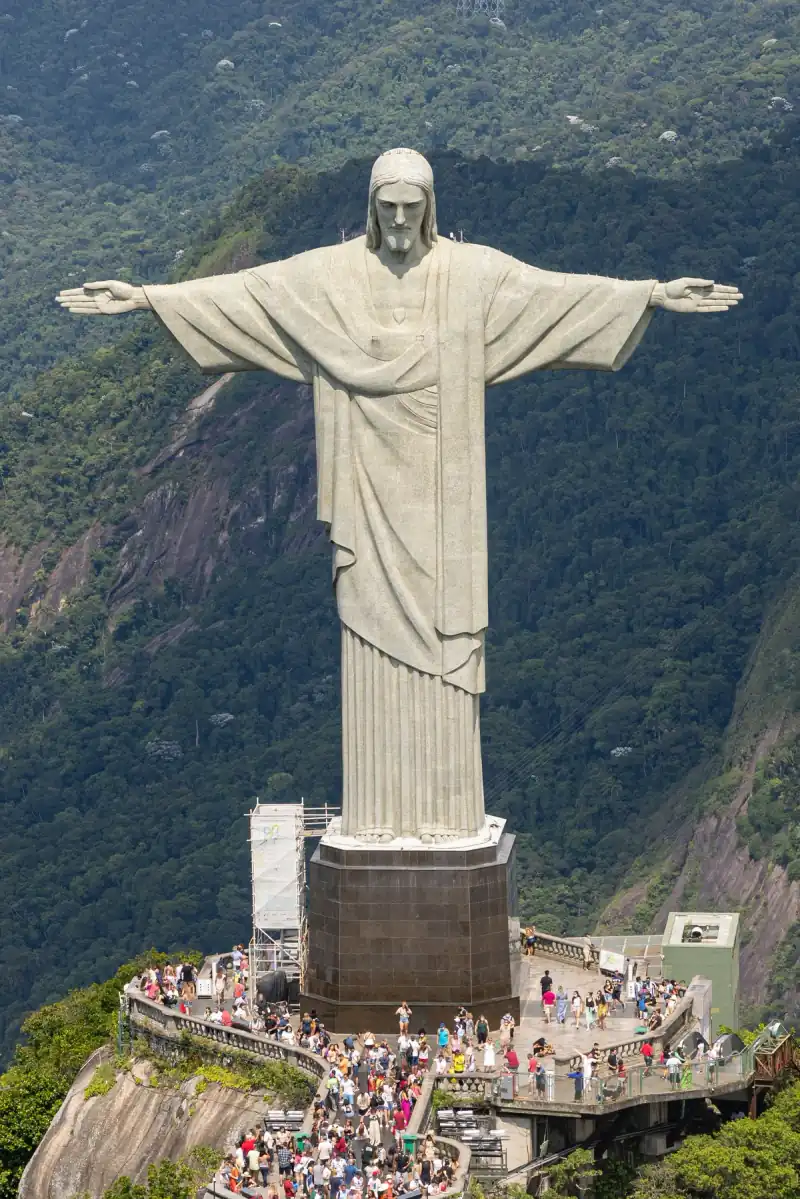
Experience the iconic Christ the Redeemer statue and Copacabana Beach in Rio de Janeiro, explore the Amazon Rainforest, marvel at Iguazu Falls, and visit the colorful streets of Salvador. The Pantanal offers incredible wildlife viewing, while Fernando de Noronha is a paradise for divers.
Fun Facts
Brazil contains about 60% of the Amazon Rainforest.
Portuguese is the official language, not Spanish.
Brazil has won the FIFA World Cup five times, more than any other country.
The name 'Brazil' comes from a tree called pau-brasil.
Rio Carnival is the largest carnival in the world.
Brazil is the largest country in South America.
Map
Bordering & Nearby Countries
Frequently Asked Questions (FAQs)
More from South America
Want a surprise? Try our random South America country generator or pick from the entire world.
Argentina
Discover Argentina: from Buenos Aires tango to Patagonian glaciers. Explore wine country, Iguazu Falls, and vibrant culture.
Bolivia
Explore Bolivia: the Salar de Uyuni and world's highest capital. Discover Lake Titicaca, indigenous culture, and Andean adventures.
Chile
Discover Chile: from the Atacama Desert to Patagonian glaciers. Explore Easter Island, wine country, and diverse landscapes.
Colombia
Discover Colombia: from Cartagena's colonial charm to the coffee region. Explore biodiversity, vibrant culture, and Caribbean beaches.