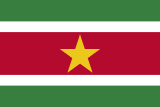
Suriname – Facts, Capital & Geography | Random Country Generator
Capital
Paramaribo
Population
620K (#164)
Currency
Surinamese Dollar (SRD)
Language
Dutch
Area
163,820 km²
National Dish
Pom
National Flower
Faya Lobi
Density
4/km²
Internet TLD
.sr
Brief History
Suriname was settled by Caribs and Arawaks before English settlers arrived in 1630, later traded to the Netherlands in 1667 in exchange for New Amsterdam (New York) under the Treaty of Breda. It grew into a wealthy Dutch plantation colony dependent on enslaved Africans and indentured Asian laborers. Suriname achieved full independence on November 25, 1975, under Henck Arron.
Key Demographics & Capital
Suriname has a population of approximately 610,000, presenting a highly diverse demographic mix: Hindustani (Indian descent, 27%), Maroon (runaway slave descendants, 21%), Creole (mixed race, 15%), and Javanese (13.7%) communities. Dutch is the sole official language, while Sranan Tongo serves as the primary spoken lingua franca. The population is concentrated along the northern coast.
Geography
Suriname is on the northeast coast of South America. Over 90% is covered by pristine tropical rainforest. The coastal area is low-lying and swampy. The interior rises to the Guiana Highlands with mountains, waterfalls, and dense jungle. The Central Suriname Nature Reserve covers 1.6 million hectares of untouched forest.
Culture & Tradition
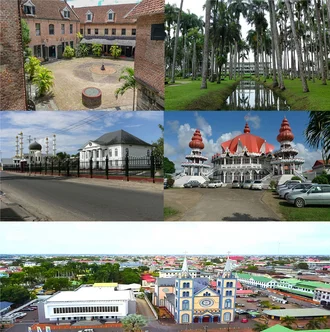
Surinamese culture is extraordinarily diverse, with Creole, Hindustani, Javanese, Maroon, Indigenous, Chinese, and European communities. This diversity is reflected in cuisine, music, and festivals. Dutch is the official language but Sranan Tongo (Creole) is widely spoken. Paramaribo's mosques, synagogues, churches, and Hindu temples stand side by side.
Economy
Suriname's economy relies on mining (gold, bauxite), oil, agriculture, and forestry. Gold mining has become the dominant export. The country has significant offshore oil potential. Rice and bananas are important agricultural products. The vast forests represent both economic and conservation value.
Travel Highlights
Explore Paramaribo's UNESCO-listed colonial wooden architecture, visit the Central Suriname Nature Reserve, discover Maroon communities along the rivers, see the Raleighvallen nature reserve with its mountains and waterfalls, and experience the multicultural cuisine and festivals. Suriname offers authentic rainforest and cultural diversity.
Fun Facts
Suriname is the smallest country in South America.
Dutch is the official language.
Over 90% of Suriname is covered by tropical rainforest.
Paramaribo's historic center is a UNESCO World Heritage Site.
Suriname has one of the most diverse populations in the Americas.
The Central Suriname Nature Reserve is larger than some European countries.
Map
Bordering & Nearby Countries
Frequently Asked Questions (FAQs)
More from South America
Want a surprise? Try our random South America country generator or pick from the entire world.
Argentina
Discover Argentina: from Buenos Aires tango to Patagonian glaciers. Explore wine country, Iguazu Falls, and vibrant culture.
Bolivia
Explore Bolivia: the Salar de Uyuni and world's highest capital. Discover Lake Titicaca, indigenous culture, and Andean adventures.
Brazil
Discover Brazil: home of the Amazon, Carnival, and beautiful beaches. Explore culture, geography, and travel highlights.
Chile
Discover Chile: from the Atacama Desert to Patagonian glaciers. Explore Easter Island, wine country, and diverse landscapes.